1. Introduction
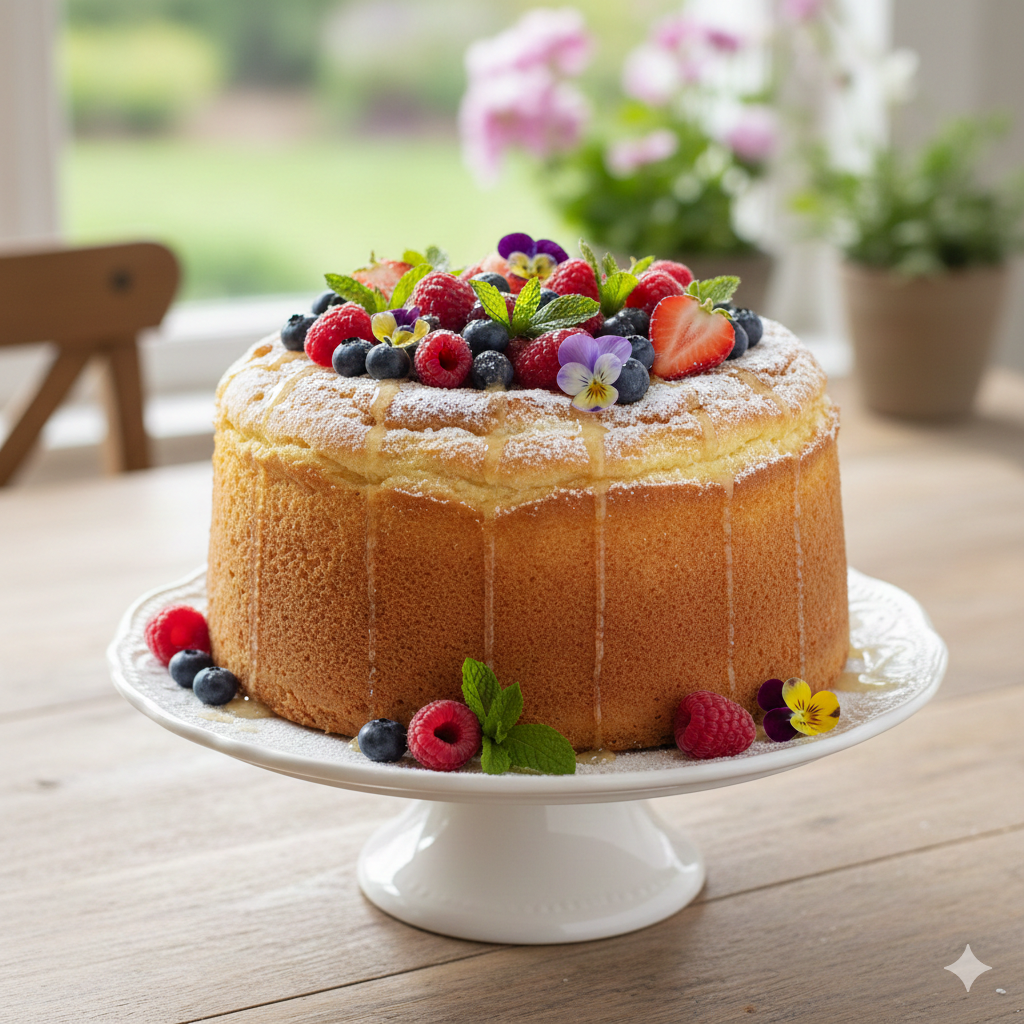
As the last traces of winter frost dissolve into the soil, the kitchen undergoes a fundamental shift. We move away from the heavy, spice-laden denseness of winter gingerbread and fruitcakes, turning instead toward the ethereal. Spring baking is defined by lightness—both in texture and in spirit. It is the season of the “whisk” rather than the “heavy spoon.”
Culturally, spring has always represented renewal. In many European traditions, this is the time for “Lighter-than-Air” sponges and citrus-infused pastries that mirror the brightening skies. This guide focuses on a signature Spring Lemon & Early Berry Cloud Cake, a recipe that embodies the transition from the zesty citrus of late winter to the first blushing berries of the new season.
The beauty of this dish lies in its simplicity. It relies on the physics of aeration rather than heavy fats, making it the perfect centerpiece for a garden party or a quiet Sunday afternoon tea.
2. Recipe Overview
- Cuisine Type: Modern European / American Fusion
- Difficulty Level: Intermediate (requires careful folding)
- Total Time: 1 hour 15 minutes (Prep: 25 mins | Bake: 30 mins | Cool/Decorate: 20 mins)
- Dietary Classifications: Vegetarian, Nut-Free (Can be made Gluten-Free with a 1:1 flour substitute)
3. Equipment and Tools
To achieve the characteristic “loft” of spring bakes, specific tools are essential:
- Mixing Bowls: One large glass bowl (for batter) and one stainless steel bowl (for egg whites).
- Springform Pan: 9-inch (23cm) diameter, at least 2.5 inches deep.
- Electric Hand Mixer or Stand Mixer: Essential for achieving stiff peaks.
- Silicone Spatula: For gentle folding to preserve air bubbles.
- Sifter/Fine-Mesh Strainer: For aerating the flour.
- Digital Scale: Recommended for precision measurements.
4. Serving Suggestions
- Plating: Serve on a white ceramic pedestal to highlight the cake’s height.
- Garnish: Dust lightly with powdered sugar and scatter fresh mint leaves and edible pansies.
- Sides: A dollop of unsweetened Greek yogurt or lightly whipped Chantilly cream.
- Pairing: Pairs beautifully with an Elderflower Spritz or a light Darjeeling tea. For wine lovers, a chilled Moscato d’Asti complements the citrus notes perfectly.
5. Nutritional Information (Per Serving)
- Calories: 210 kcal
- Carbohydrates: 28g
- Protein: 5g
- Fat: 9g (Saturated: 5g)
- Benefits: High in Vitamin C from fresh lemon juice; lower in sugar than traditional buttercream cakes.
6. Storage and Reheating
- Storage: Keep in an airtight container at room temperature for up to 2 days.
- Refrigeration: If using fresh cream topping, store in the fridge for up to 4 days.
- Freezing: The sponge (unfrosted) freezes well for 1 month. Wrap tightly in plastic wrap and foil.
- Reheating: Not recommended; this cake is best served at room temperature to maintain its delicate crumb.
7. Expert Tips and Variations
- The “Clean Bowl” Rule: When whipping egg whites, ensure your bowl is completely grease-free. A drop of yolk or oil will prevent the whites from peaking.
- Variation – Lavender Honey: Swap the lemon zest for 1 tsp of culinary lavender and drizzle with honey.
- Common Mistake: Slamming the oven door. This can cause the delicate structure to collapse before it sets.
8. Ingredients Section
| Ingredient | Metric | Imperial | Substitution |
| Cake Flour | 200g | 1.5 Cups | All-purpose + 2 tbsp Cornstarch |
| Granulated Sugar | 150g | 3/4 Cup | Snatched/Stevia Blend (check ratio) |
| Large Eggs (Separated) | 4 pcs | 4 pcs | – |
| Fresh Lemon Juice | 45ml | 3 tbsp | Lime juice |
| Lemon Zest | 10g | 2 tsp | Orange zest |
| Baking Powder | 5g | 1 tsp | – |
| Sea Salt | 2g | 1/2 tsp | – |
| Whole Milk | 60ml | 1/4 Cup | Oat milk (Unsweetened) |
9. Step-by-Step Instructions
- Prep the Oven: Preheat to 175°C (350°F). Grease the bottom of your pan but leave the sides ungreased to allow the cake to “climb.”
- Sift Dry Ingredients: Sift flour, baking powder, and salt three times to maximize aeration.
- Cream the Yolks: Beat egg yolks with 100g of sugar until pale and ribbons form. Stir in milk, lemon juice, and zest.
- Whip the Whites: In a separate bowl, beat egg whites until foamy. Gradually add the remaining 50g of sugar, beating until stiff, glossy peaks form.
- The Fold: Gently fold the dry ingredients into the yolk mixture. Then, take 1/3 of the egg whites and stir in to lighten the batter. Carefully fold the remaining whites in using a figure-eight motion.
- Bake: Pour into the pan and bake for 30–35 minutes. Test with a skewer; it should come out clean.
- Cooling: Invert the pan on a wire rack immediately. This prevents the cake from shrinking back into itself.
10. Frequently Asked Questions (FAQ)
- Can I use bottled lemon juice? Fresh is highly recommended for the essential oils in the zest and the bright acidity.
- Why did my cake sink? Usually due to underbaking or opening the oven door too early.
- Can I make this dairy-free? Yes, substitute milk with a neutral oil or almond milk.
- What if I don’t have cake flour? Use the substitution listed in the ingredients table to achieve that “soft” crumb.
- How do I zest a lemon properly? Only take the yellow skin; the white pith underneath is bitter.