1. Introduction
There is a specific kind of joy found in the creamy, salty, and slightly sweet profile of a California roll. Born in the 1960s or 70s—depending on which culinary historian you ask—the California roll was a revolutionary bridge between traditional Japanese sushi and the Western palate. By tucking the seaweed (nori) inside and highlighting the buttery texture of avocado and the mild sweetness of surimi (imitation crab), it became a global sensation.
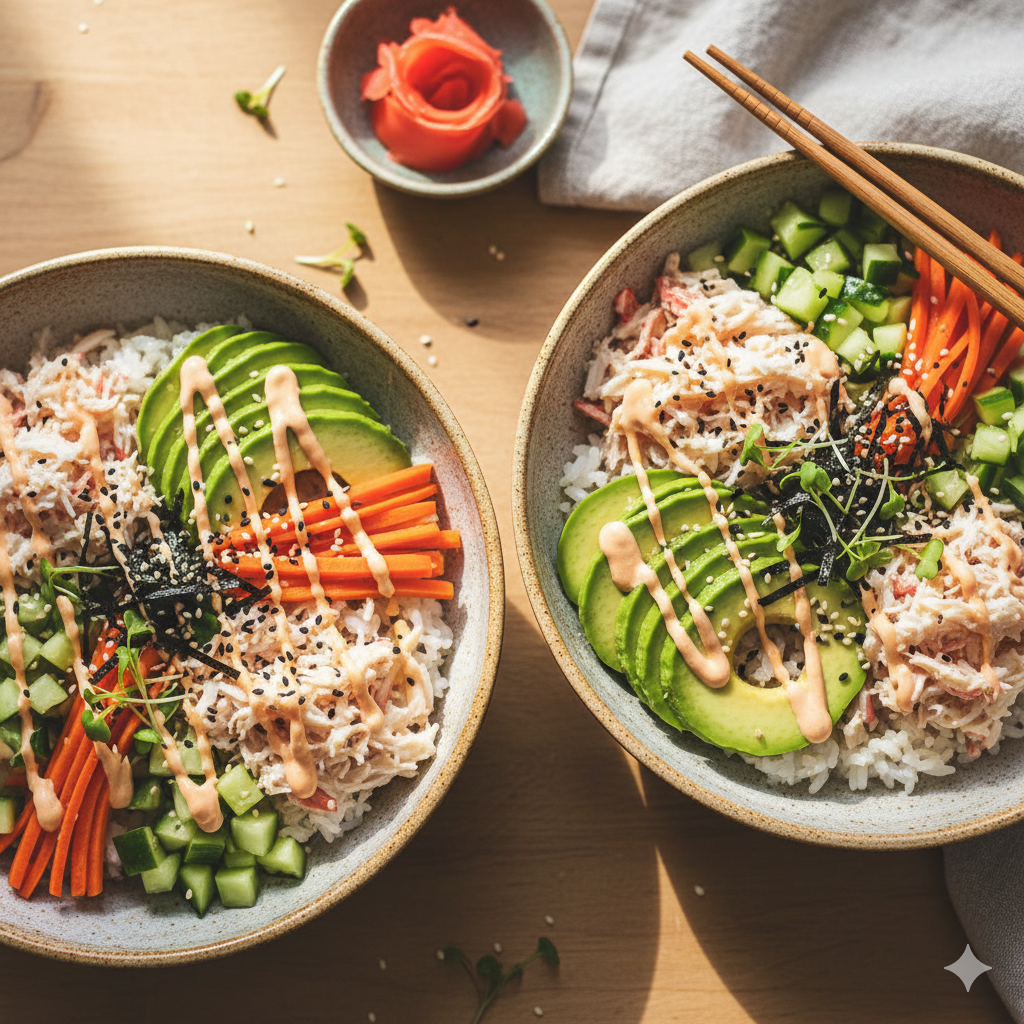
However, as much as we love the taste, the art of rolling sushi can be a daunting, messy endeavor for the home cook. Enter the Deconstructed California Roll Sushi Bowl. This dish takes everything we love about the iconic roll—the vinegared rice, the crisp cucumber, the rich avocado, and the savory crab—and presents it in a vibrant, customizable bowl. It is the ultimate “lazy” gourmet meal, perfect for those who crave the elegance of sushi but lack the bamboo mat skills.
Beyond convenience, the “sushi bowl” (or chirashizushi style) allows for a more generous ratio of toppings to rice. It’s a celebration of textures: the crunch of toasted sesame seeds, the velvetiness of ripe avocado, and the snap of fresh cucumber, all drizzled with a spicy mayo that ties the room together.
2. Recipe Overview
- Cuisine Type: Japanese-American Fusion
- Difficulty Level: Easy
- Total Time: 40 minutes (includes rice soaking and cooling)
- Prep Time: 20 minutes
- Cook Time: 20 minutes
- Dietary Classifications: Can be made Gluten-Free (use Tamari), Dairy-Free, and Pescatarian.
3. Equipment and Tools
To achieve restaurant-quality results at home, having the right tools for rice preparation is essential.
- Rice Cooker or Heavy-Bottomed Pot: A 2-quart pot with a tight-fitting lid is ideal for 2 cups of dry rice.
- Fine-Mesh Strainer: Essential for rinsing the starch off the sushi rice.
- Hangiri or Large Glass Bowl: Traditionally, a wooden hangiri is used to cool rice, but any wide glass or ceramic bowl works. Avoid metal, as it can react with the vinegar.
- Rice Paddle (Shamoji): Or a flat silicone spatula for folding vinegar into the rice without mashing the grains.
- Chef’s Knife: A sharp blade is required for clean cuts of avocado and cucumber.
- Measuring Tools: Standard Imperial/Metric cups and spoons.
- Small Mixing Bowls: For whisking the spicy mayo and the rice vinegar seasoning.
4. Serving Suggestions
Plating Recommendations:
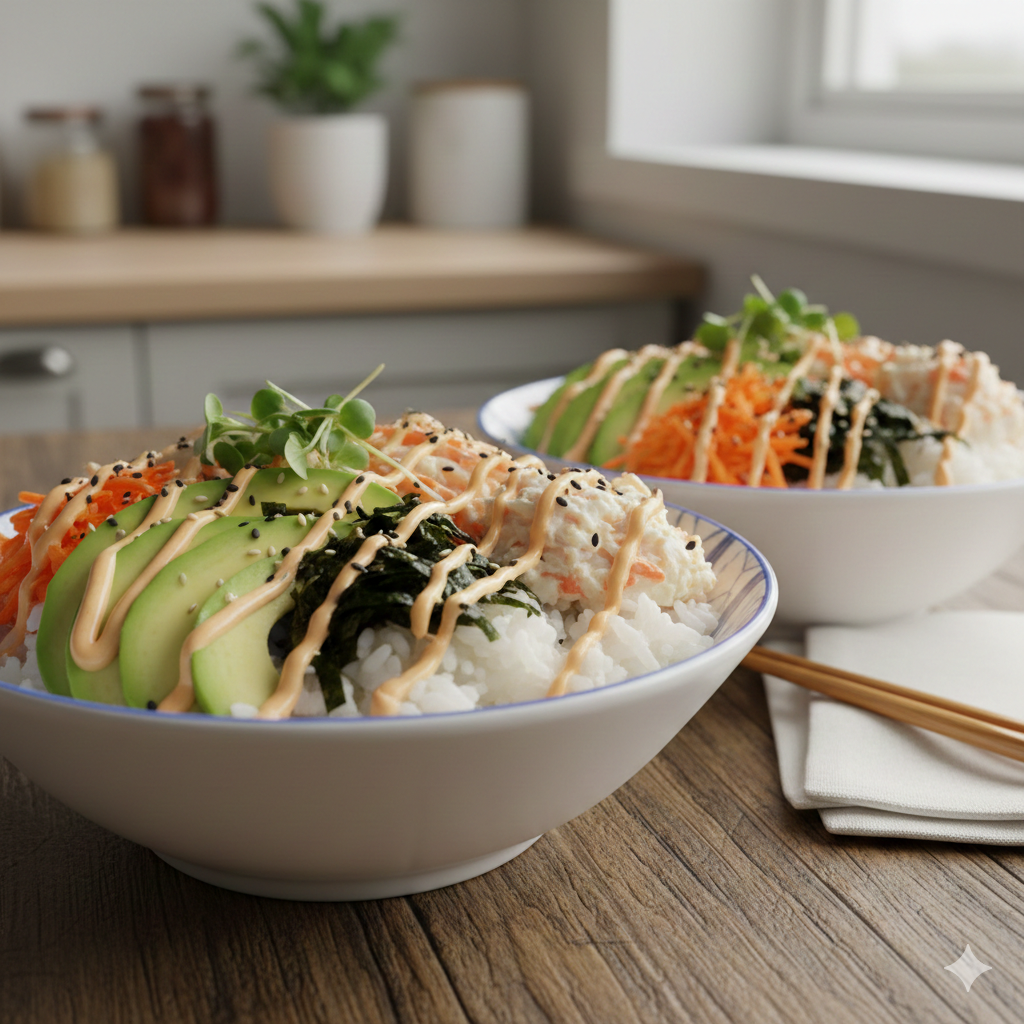
Start with a base of seasoned rice, slightly flattened. Arrange the toppings in distinct sections or “piles” around the bowl to create a rainbow effect. Place the crab salad in the center.
Garnish Ideas:
- Toasted Nori Strips: Use kitchen shears to snip nori sheets into thin ribbons.
- Furikake: A Japanese seasoning blend of seaweed, sesame, and dried fish.
- Pickled Ginger (Gari): To cleanse the palate between bites.
- Microgreens: Radish sprouts or micro-cilantro for a modern touch.
Beverage Pairings:
- Green Tea: A hot Sencha or cold-brewed Matcha.
- Sake: A chilled Junmai Ginjo with fruity notes.
- Beer: A crisp Japanese lager like Sapporo or Asahi.
5. Nutritional Information
Per Serving (approx. 1 bowl):
| Nutrient | Amount |
| Calories | 480 kcal |
| Total Fat | 18g |
| Saturated Fat | 3g |
| Protein | 12g |
| Total Carbohydrates | 65g |
| Dietary Fiber | 6g |
| Sugars | 8g |
Health Benefits:
The avocado provides heart-healthy monounsaturated fats, while the cucumber offers hydration and Vitamin K. Using brown sushi rice can increase fiber content significantly.
6. Storage and Reheating
Refrigeration: Sushi rice is best enjoyed the day it is made. If you have leftovers, store the components separately. The rice will harden in the fridge; to soften it, sprinkle with a teaspoon of water and microwave for 30 seconds under a damp paper towel.
Freezing: It is not recommended to freeze the assembled bowl or the imitation crab. However, plain cooked sushi rice can be frozen in airtight portions for up to a month.
7. Expert Tips and Variations
- The Rice Secret: Always rinse your rice until the water runs clear. This removes excess starch and prevents the rice from becoming a gummy “glue.”
- The “Fan” Method: While folding the vinegar into the rice, have someone fan the rice (or use a handheld fan). This cools it quickly and gives the grains a beautiful, glossy sheen.
- Variation – The Spicy Tuna Twist: Swap the imitation crab for sushi-grade tuna cubes tossed in sriracha and sesame oil.
- Variation – Low Carb: Replace the sushi rice with cauliflower rice seasoned with a splash of rice vinegar and a pinch of monk fruit sweetener.
8. Ingredients Section
For the Sushi Rice
- 2 cups (400g) Short-grain Japanese sushi rice
- 2 ¼ cups (540ml) Water
- ¼ cup (60ml) Rice vinegar
- 1 tbsp (15g) Granulated sugar
- 1 tsp (5g) Sea salt
For the Toppings
- 8 oz (225g) Imitation crab meat (surimi), shredded or chopped
- 1 large English cucumber, diced or julienned
- 1 large Ripe avocado, sliced
- 2 tbsp Shredded carrots
- 1 sheet Nori (dried seaweed), crumbled or shredded
For the Spicy Mayo Sauce
- ¼ cup (60ml) Japanese Mayo (Kewpie brand recommended)
- 1 tbsp Sriracha (adjust for heat)
- 1 tsp Fresh lime juice
9. Step-by-Step Instructions
Step 1: Prepare the Sushi Rice
Rinse the rice in a fine-mesh strainer under cold water for 2–3 minutes until the water is no longer cloudy. Combine rice and water in your pot. Bring to a boil, then reduce to the lowest heat, cover tightly, and simmer for 15 minutes. Remove from heat and let sit, covered, for 10 minutes.
Step 2: Season the Rice
In a small bowl, whisk the rice vinegar, sugar, and salt until dissolved. Transfer the warm rice to a large glass bowl. While using a slicing motion with your rice paddle, drizzle the vinegar mixture over the rice. Fan the rice for 2 minutes while folding gently. Cover with a damp cloth and let reach room temperature.
Step 3: Prepare the Crab Salad
In a medium bowl, flake the imitation crab meat. If you prefer a creamier texture, mix the crab with 1 tablespoon of mayo and a dash of lemon juice.
Step 4: Whisk the Spicy Mayo
In a small ramekin, combine the Kewpie mayo and sriracha. Whisk until smooth. Transfer to a squeeze bottle for a professional-looking drizzle.
Step 5: Assemble the Bowls
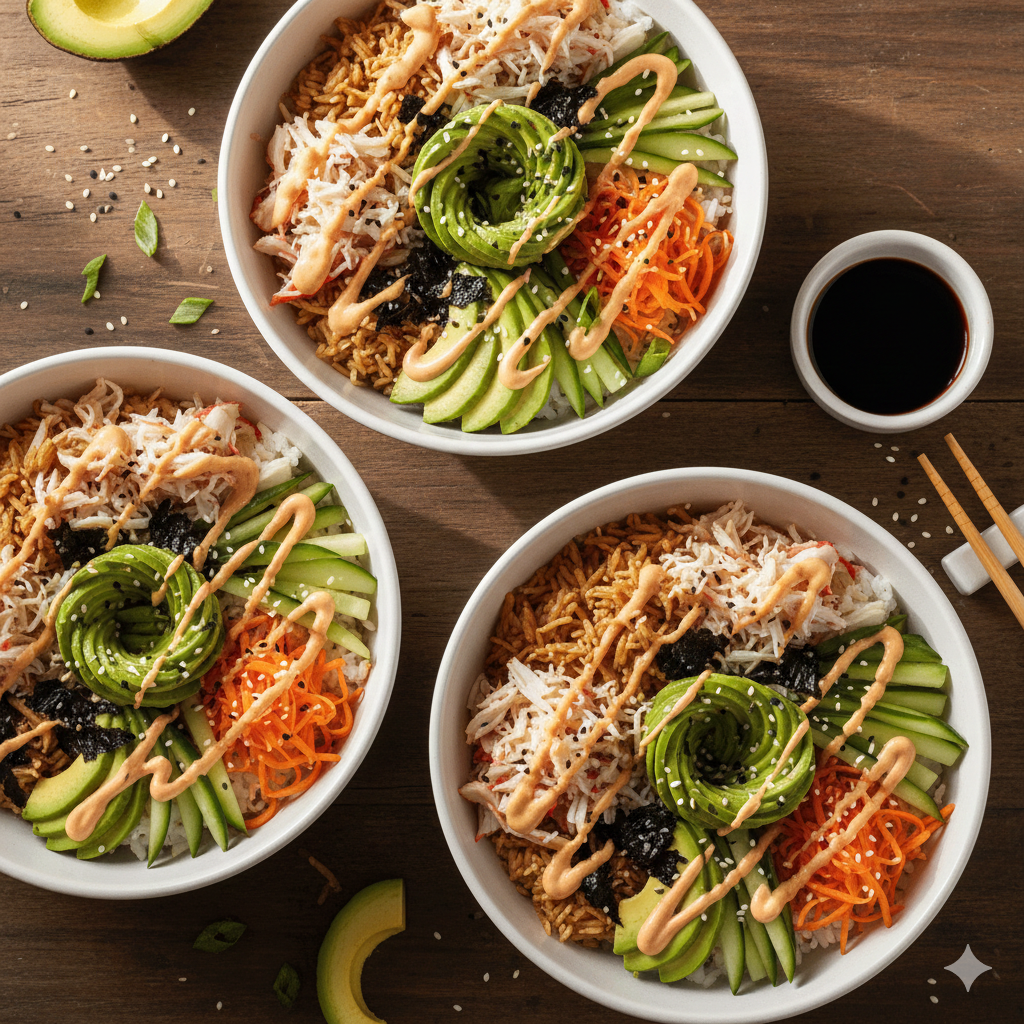
Divide the seasoned rice into four bowls. Top each bowl with a portion of the crab, diced cucumber, shredded carrots, and avocado slices.
Step 6: Final Touches
Garnish with nori strips, sesame seeds, and a generous drizzle of spicy mayo. Serve immediately.
10. Frequently Asked Questions (FAQ)
Q: Can I use regular long-grain rice?
A: It is not recommended. Sushi rice (short-grain) has a specific starch content that makes it sticky. Long-grain rice will be too dry and won’t hold the flavors the same way.
Q: Is imitation crab gluten-free?
A: Often, no. Most imitation crab contains wheat starch as a binder. If you are gluten-sensitive, look for specifically labeled GF surimi or use real lump crab meat or cooked shrimp.
Q: Why is my rice mushy?
A: This usually happens if too much water was used or if the rice wasn’t drained properly after rinsing. Ensure a 1:1.1 rice-to-water ratio.
Q: Can I make this ahead of time for meal prep?
A: Yes! Keep the avocado and sauce separate until serving. Store the rice at room temperature for a few hours or in the fridge (noting it will firm up).
Q: What is Kewpie mayo, and do I need it?
A: Kewpie is a Japanese mayo made with only egg yolks and MSG, giving it a richer, more savory flavor than Western mayo. You can substitute regular mayo with a pinch of sugar and a drop of rice vinegar.