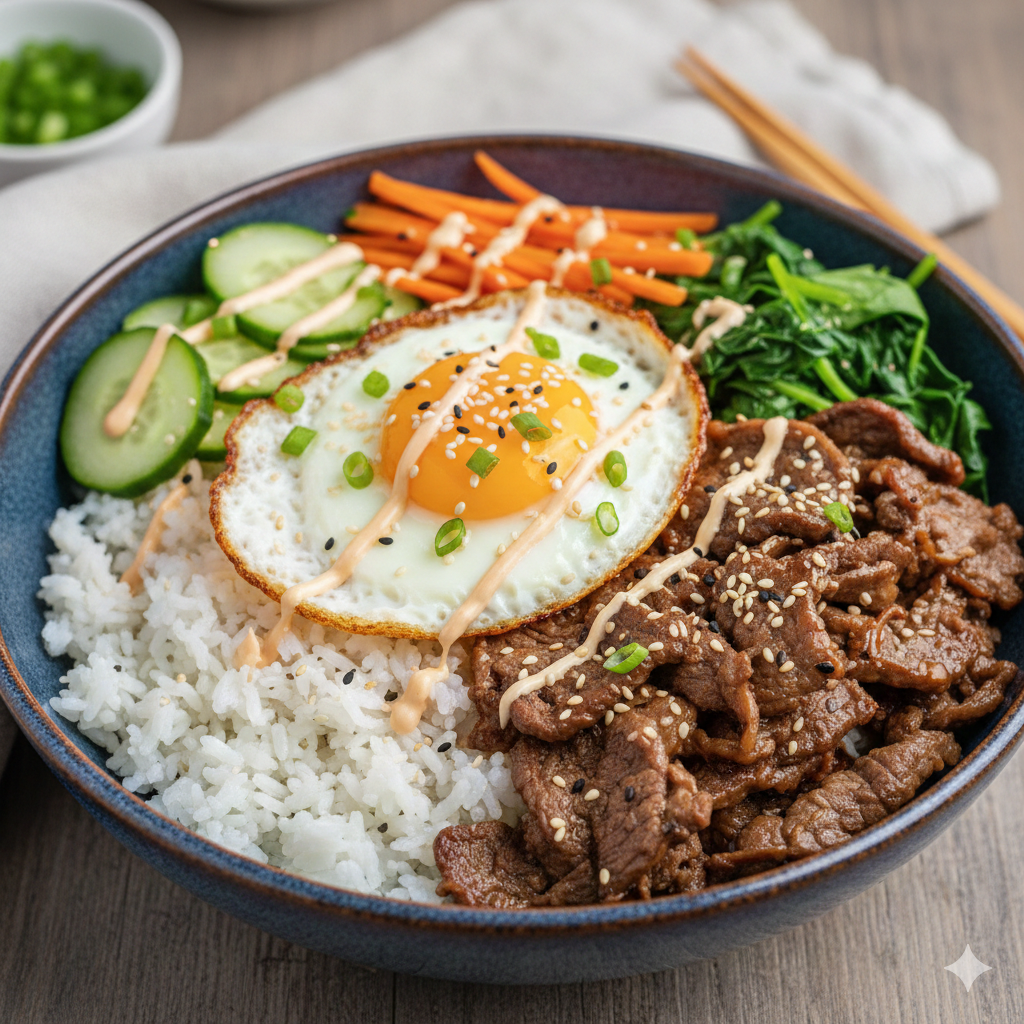
1. Introduction: A Journey to the Heart of Seoul
There is a specific, intoxicating aroma that wafts through the night markets of Seoul—a heady mix of caramelized sugar, toasted sesame, and searing protein. This is the essence of Bulgogi (literally “fire meat”). Traditionally, Bulgogi refers to thin slices of beef marinated and grilled over an open flame, a practice dating back to the Goguryeo era (37 BCE–668 CE), where it was known as maekjeok.
Over centuries, this royal court delicacy evolved into the beloved staple we know today. While the classic preparation involves a charcoal grill, the modern Bulgogi Bowl has revolutionized the dish for the contemporary kitchen. It transforms the communal BBQ experience into a balanced, vibrant, and convenient “power bowl.”
What makes this recipe special isn’t just the tender beef; it’s the harmony of Umami. By using Asian pear to tenderize the fibers and a balance of soy and ginger, we create a dish that feels sophisticated yet remains incredibly approachable for a Tuesday night dinner.
2. Recipe Overview
- Cuisine Type: Korean / Fusion
- Difficulty Level: Intermediate (requires precise slicing)
- Prep Time: 20 minutes (+ 30 minutes marinating)
- Cook Time: 10 minutes
- Total Time: 60 minutes
- Dietary Classifications: Dairy-Free, Nut-Free (can be made Gluten-Free with Tamari)
3. Equipment and Tools
To achieve the perfect sear without boiling the meat in its own juices, the right gear is essential:
- 12-inch Cast Iron Skillet or Carbon Steel Wok: High heat retention is vital for that “fire meat” char.
- Chef’s Knife: Must be exceptionally sharp for paper-thin beef slices.
- Mixing Bowls: One large glass bowl for marinating (avoid reactive metal).
- Box Grater or Microplane: For the ginger, garlic, and pear.
- Rice Cooker: For consistent, fluffy short-grain rice.
- Fine-Mesh Strainer: To rinse the rice and remove excess starch.
4. Serving Suggestions
Presentation is key to the “bowl” experience. Aim for a contrast of colors and textures.
- Plating: Start with a base of steamed rice, place the beef in one quadrant, and surround it with vibrant toppings.
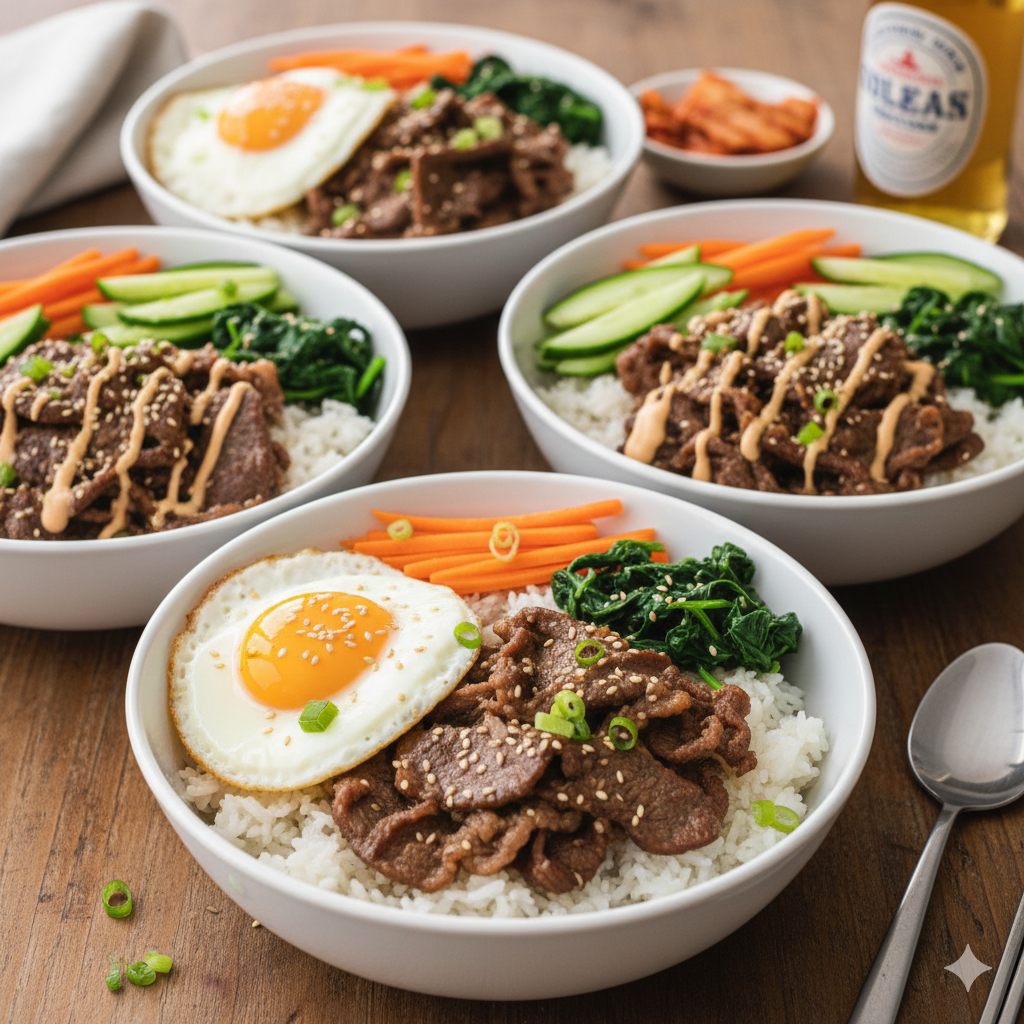
- Garnish: Toasted white sesame seeds, thinly sliced scallions (cut on a bias), and a drizzle of spicy Sriracha mayo.
- Side Dishes (Banchan): Serve with Kimchi, pickled radishes (danmuji), or a light cucumber salad (oi muchim).
- Pairings: A crisp, cold Lager or a dry Riesling cuts through the richness of the beef perfectly. For a non-alcoholic option, try iced barley tea (boricha).
5. Nutritional Information (Per Serving)
| Nutrient | Amount |
| Calories | 540 kcal |
| Protein | 32g |
| Total Fat | 18g |
| Carbohydrates | 62g |
| Fiber | 3g |
| Sodium | 980mg |
Health Benefits: This dish is a powerhouse of iron and B12 from the lean beef, while ginger and garlic provide anti-inflammatory properties and digestive support.
6. Storage and Reheating
- Refrigeration: Store beef and rice in separate airtight containers for up to 3 days.
- Freezing: The marinated (uncooked) beef freezes beautifully for up to 3 months. Thaw in the fridge overnight before searing.
- Reheating: For the best texture, reheat the beef in a pan over medium-high heat with a splash of water to loosen the sauce. Microwave use is acceptable but may toughen the meat.
7. Expert Tips and Variations
Professional Chef Tips
- The Freeze Trick: To get those signature paper-thin slices, place your steak in the freezer for 45–60 minutes until firm but not frozen solid. This makes slicing infinitely easier.
- Don’t Overcrowd: Cook the beef in batches. If the pan is too full, the temperature drops, and the beef will steam instead of caramelizing.
Creative Variations
- The Low-Carb Swap: Replace rice with cauliflower rice or serve the beef in large butter lettuce cups (Ssam style).
- Vegetarian Version: Use sliced King Oyster mushrooms or extra-firm pressed tofu.
- Spicy Kick: Add 1 tablespoon of Gochujang (Korean chili paste) to the marinade.
8. Ingredients Section
The Beef & Marinade
- 1.5 lbs (680g) Ribeye or Flank Steak (well-marbled)
- 1/2 cup (120ml) Soy Sauce (low sodium recommended)
- 3 tbsp (45g) Brown Sugar (or honey)
- 1/2 Asian Pear, grated (substitute with Fuji apple or Bosc pear)
- 2 tbsp (30ml) Toasted Sesame Oil
- 3 cloves Garlic, minced
- 1 tsp Fresh Ginger, grated
- 1/4 tsp Black Pepper
The Bowl Base & Toppings
- 2 cups Prepared Short-Grain White Rice
- 1 large Carrot, julienned
- 1 small Cucumber, thinly sliced
- 2 cups Baby Spinach, lightly sautéed
- Optional: Fried egg (sunny side up)
9. Step-by-Step Instructions
- Prepare the Beef: Thinly slice the partially frozen beef against the grain into 1/8-inch thick pieces. This ensures maximum tenderness.
- Marinate: In a large bowl, whisk together soy sauce, sugar, grated pear, sesame oil, garlic, ginger, and pepper. Add the beef, ensuring every slice is coated. Cover and refrigerate for at least 30 minutes (up to 4 hours).
- Prep the Veggies: While the meat marinates, steam your rice and prepare your vegetable garnishes. Sauté the carrots and spinach separately with a pinch of salt.
- The Sear: Heat your skillet over high heat until it just begins to smoke. Add a tablespoon of neutral oil (like grapeseed).
- Cook in Batches: Spread a single layer of beef in the pan. Let it sear undisturbed for 1–2 minutes to get a dark crust, then flip and cook for another 30 seconds.
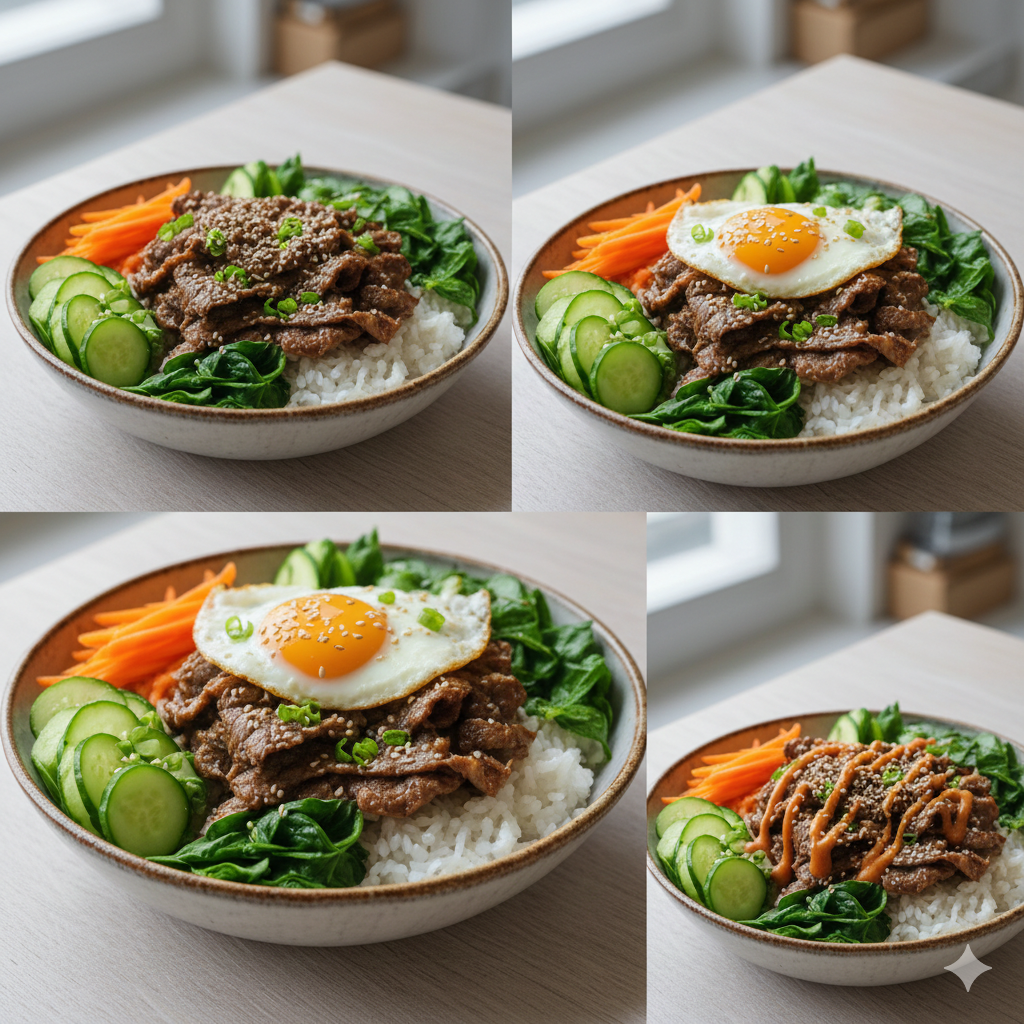
- Assemble: Scoop rice into bowls. Top with a generous portion of Bulgogi, then arrange your vegetables in sections around the meat.
- Final Flourish: Top with a fried egg if desired, sprinkle with sesame seeds, and serve immediately.
10. Frequently Asked Questions (FAQ)
Q: Can I use ground beef instead of steak?
A: Yes! While not traditional “Bulgogi,” ground beef works excellently for a budget-friendly weeknight version. Just brown the meat and stir in the marinade at the end.
Q: What if I can’t find an Asian Pear?
A: Asian pears contain an enzyme (calpain) that tenderizes meat. A grated Fuji apple or even a tablespoon of kiwi puree works as a great substitute.
Q: Is this dish very spicy?
A: Standard Bulgogi is savory and sweet. It only becomes spicy if you add Gochujang or red chili flakes to the marinade.
Q: Why is my beef tough?
A: This usually happens if you slice with the grain rather than against it, or if you use a very lean cut like eye of round without marinating long enough.
Q: Can I make this gluten-free?
A: Absolutely. Simply swap the soy sauce for Tamari or Coconut Aminos.