1. Introduction
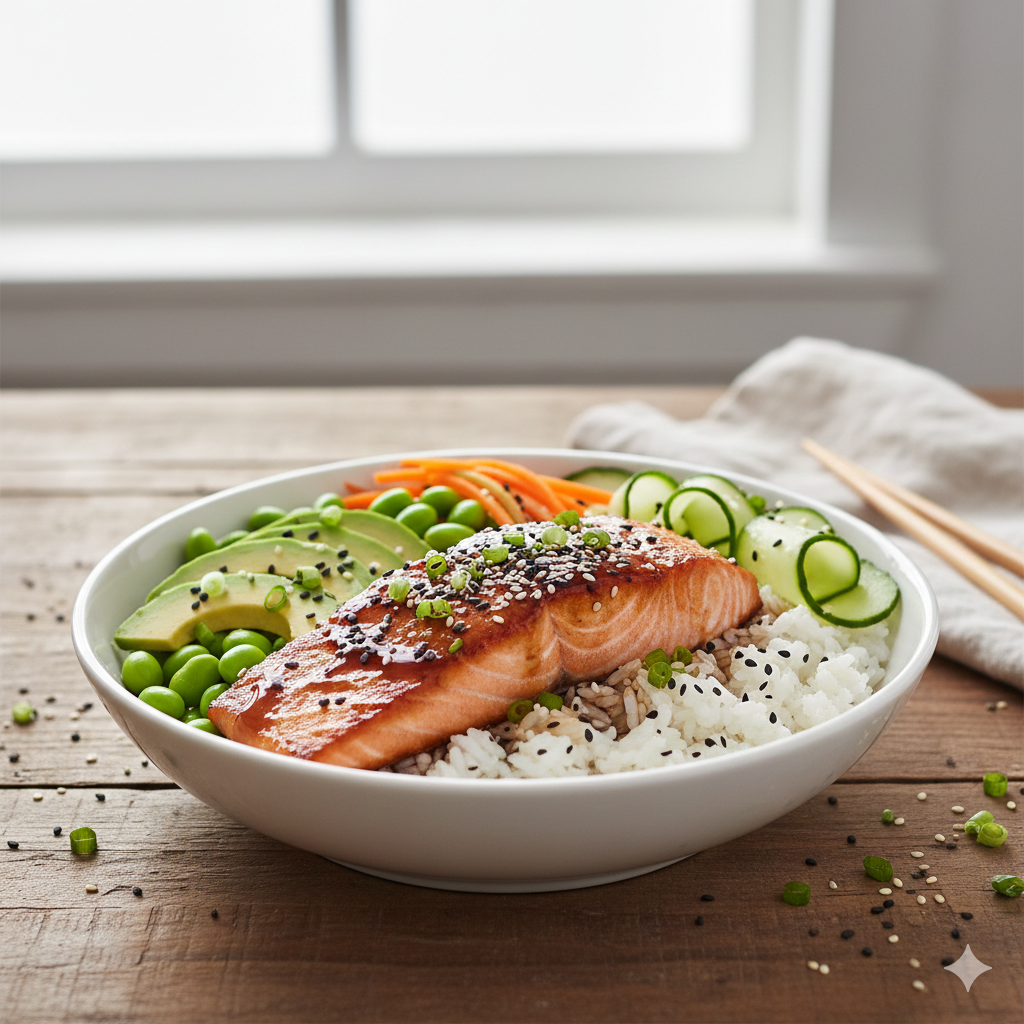
There is a specific kind of magic that happens when high-quality seafood meets the ancestral art of Japanese glazing. The Teriyaki Salmon & Edamame Rice Bowl is more than just a “health bowl”—it is a masterclass in balance. It marries the rich, buttery texture of Atlantic salmon with the bright, snappy crunch of steamed edamame, all anchored by a bed of fluffy grain.
Historically, Teriyaki—derived from the Japanese words teri (luster) and yaki (grill/broil)—was a technique used to give fish a signature shine and deep umami flavor. In this modern adaptation, we’ve elevated the classic profile to suit the fast-paced lifestyle of the contemporary home cook. Whether you are looking for a post-workout recovery meal or a sophisticated weeknight dinner that looks like it came from a high-end bistro, this recipe delivers.
The beauty of this dish lies in its versatility. It’s a “living recipe” that adapts to what you have in your pantry while maintaining its core identity: a nutritious, vibrant, and deeply satisfying bowl of comfort.
2. Recipe Overview
- Cuisine Type: Japanese-inspired Fusion
- Difficulty Level: Easy to Intermediate
- Prep Time: 15 minutes
- Cook Time: 15 minutes
- Total Time: 30 minutes
- Dietary Classifications: Dairy-Free, Pescatarian (Can be made Gluten-Free with Tamari)
3. Equipment and Tools
To achieve the perfect sear on the salmon and the ideal fluff in your rice, you’ll need the following:
- Rice Cooker or Heavy-Bottomed Saucepan: A 2-quart pot with a tight-fitting lid is essential for stovetop rice.
- Non-Stick or Cast Iron Skillet: 12-inch diameter to allow the salmon fillets enough space to sear without crowding.
- Small Saucepan: For reducing the homemade teriyaki glaze.
- Chef’s Knife: A sharp 8-inch blade for precise vegetable prep.
- Measuring Tools: Full set of dry and liquid measuring cups.
- Instant-Read Meat Thermometer: To ensure the salmon reaches a perfect 145°F (63°C).
- Silicone Spatula: For flipping the fish gently without breaking the flakes.
4. Serving Suggestions
Plating Recommendations:
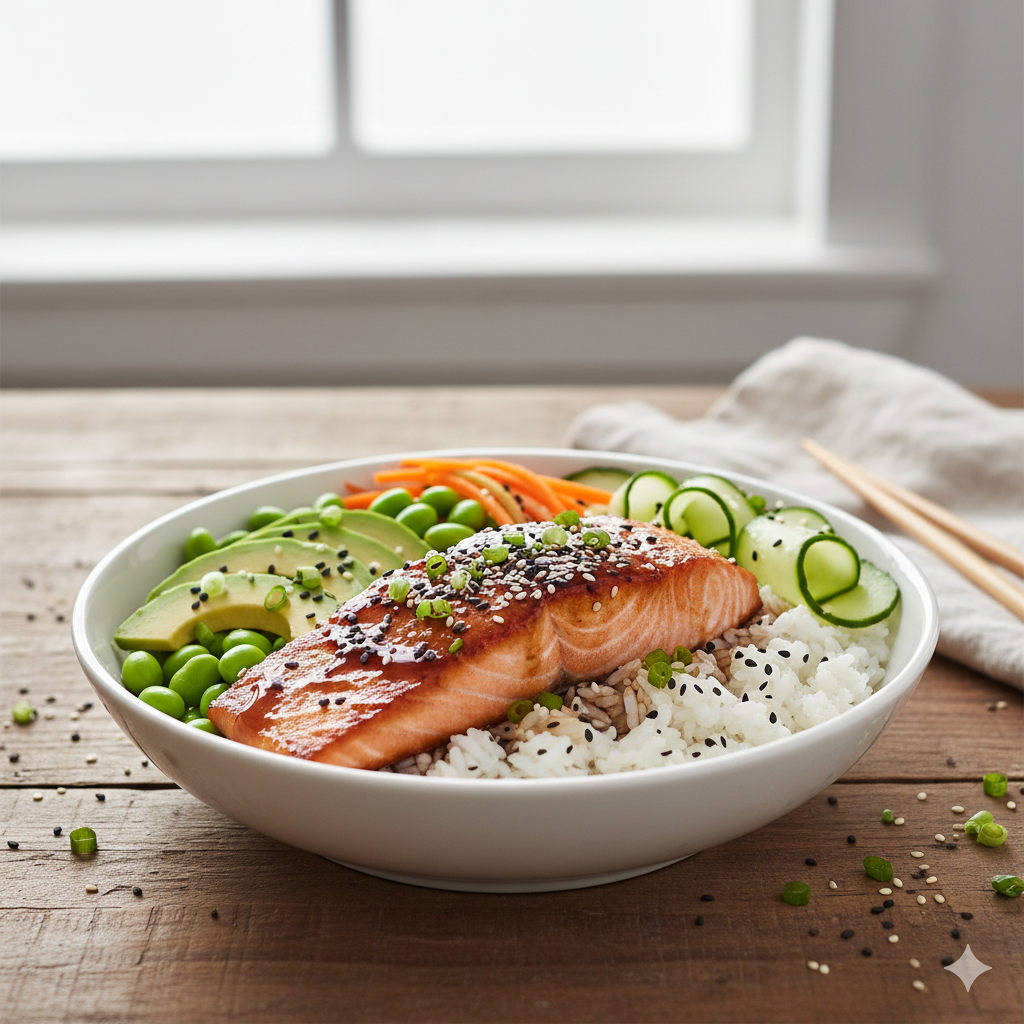
Start with a wide, shallow bowl. Place a generous mound of rice in the center, slightly off-set. Lean the salmon fillet against the rice and arrange the edamame, shredded carrots, and cucumber in distinct “sections” around the bowl to create a visual rainbow.
Garnish Ideas:
- Toasted white and black sesame seeds.
- Thinly sliced scallions (cut on a sharp bias).
- A drizzle of spicy Japanese mayo or sriracha.
- Microgreens or radish sprouts for a peppery bite.
Beverage Pairings:
- Tea: Hot Genmaicha (brown rice green tea).
- Wine: A crisp, dry Riesling or a chilled Rosé.
- Beer: A light Japanese lager like Sapporo or Asahi.
5. Nutritional Information
(Per Serving – based on 4 servings)
| Nutrient | Amount |
| Calories | 580 kcal |
| Protein | 38g |
| Total Fat | 18g |
| Carbohydrates | 65g |
| Fiber | 5g |
| Sugar | 12g |
Health Benefits: This bowl is an Omega-3 powerhouse, supporting heart health and cognitive function. The edamame provides a complete plant-based protein source and essential fiber for digestion.
6. Storage and Reheating
- Refrigeration: Store components separately if possible. In an airtight container, the salmon and rice will stay fresh for up to 3 days.
- Freezing: You can freeze the cooked rice and the raw marinated salmon separately. We do not recommend freezing the assembled bowl as the fresh vegetables will lose their texture.
- Reheating: To prevent the salmon from drying out, reheat it in the oven at 275°F (135°C) covered with foil for 10 minutes. Alternatively, microwave the rice with a damp paper towel over it to restore moisture.
7. Expert Tips and Variations
- The “Cold Start” Rice: Always rinse your rice until the water runs clear. This removes excess starch and prevents a gummy texture.
- The Salmon Sear: Pat the salmon completely dry with paper towels before seasoning. Moisture is the enemy of a crisp crust.
- Variation – Low Carb: Swap the white rice for cauliflower rice or a bed of massaged kale.
- Variation – Tropical: Add diced mango or pineapple for a sweet, acidic contrast to the salty teriyaki.
8. Ingredients Section
The Salmon & Marinade
- Salmon Fillets: 4 (6 oz) skin-on or skinless fillets (center-cut preferred).
- Soy Sauce: 1/2 cup (Use Tamari for gluten-free).
- Mirin: 1/4 cup.
- Honey or Brown Sugar: 3 tbsp.
- Fresh Ginger: 1 tbsp, grated.
- Garlic: 2 cloves, minced.
- Toasted Sesame Oil: 1 tsp.
The Bowl Base & Toppings
- Sushi Rice or Jasmine Rice: 1.5 cups dry (approx. 3 cups cooked).
- Shelled Edamame: 1.5 cups (steamed).
- Cucumber: 1 English cucumber, thinly sliced.
- Carrots: 1 cup, julienned or shredded.
- Avocado: 1 large, sliced.
9. Step-by-Step Instructions
- Prepare the Rice: Rinse the rice 3–4 times. Combine with 1.75 cups water in a pot. Bring to a boil, then reduce to a simmer, cover, and cook for 15 minutes. Let it sit, covered, for 5 minutes before fluffing.
- Whisk the Glaze: In a small bowl, whisk together the soy sauce, mirin, honey, ginger, garlic, and sesame oil.
- Marinate: Place salmon in a shallow dish. Pour half of the glaze over the fish and let sit for 10 minutes. Reserve the other half of the sauce.
- Sear the Salmon: Heat 1 tbsp oil in a skillet over medium-high heat. Place salmon in the pan (skin-side down if applicable). Cook for 4–5 minutes until the bottom is crispy.
- Flip and Glaze: Flip the fillets. Pour the reserved sauce into the pan. As the salmon finishes cooking (another 3–4 minutes), the sauce will bubble and thicken into a syrupy glaze. Spoon this over the fish repeatedly.
- Steam Edamame: While the fish rests, steam your edamame for 3 minutes until bright green and tender.
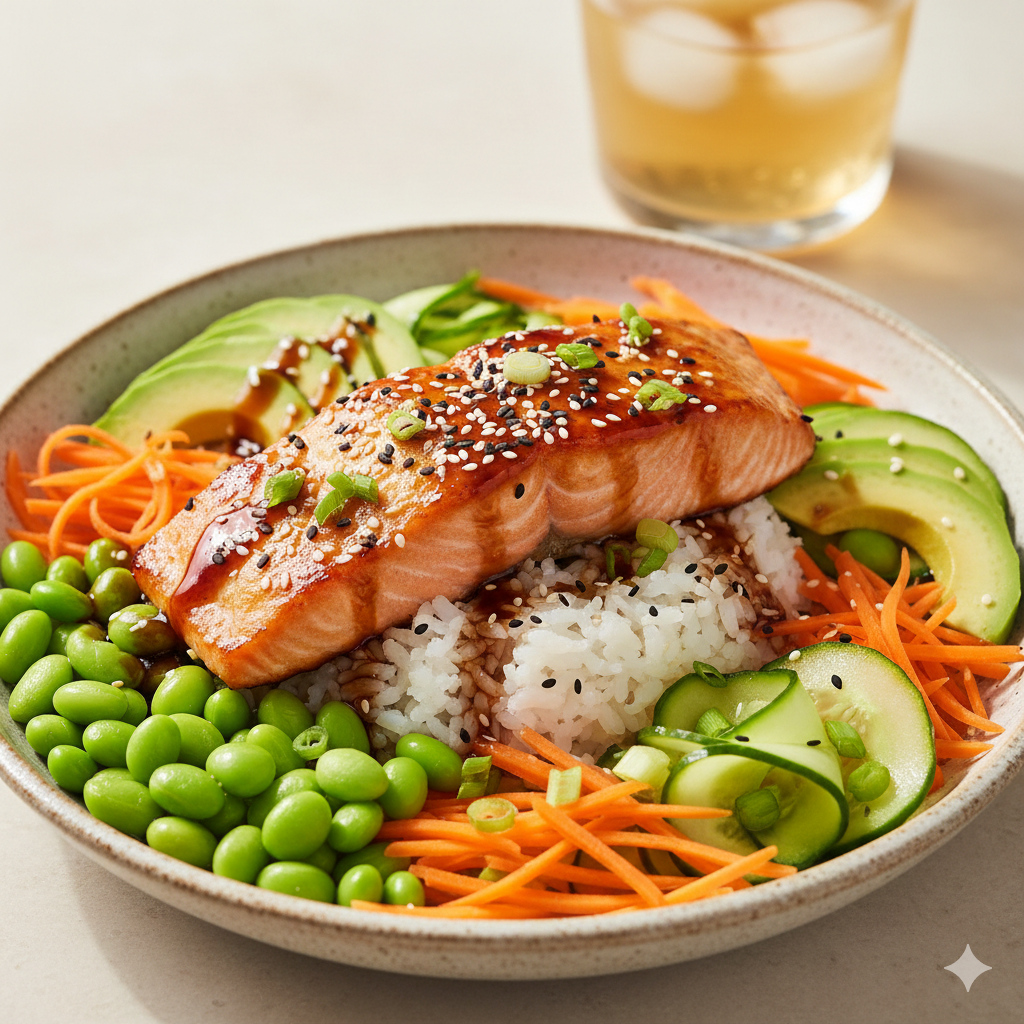
- Assemble: Divide rice into four bowls. Top with a salmon fillet, a scoop of edamame, cucumbers, carrots, and avocado.
- Final Touch: Drizzle any remaining thickened glaze from the pan over the entire bowl. Garnish and serve immediately.
10. Frequently Asked Questions (FAQ)
Q: Can I use frozen salmon?
A: Absolutely. Just ensure it is completely thawed and patted dry before you begin the marinating process to avoid a watery sauce.
Q: What is a good substitute for Mirin?
A: You can use dry sherry or sweet marsala wine. If you prefer a non-alcoholic substitute, use rice vinegar mixed with a pinch of extra sugar.
Q: How do I know when the salmon is done?
A: The fish should change from translucent to opaque pink. It should flake easily with a fork at the thickest part.
Q: Is this meal prep friendly?
A: Yes! It is one of the best meal prep dishes. Keep the sauce on the side if you plan to eat the vegetables cold while reheating the salmon and rice.
Q: My teriyaki sauce is too thin, how do I fix it?
A: Simmer it for a few extra minutes in the pan. If it’s still thin, whisk 1 tsp of cornstarch with 1 tsp of water and stir it into the boiling sauce.