1. Introduction
As the sun dips below the horizon and the Adhan echoes through the neighborhood, the air fills with a sense of gratitude and community. Ramadan is a month of reflection, but it is also a month of culinary heritage. After a day of fasting, the body craves more than just sustenance; it craves the comfort of tradition.
Dessert during Ramadan, particularly at Iftar, is more than a luxury—it’s a celebration. Across the Middle East, South Asia, and North Africa, sweets are designed to provide a quick energy boost while soothing the palate with floral notes like rosewater, cardamom, and orange blossom.
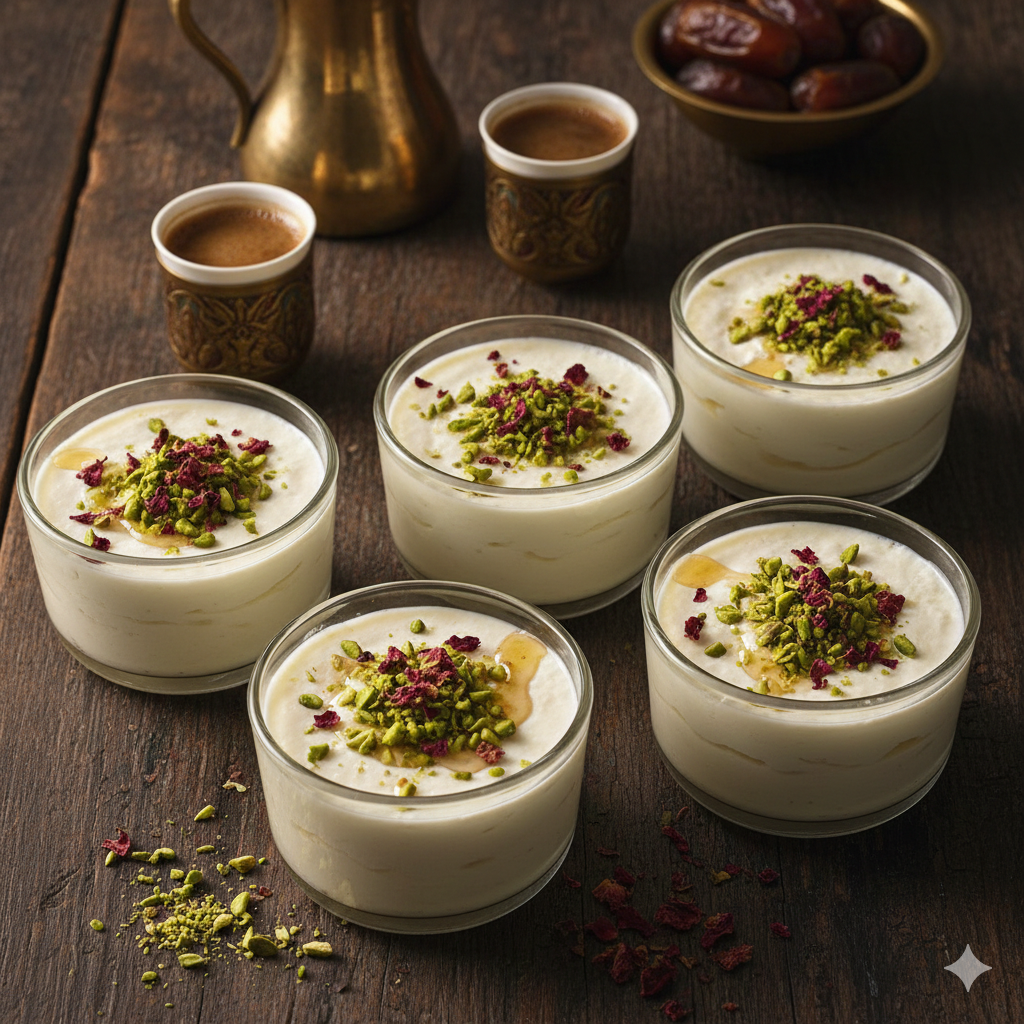
This recipe for Rose & Pistachio Muhallabia (a traditional Middle Eastern milk pudding) is the quintessential Ramadan dessert. Its origins date back to the Sassanid Empire, and it has remained a staple for centuries because of its simplicity and elegance. It requires no baking, minimal ingredients, and offers a cooling sensation that is incredibly refreshing after a long day of abstinence. Whether you are hosting a large family gathering or enjoying a quiet moment of reflection, this dessert embodies the spirit of the holy month: simple, pure, and deeply satisfying.
2. Recipe Overview
- Cuisine Type: Middle Eastern / Levantine
- Difficulty Level: Very Easy
- Total Time: 4.5 hours (15 mins cooking, 4 hours chilling)
- Dietary Classifications: Vegetarian, Gluten-Free, Egg-Free, Nut-Free (optional).
3. Equipment and Tools
- Heavy-Bottomed Saucepan: 2-quart capacity to prevent the milk from scorching.
- Whisk: Stainless steel balloon whisk for a lump-free consistency.
- Serving Bowls: 4 to 6 small glass ramekins or decorative bowls (approx. 150ml volume).
- Measuring Tools: Standard metric and imperial cups/spoons.
- Fine-Mesh Sieve: To ensure the cornstarch is perfectly incorporated.
4. Serving Suggestions
Plating Recommendations:
For an authentic feel, use clear glass bowls to showcase the stark, snowy white pudding against the vibrant green of the pistachios.
Garnish Ideas:
- Dried Rose Petals: Culinary grade for a pop of crimson.
- Crushed Pistachios: For a salty, nutty crunch.
- Honey Drizzle: A thin thread of wildflower honey just before serving.
Beverage Pairings:
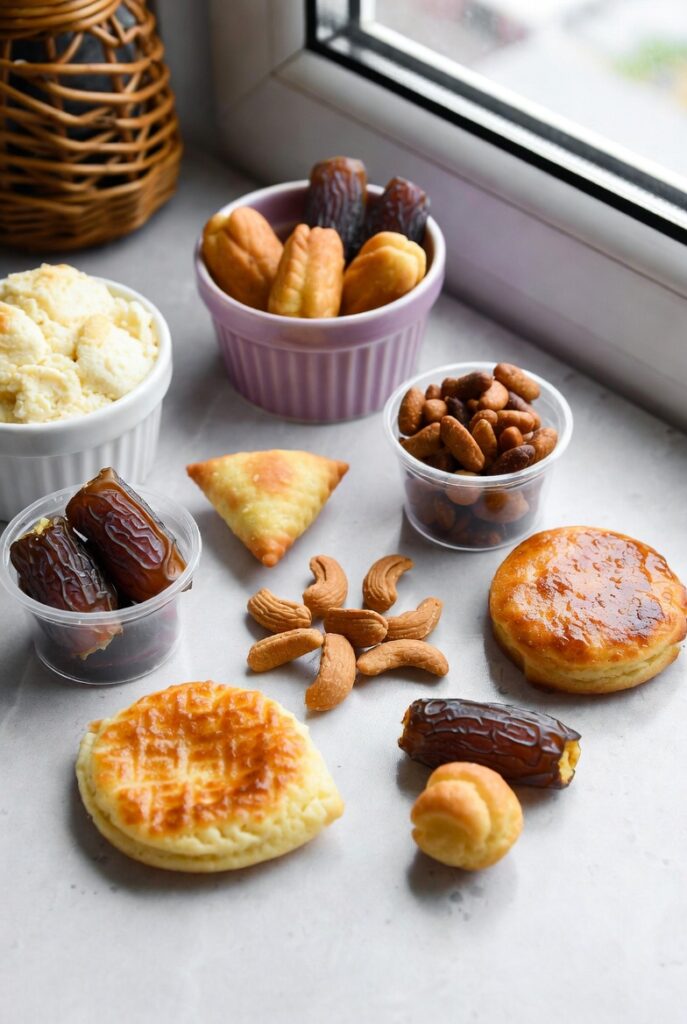
- Arabic Coffee (Gahwa): The bitterness of the cardamom-infused coffee perfectly balances the sweetness.
- Mint Tea: A warm, digestive-friendly option.
- Jallab: A refreshing fruit syrup drink made from carob, dates, and grape molasses.
5. Nutritional Information
Per serving (based on 6 servings):
| Nutrient | Amount |
| Calories | 195 kcal |
| Total Fat | 6g |
| Carbohydrates | 28g |
| Protein | 5g |
| Calcium | 15% DV |
Health Benefits: This pudding is rich in calcium and provides a gentle glucose boost to stabilize blood sugar levels post-fasting without the “sugar crash” associated with heavy pastries.
6. Storage and Reheating
- Refrigeration: Muhallabia must be kept refrigerated. Cover each bowl with plastic wrap to prevent a “skin” from forming. It stays fresh for up to 3 days.
- Freezing: Not recommended, as the cornstarch base will weep and become grainy upon thawing.
- Reheating: This dish is traditionally served cold. However, if you prefer it warm, you can gently reheat it in a saucepan with a splash of milk, though the texture may soften.
7. Expert Tips and Variations
- The “Cold Mix” Rule: Always dissolve your cornstarch in a small amount of cold milk before adding it to the hot pot. Adding dry starch to hot liquid creates permanent lumps.
- Quality Matters: Since there are so few ingredients, use whole milk (3.5% fat) for the creamiest mouthfeel.
- Variations:
- Chocolate Muhallabia: Whisk in 2 tablespoons of cocoa powder with the starch.
- Coconut Twist: Replace half the milk with full-fat coconut milk.
- Saffron Infusion: Soak a pinch of saffron threads in a tablespoon of warm milk and add it to the pudding for a golden hue.
8. Ingredients Section
- Whole Milk: 4 Cups (1 Liter).
- Sugar: 1/2 Cup (100g) – Adjust to preference.
- Cornstarch: 4 tbsp (35g).
- Rosewater or Orange Blossom Water: 1 tbsp (15ml).
- Pistachios: 1/4 Cup (30g) – Raw and unsalted, finely chopped.
- Ground Cardamom: 1/4 tsp (optional for depth).
9. Step-by-Step Instructions
- Starch Slurry: In a small bowl, take 1/2 cup of the cold milk and whisk it with the cornstarch until completely smooth. Set aside.
- Heat the Milk: Pour the remaining milk and the sugar into the saucepan. Heat over medium heat, stirring occasionally, until it begins to simmer (do not let it reach a rolling boil).
- Thicken: Lower the heat to medium-low. Slowly pour the starch slurry into the saucepan while whisking vigorously.
- The Simmer: Continue to cook and whisk for about 5-8 minutes. The mixture will begin to thicken into a custard-like consistency.
- Visual Cue: The pudding is ready when it coats the back of a spoon and you can draw a clear line through it with your finger.
- Flavoring: Remove from heat. Stir in the rosewater (adding it at the end preserves the delicate aroma).
- Set: Pour the mixture into your serving bowls. Let them cool at room temperature for 20 minutes.
- Chill: Place in the refrigerator for at least 4 hours to fully set.
- Garnish: Just before serving at Iftar, top with the chopped pistachios and rose petals.
10. Frequently Asked Questions (FAQ)
Q: Can I use a sugar substitute?
A: Yes, stevia or monk fruit sweeteners work well, but add them at the end of the cooking process to avoid any bitterness.
Q: Why is my pudding watery?
A: It likely wasn’t cooked long enough after the starch was added. The starch needs heat to “gel.”
Q: I don’t like rosewater. What else can I use?
A: Vanilla bean paste or a simple zest of orange provides a beautiful, non-floral alternative.
Q: Is this suitable for Sahur?
A: Absolutely! It’s a light, hydrating way to start the fast as well.
Q: Can I make this vegan?
A: Yes, almond milk or cashew milk are excellent substitutes, though the pudding will be slightly less creamy.