Simple Sweet Treats for Ramadan & Eid: Festive Delights Made Easy
1. Introduction
As the crescent moon signals the start of Ramadan, kitchens across the globe transform into hubs of spiritual and culinary preparation. The transition from the reflective days of fasting to the joyous celebration of Eid al-Fitr is marked by a shared language of sweetness. In many cultures, these treats are more than just food; they are “Barakah” (blessing) in edible form.
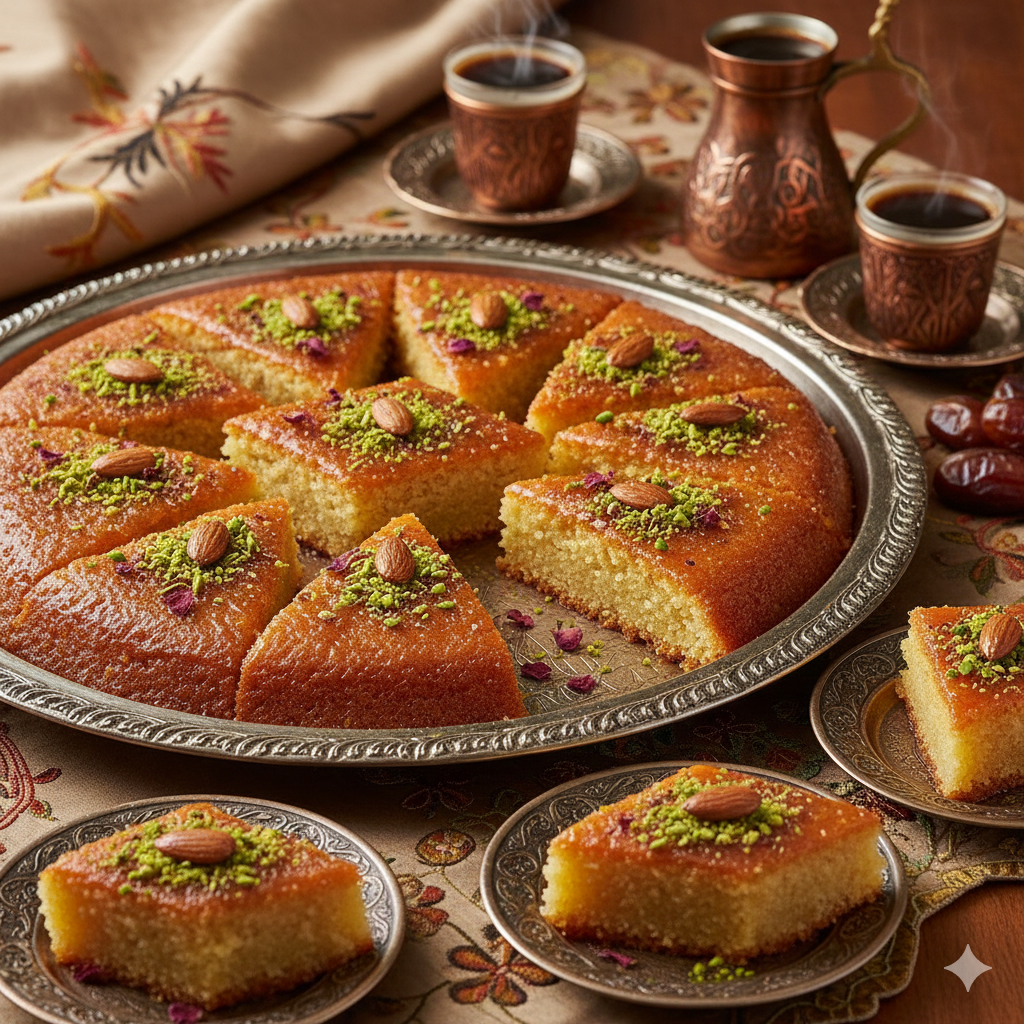
The recipe at the heart of this guide is the Rose & Pistachio Semolina Cake (Basbousa). Originating in the Middle East and beloved across North Africa and the Levant, Basbousa is a staple for Iftar tables. Its significance lies in its ability to provide a quick energy boost after a day of fasting, thanks to its honeyed syrup and hearty semolina base. This version is designed for simplicity, ensuring that even during the busy final days of Ramadan, you can produce a dessert that looks and tastes like a royal offering.
2. Recipe Overview
- Cuisine Type: Middle Eastern / Levantine
- Difficulty Level: Easy
- Total Time: 50 minutes (Prep: 15 mins | Bake: 30 mins | Cooling/Soaking: 5 mins)
- Dietary Classifications: Vegetarian, Egg-Free (naturally).
3. Equipment and Tools
- Baking Dish: 9×9 inch (23×23 cm) square glass or ceramic dish.
- Small Saucepan: For preparing the “Attar” (simple syrup).
- Mixing Bowls: One large bowl for combining the base.
- Spatula: For smoothing the thick batter.
- Sharp Knife: Essential for pre-cutting the diamond pattern before baking.
- Measuring Jug: For precise syrup-to-cake ratios.
4. Serving Suggestions
- Plating: Serve in traditional diamond-shaped cuts on a silver or brass platter.
- Garnish: A single whole almond in the center of each diamond and a sprinkle of crushed green pistachios.
- Sides: A few fresh Medjool dates and a side of “Ashta” (clotted cream).
- Beverage Pairings: Perfectly complemented by Arabic Coffee (Gahwa) with cardamom or a hot Mint Tea.
5. Nutritional Information (Per Square)
- Calories: 260 kcal
- Carbohydrates: 38g
- Protein: 4g
- Fat: 11g
- Health Note: Semolina provides a slower release of energy compared to white flour, and rose water is known in traditional medicine for its calming properties.
6. Storage and Reheating
- Storage: Cover with foil and keep at room temperature for up to 3 days. It actually becomes moister on day two.
- Refrigeration: Store in an airtight container for up to 1 week.
- Freezing: This cake freezes exceptionally well for up to 1 month. Thaw at room temperature.
- Reheating: Serve at room temperature or warm slightly in the microwave for 10 seconds to loosen the syrup.
7. Expert Tips and Variations
- The Temperature Contrast: This is the golden rule of Basbousa—Hot Cake, Cold Syrup (or vice versa). This ensures the syrup is absorbed rather than making the cake mushy.
- Coconut Twist: Replace 50g of semolina with desiccated coconut for a “Bil-Narguile” style texture.
- Avoid Over-mixing: Stir until just combined to keep the semolina grains distinct and fluffy.
- Seasonal Adaption: During Eid, add a drop of orange blossom water for a more floral, festive aroma.
8. Ingredients Section
| Ingredient | Metric | Imperial | Quality Tip |
| Coarse Semolina | 350g | 2 Cups | Do not use fine semolina flour |
| Plain Yogurt | 240g | 1 Cup | Full-fat Greek yogurt is best |
| Granulated Sugar | 150g | 3/4 Cup | For the batter |
| Melted Ghee or Butter | 115g | 1/2 Cup | Ghee provides the best aroma |
| Baking Powder | 10g | 2 tsp | – |
| For the Syrup: | – | – | – |
| Water | 240ml | 1 Cup | – |
| Sugar | 200g | 1 Cup | – |
| Rose Water | 15ml | 1 tbsp | High-quality culinary grade |
| Lemon Juice | 5ml | 1 tsp | Prevents crystallization |
9. Step-by-Step Instructions
- Syrup First: Combine syrup water, sugar, and lemon juice in a saucepan. Simmer for 10 mins. Stir in rose water at the end and let it cool completely.
- Heat Oven: Preheat to 190°C (375°F). Grease your baking dish with tahini or butter.
- Mix Base: In a large bowl, mix semolina, sugar, and baking powder.
- Bind: Add melted ghee and yogurt. Stir until a thick, cohesive paste forms.
- Level: Press the batter into the dish. Use a wet spatula to smooth the surface perfectly flat.
- Score: Use a knife to score diamond shapes into the surface. Place an almond in the center of each.
- Bake: Bake for 25–30 minutes until the edges are deep brown and the top is golden.
- Soak: Immediately pour the cold syrup over the hot cake. You will hear a hiss—this is the sound of the semolina “drinking.”
- Rest: Let it sit for at least 1 hour to fully set before serving.
10. Frequently Asked Questions (FAQ)
- Can I make this dairy-free? Yes, use coconut yogurt and coconut oil instead of ghee.
- Why is my Basbousa crumbly? It likely didn’t get enough syrup. The cake should be fully saturated.
- What if I don’t like rose water? You can substitute it with vanilla extract or extra lemon zest.
- Is semolina the same as polenta? No. Semolina is made from durum wheat; polenta is corn. They cannot be swapped here.
- Can I use honey instead of sugar syrup? You can, but it will make the cake much denser and heavier.