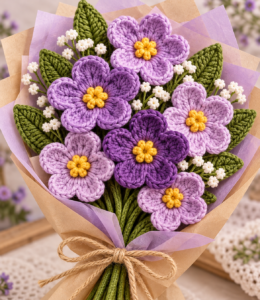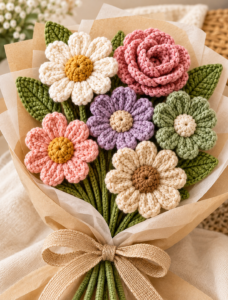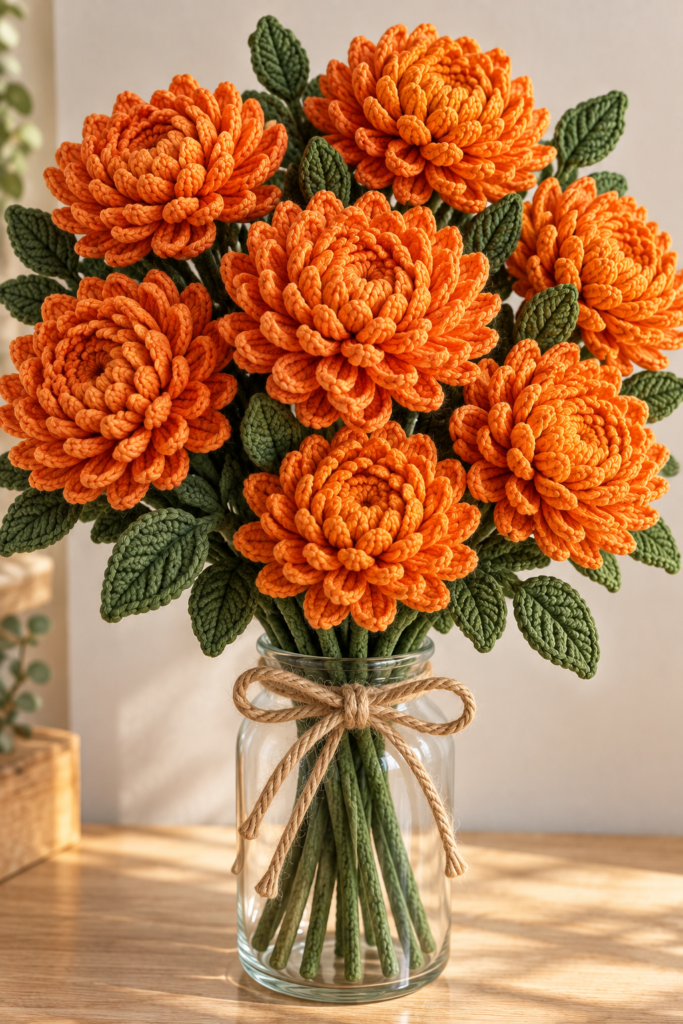
If you love bright handmade flowers, these Easy Crochet Orange Flower Ideas are a beautiful way to create a warm, eye-catching bouquet that lasts all year. Orange crochet flowers work especially well for fall decor, handmade gifts, table arrangements, and colorful floral displays.
The inspiration bouquet features full, textured orange blooms with layered petals, dark green leaves, and long green stems arranged inside a simple glass jar with a rustic twine bow. The dense petals give the flowers a chrysanthemum or pom-pom-inspired appearance.
Below are 7 crochet orange flower ideas, each with crochet instructions so you can make the flowers, leaves, centers, and stems yourself.
Crochet Abbreviations
MR = Magic Ring
ch = Chain
sc = Single Crochet
hdc = Half Double Crochet
dc = Double Crochet
tr = Treble Crochet
inc = Increase
sl st = Slip Stitch
BLO = Back Loop Only
FLO = Front Loop Only
st/sts = Stitch/Stitches
FO = Fasten Off
1. Full Orange Chrysanthemum Crochet Flower
This first flower is inspired by the large textured orange blooms in the reference image. The goal is to create many short curled petals packed closely together.
For a bouquet similar to the photo, make approximately 7–9 flowers and vary their heights slightly.
Materials
- Orange cotton or cotton-blend yarn
- Dark green yarn
- 2.5–3.5 mm crochet hook
- Yarn needle
- Scissors
- Stitch markers
- Suitable craft stem supports
- Green floral tape
- Optional craft-safe glue for decorative arrangements
Flower Base
Using orange yarn:
R1: 6 sc in MR (6)
R2: inc × 6 (12)
R3: (1 sc, inc) × 6 (18)
R4: (2 sc, inc) × 6 (24)
R5: (3 sc, inc) × 6 (30)
Do not fasten off.
First Layer of Curly Petals
Work in the front loops.
For each available stitch:
ch 5
Starting in the second chain from the hook:
4 sc
Sl st back into the base stitch.
Move to the next stitch and repeat.
Continue around the flower.
The small chains naturally create a dense, textured petal layer.
Second Petal Layer
Join orange yarn into the unused back loops of the previous round.
For each stitch:
ch 6
Starting in the second chain:
5 sc
Sl st into the next base stitch.
Repeat around.
This slightly longer layer adds volume behind the first petals.
Outer Petal Layer
For an especially full flower, work one final layer around the outer edge:
ch 7
Starting in the second chain:
6 sc
Sl st into the next stitch.
Repeat around.
Gently separate and fluff the petals with your fingers after finishing.
Green Flower Back
Using dark green:
R1: 6 sc in MR (6)
R2: inc × 6 (12)
R3: (1 sc, inc) × 6 (18)
R4: (2 sc, inc) × 6 (24)
Now create pointed sepals:
ch 5, sl st in 2nd ch, sc, hdc, dc
Sl st into the next base stitch.
Repeat approximately 6 times around the backing.
FO, leaving a long tail.
Sew the green backing securely behind the orange flower.
Stem
Secure the completed flower to your chosen craft stem support.
Starting immediately beneath the green backing, wrap the stem tightly with green floral tape or green yarn.
Continue to the bottom.
Make several stems at different lengths so the bouquet looks natural rather than perfectly symmetrical.
2. Orange Pom-Pom Crochet Flowers
This version creates smaller rounded blooms that work beautifully as filler flowers.
Flower Center
Using orange:
R1: 6 sc in MR (6)
R2: inc × 6 (12)
R3: (1 sc, inc) × 6 (18)
Textured Petals
In each stitch:
ch 4, 3 sc back down the chain, sl st into the same base stitch
Then sl st into the next stitch.
Repeat around.
For extra fullness, work a second layer behind the first using:
ch 5, 4 sc back down the chain
FO.
Fluff the loops outward to create the rounded pom-pom appearance.
Make 5–7 small flowers and place them between larger blooms.
3. Burnt Orange Daisy Crochet Flowers
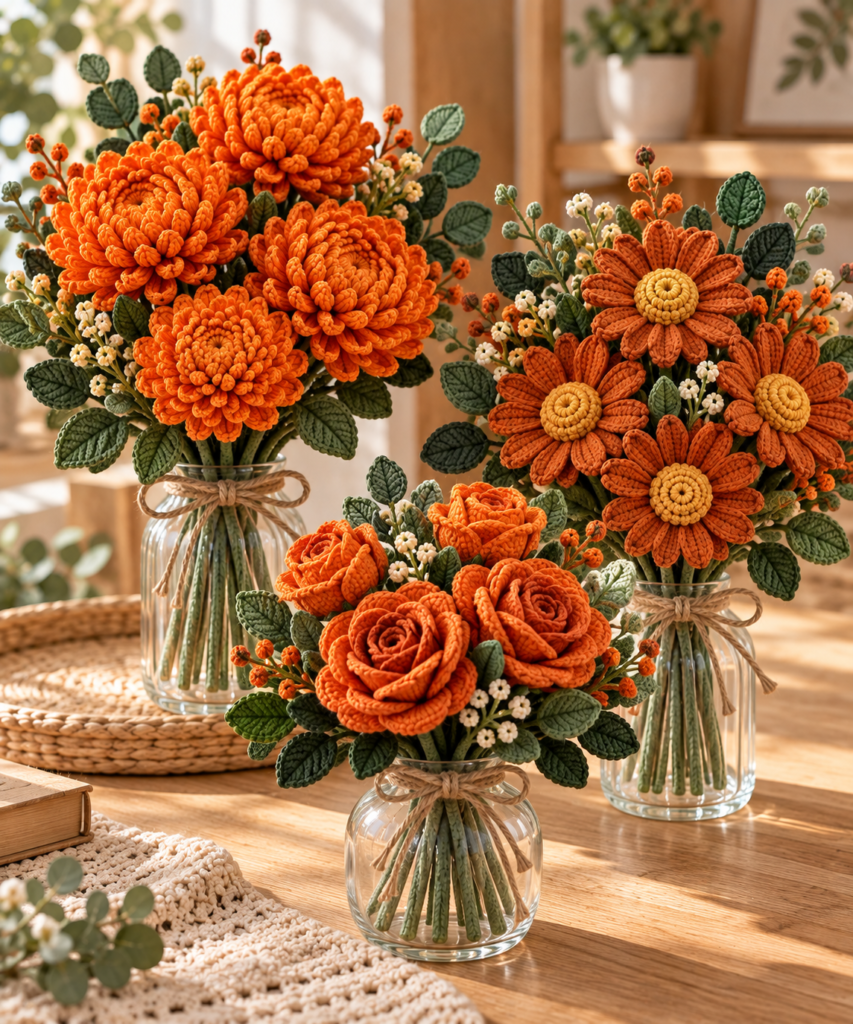
For a simpler project, create orange daisies with warm golden centers.
Golden Center
Using mustard yellow:
R1: 6 sc in MR (6)
R2: inc × 6 (12)
R3: (1 sc, inc) × 6 (18)
FO.
Orange Petals
Join burnt-orange yarn.
For each petal:
ch 7
Starting in second chain:
sl st, sc, hdc, dc, dc, hdc
Sl st into the next available center stitch.
Repeat until you have 9 petals spaced around the center.
FO.
Green Backing
R1: 6 sc in MR
R2: inc × 6 (12)
R3: (1 sc, inc) × 6 (18)
FO and sew behind the flower.
Attach the stem through the center of the backing and wrap it in green.
4. Mini Orange Marigold Crochet Flowers
Small orange marigolds are useful for adding texture between larger flowers.
Base
With orange:
R1: 6 sc in MR (6)
R2: inc × 6 (12)
R3: (1 sc, inc) × 6 (18)
Ruffled Petals
For the next round:
(sl st, 3 dc in next st, sl st)
Repeat around.
For a fuller second layer, join a darker orange yarn behind the first petals.
Work:
(sl st, 4 dc in next st, sl st)
Repeat around.
FO.
Cup the flower gently with your fingers so the petals turn upward instead of lying completely flat.
5. Orange Rose Crochet Bouquet
Orange roses add a softer, more elegant flower shape to the arrangement.
Crochet Rose
Using orange:
ch 45
Row 1
Starting in second chain:
44 sc
Row 2
Turn.
Repeat:
5 dc in next st, sl st in next st
Continue across.
FO, leaving a long yarn tail.
Shape the Rose
Begin rolling from one end.
Keep the center fairly tight.
As you continue rolling, loosen the strip slightly so the outer petals spread outward.
Thread the long tail through the bottom of the rolled flower several times to secure every layer.
Green Sepal
Using green:
R1: 5 sc in MR (5)
For each point:
ch 5
Starting in second chain:
sl st, sc, hdc, sc
Sl st into the next stitch of the ring.
Repeat 5 times.
Sew the sepal underneath the rose before adding the stem.
6. Orange Gerbera-Style Crochet Flower
This design uses longer petals to create a flower that looks lighter and more open than the dense chrysanthemum.
Center
Using dark orange or brown:
R1: 6 sc in MR
R2: inc × 6 (12)
R3: (1 sc, inc) × 6 (18)
R4: (2 sc, inc) × 6 (24)
FO.
Petals
Join bright orange.
For each petal:
ch 8
Starting in second chain:
sl st, sc, hdc, 3 dc, hdc
Sl st into the next stitch.
Repeat around.
Second Petal Layer
Join yarn behind the first row of petals.
For each petal:
ch 9
Starting in second chain:
sl st, sc, hdc, 4 dc, hdc
Attach to the base.
Repeat around.
Position the second layer between the first-layer petals to make the flower appear fuller.
7. Mixed Orange Autumn Crochet Bouquet
For the final bouquet, combine several of the flowers above rather than using only one flower style.
A balanced arrangement could include:
- 3 full orange chrysanthemums
- 2 orange roses
- 3 burnt-orange daisies
- 3 mini marigolds
- Several dark green leafy stems
This gives the bouquet different heights and textures while keeping the orange color theme consistent.
Large Crochet Leaf
Using dark green:
ch 13
Starting in second chain:
sl st, sc, hdc, dc, 4 tr, dc, hdc, sc, sl st
Continue down the opposite side:
sl st, sc, hdc, dc, 4 tr, dc, hdc, sc, sl st
FO.
Small Leaf
ch 9
Starting in second chain:
sl st, sc, hdc, 2 dc, hdc, sc, sl st
Work the same stitches along the opposite side.
FO.
Leafy Branch
Create a green stem approximately 25–30 cm long using your preferred supported-stem method.
Make 5–7 leaves.
Arrange the leaves in alternating positions rather than directly opposite one another.
Start with smaller leaves near the top and place larger leaves lower on the stem.
Wrap each attachment point neatly with green floral tape or yarn.
How to Assemble the Orange Crochet Bouquet
Start with your largest chrysanthemums. Position one flower slightly higher in the center and place the remaining large blooms around it.
Add medium-sized roses and gerbera-style flowers around the main flowers.
Use mini marigolds and pom-pom flowers to fill visible gaps.
Next, insert the dark green leafy stems around the outer edges. Allow some leaves to sit between the orange blooms so the individual flowers remain visually separated.
Rotate the bouquet as you work. This helps you spot empty areas and prevents all the flowers from facing in exactly the same direction.
Once you like the arrangement, gather the stems tightly near the bottom.
For the rustic style shown in the inspiration image, place the finished bouquet in a clear glass jar and wrap natural jute twine around the neck of the jar.
Tie the twine into a simple bow.
How to Make Strong Crochet Flower Stems
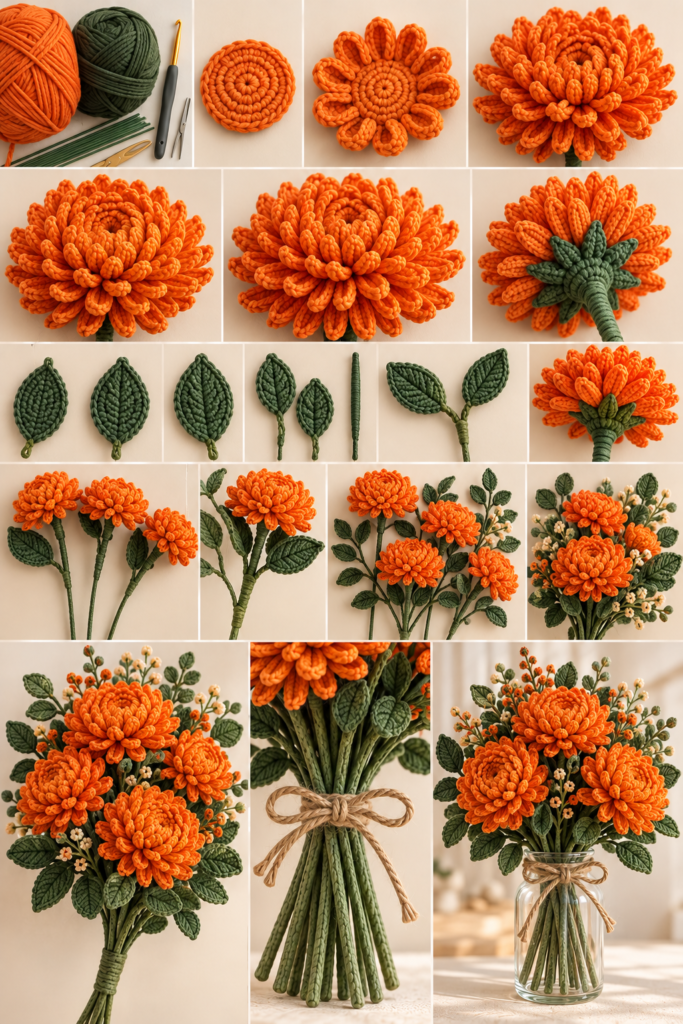
Large crochet flowers can become relatively heavy, so the stems need enough support to keep the flowers upright.
Secure each finished flower to an appropriate craft stem support through the green backing.
Wrap from directly underneath the flower downward using green floral tape.
If you are adding leaves, position them while wrapping the stem so their ends are concealed.
For decorative arrangements, make some stems longer than others. The tallest flowers should generally sit toward the middle or back of the bouquet.
Best Yarn Colors for Orange Crochet Flowers
Using more than one shade of orange can make a bouquet much more interesting.
Bright Autumn: Pumpkin orange + dark green + mustard
Rustic: Burnt orange + olive green + cream
Soft Fall: Peach-orange + sage + warm beige
Bold Bouquet: Tangerine + forest green + golden yellow
Sunset: Dark orange + terracotta + mustard + muted green
For a bouquet similar to the inspiration photo, use a vibrant pumpkin-orange yarn with rich leaf green.
Beginner Tips for Crochet Flowers
Cotton or cotton-blend yarn is a good starting choice because it provides clear stitch definition and holds flower shapes well.
When making a bouquet, work in batches. Crochet all the flower bases first, then petals, leaves, and finally stems. This can make the process much faster.
Count repeated petals carefully. A missed stitch can leave a noticeable gap in a dense flower.
For chrysanthemums and pom-pom flowers, separate the petals gently after crocheting. This helps create the full textured appearance.
Do not make every stem identical in length. A little height variation makes the finished arrangement more natural.
Before permanently securing your bouquet, place all the flowers together and adjust their positions.
Frequently Asked Questions
Are orange crochet flowers suitable for beginners?
Yes. Simple daisies, roses, marigolds, and pom-pom flowers mainly use basic stitches. Dense chrysanthemums require more repetition but use straightforward crochet techniques.
Which orange crochet flower is easiest?
The burnt-orange daisy is one of the easiest options because it uses a simple round center followed by repeated petals.
How do I make a crochet flower look fuller?
Add multiple layers of petals and slightly vary their lengths. For textured flowers, gently separate the finished petals with your fingers.
What yarn works best for crochet flower bouquets?
Cotton and cotton-blend yarns are excellent because they provide clear stitches and help petals maintain their shape.
How many flowers should I make for one bouquet?
For a medium arrangement, around 7–12 main flowers can work well, depending on their size. Smaller filler flowers and foliage can then be added to create fullness.
Can I mix different shades of orange?
Yes. Combining pumpkin, burnt orange, tangerine, peach, and terracotta can give a handmade bouquet more depth than using one shade throughout.
Final Thoughts
These Easy Crochet Orange Flower Ideas give you several ways to build a stunning handmade bouquet using one beautiful color family.
To recreate the overall look of the inspiration image, make several full orange chrysanthemum-style flowers, add dark green crochet leaves and supported stems, and arrange everything inside a clear glass jar finished with a natural twine bow.
Once you master the main flower, try mixing chrysanthemums with roses, marigolds, daisies, and gerbera-style blooms for an orange crochet bouquet with even more texture.