1. Introduction
In the world of modern snacking, we often find ourselves caught between the desire for something sweet and the commitment to a balanced lifestyle. Enter the Frozen Yogurt Bark. This dish has transcended its humble origins as a “Pinterest-friendly” trend to become a staple in the freezers of health-conscious foodies and busy parents worldwide.
The beauty of this recipe lies in its minimalist philosophy. By utilizing just three core components, we celebrate the textures and natural sweetness of whole foods. Historically, frozen dairy treats have been laden with stabilizers and refined sugars; however, this bark strips away the complexity, offering a refreshing crunch that melts into a creamy finish. Whether you are looking for a post-workout protein boost or a colorful treat for a summer afternoon, this recipe serves as a versatile canvas for your culinary creativity.
2. Recipe Overview
- Cuisine Type: Modern American / Healthy Snack
- Difficulty Level: Very Easy (Beginner Friendly)
- Prep Time: 10 minutes
- Freezing Time: 3–4 hours
- Total Time: 4 hours 10 minutes
- Dietary Classifications: Vegetarian, Gluten-Free, Refined Sugar-Free (depending on honey/maple syrup usage), Egg-Free.
3. Equipment and Tools
To ensure the perfect snap and even freezing, having the right tools is essential.
| Equipment | Specification | Purpose |
| Baking Sheet | 9×13 inch (Quarter Sheet) | Provides the flat surface for spreading |
| Parchment Paper | Standard non-stick | Prevents the yogurt from sticking to the metal |
| Offset Spatula | 6–8 inch | Ensures an even, smooth thickness |
| Mixing Bowl | Medium (2–3 quart) | For incorporating the sweetener and yogurt |
| Measuring Cups | Standard US/Metric | For precise ingredient ratios |
4. Serving Suggestions
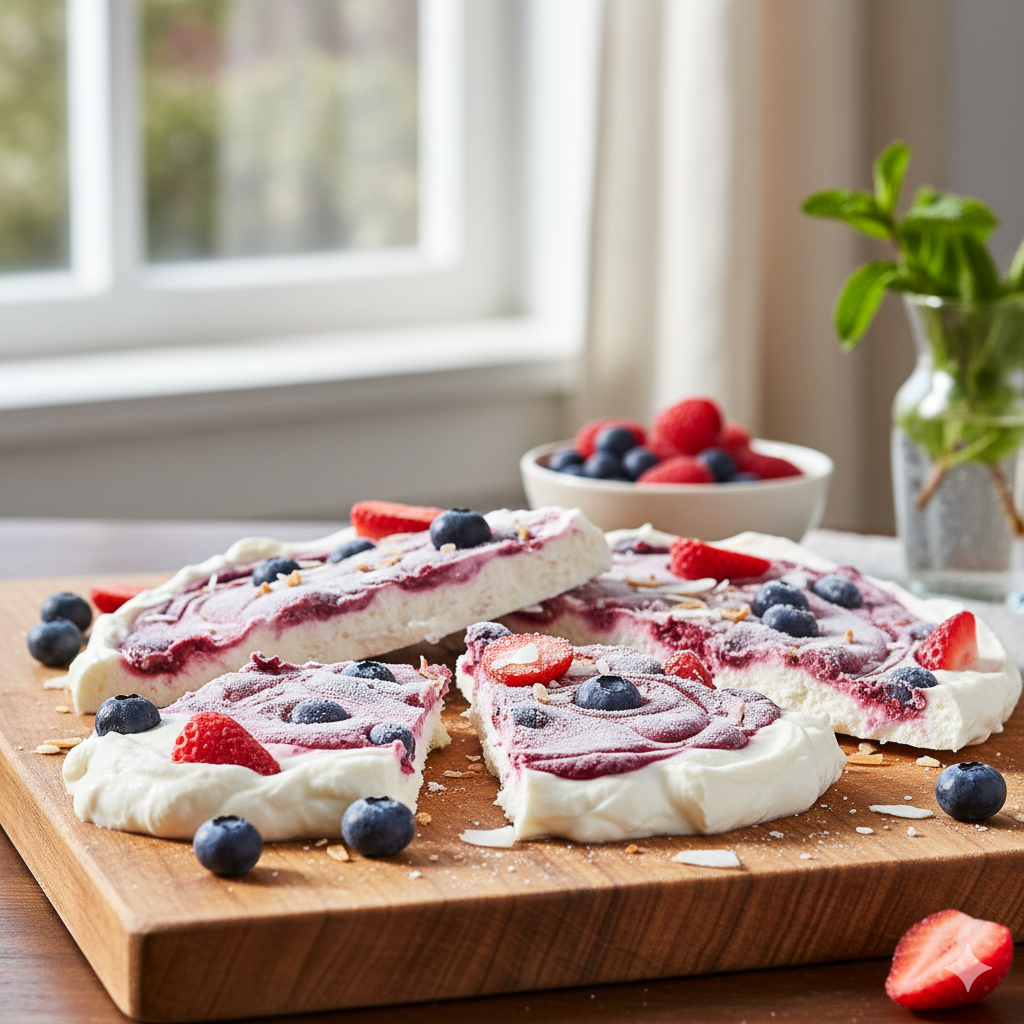
This bark is best enjoyed immediately after removing it from the freezer.
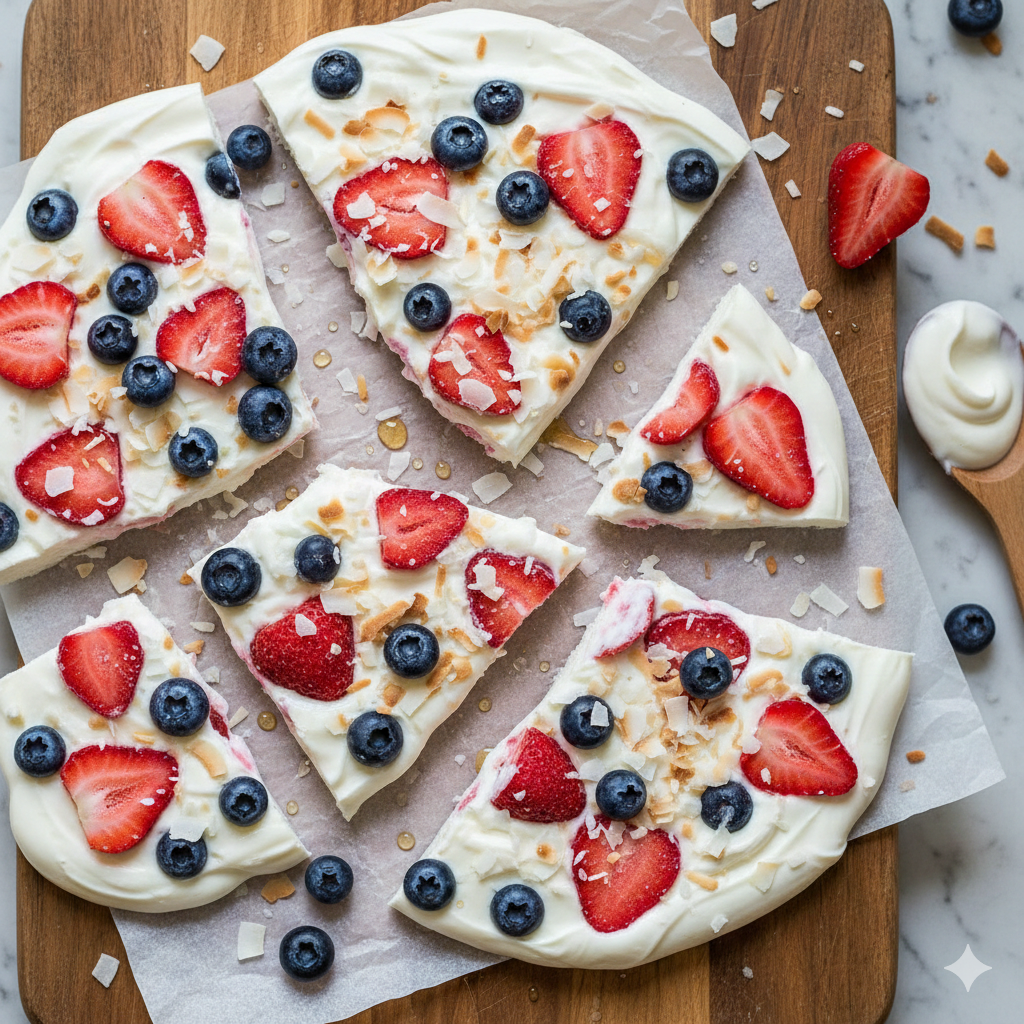
- Plating: Break the bark into irregular, shards for a rustic “shattered” look. Serve in a chilled glass bowl to slow down melting.
- Garnish: A light dusting of lime zest or a pinch of flaky sea salt can elevate the flavor profile instantly.
- Beverage Pairings: Pairs beautifully with an iced hibiscus tea or a crisp kombucha. For a late-night treat, try it alongside a decaf almond milk latte.
5. Nutritional Information
(Estimated per 2-ounce serving)
- Calories: 85 kcal
- Protein: 6g
- Total Fat: 2g
- Carbohydrates: 11g
- Fiber: 1g
- Sugar: 8g (Natural and added)
Health Benefits: High in probiotics for gut health, a good source of calcium, and packed with antioxidants from the fruit components.
6. Storage and Reheating
- Storage: Once frozen solid and broken into pieces, transfer the bark to an airtight freezer-safe bag or container.
- Freezing: Layer the pieces with parchment paper between them to prevent clumping.
- Shelf Life: Best consumed within 2 weeks. After this, ice crystals may form, affecting the texture.
- Note: Do not “reheat.” If the bark is too hard, let it sit at room temperature for 60 seconds before biting.
7. Expert Tips and Variations
Professional Chef Tips
- Full-Fat is Better: Use whole-milk Greek yogurt for a creamier mouthfeel. Low-fat versions have higher water content, which can lead to an “icy” or gritty texture.
- The Thump Test: After spreading the yogurt on the tray, gently tap the tray on the counter to remove air bubbles.
Variations
- The Tropical: Use coconut-flavored yogurt, topped with mango chunks and toasted coconut flakes.
- The PB&J: Swirl in a tablespoon of creamy peanut butter and use smashed grapes or raspberries as your fruit.
- The Indulgent: Add a handful of dark chocolate mini-chips to the mix.
8. Ingredients Section
To achieve the best results, source high-quality, organic ingredients where possible.
- 2 cups (480g) Greek Yogurt: Plain, unsweetened is preferred for control over sweetness.
- 3 tbsp (45ml) Honey or Pure Maple Syrup: Adjust based on your preference for sweetness.
- 1 cup (150g) Fresh Berries: Strawberries (sliced), blueberries, or raspberries.
Substitution Note: If vegan, swap Greek yogurt for a thick coconut or soy-based yogurt alternative. Ensure it is a “thick” variety to maintain the bark structure.
9. Step-by-Step Instructions
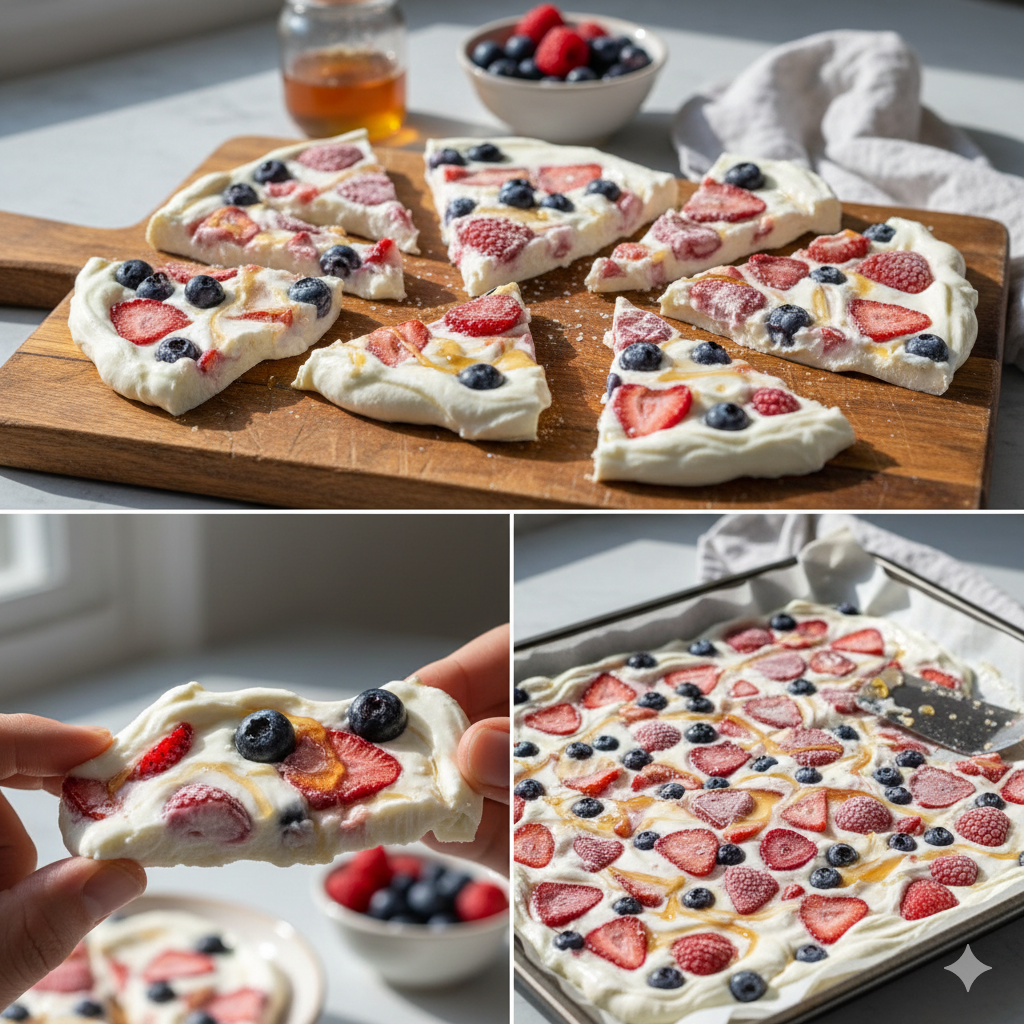
- Prep the Surface: Line a 9×13-inch baking sheet with parchment paper. Ensure the paper covers the edges so you can easily lift the bark later.
- Sweeten the Base: In a medium mixing bowl, combine the Greek yogurt and your choice of liquid sweetener. Whisk until the mixture is completely smooth and the sweetener is fully incorporated.
- Spread: Pour the mixture onto the center of the parchment paper. Using an offset spatula, spread the yogurt into an even layer, approximately 1/4 to 1/2 inch thick. Do not go too thin, or it will shatter into dust; too thick, and it’s hard to bite.
- Top: Evenly scatter your fresh fruit over the surface. Gently press the larger pieces of fruit into the yogurt so they are partially submerged—this “locks” them in place.
- Freeze: Place the tray flat in the freezer. Freeze for a minimum of 3 hours, or until the center is firm to the touch and no longer tacky.
- Break and Serve: Lift the parchment paper off the tray. Use your hands to snap the bark into large, uneven pieces.
10. Frequently Asked Questions (FAQ)
Q: Can I use regular yogurt instead of Greek yogurt?
A: You can, but regular yogurt has a higher water content. This will result in a bark that is more like an ice cube than a creamy snack. Greek yogurt is highly recommended for the best texture.
Q: Why is my bark too hard to bite?
A: This usually happens if the yogurt layer is too thick or if it has been in the freezer for more than a week. Let it sit on the counter for a minute before eating.
Q: Can I use frozen fruit?
A: Yes, but be aware that frozen fruit may release extra moisture as it sits on the yogurt before freezing, which can cause bleeding of colors.
Q: How do I keep the fruit from falling off?
A: Make sure to lightly press the fruit into the wet yogurt before you put the tray in the freezer.
Q: Is this safe for toddlers?
A: Yes, it’s a great teething snack! However, be sure to slice berries into very small pieces to avoid choking hazards.