1. Introduction: A Love Letter to the Citrus Cloud
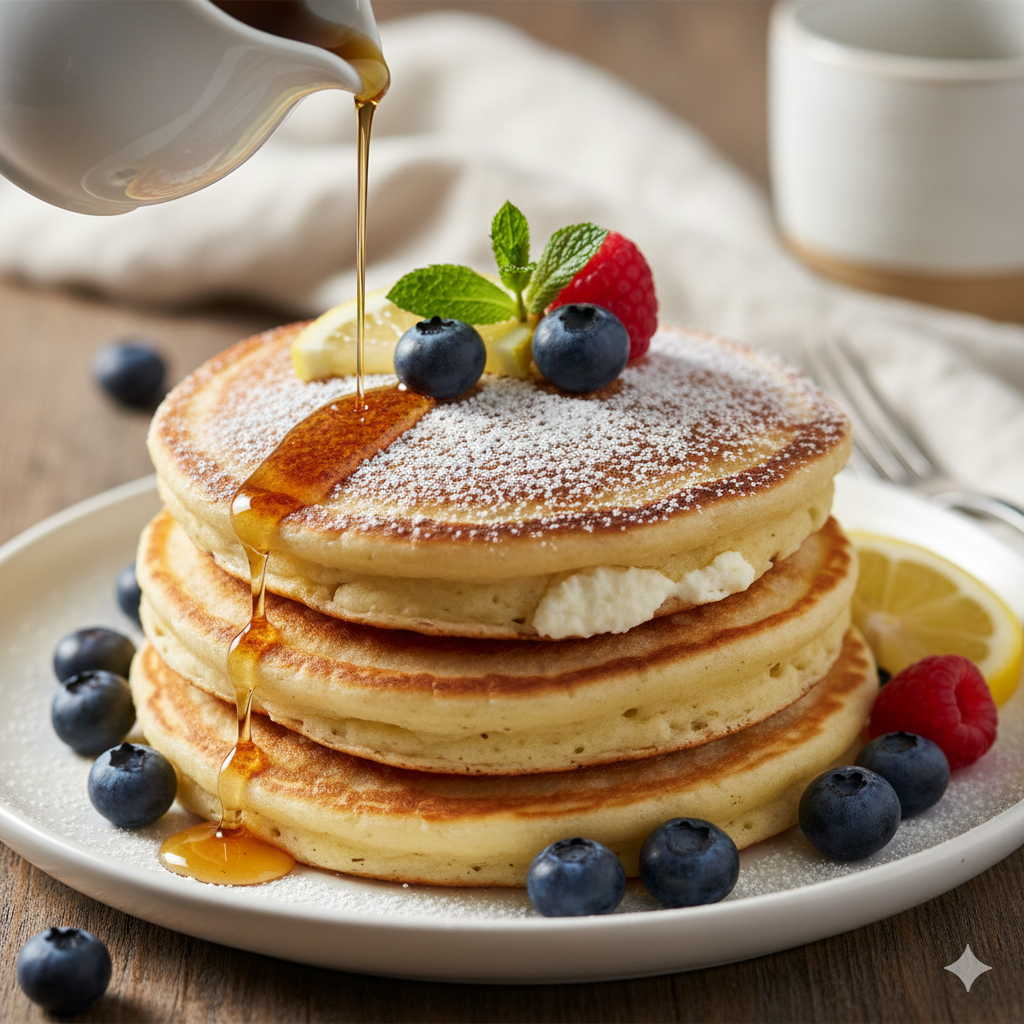
There is a specific kind of magic that happens when the zest of a sun-ripened lemon meets the creamy, pearl-like curd of fresh ricotta cheese. While the classic buttermilk pancake has long reigned supreme on American breakfast tables, the Lemon Ricotta Pancake represents the sophisticated, Mediterranean-inspired cousin that turns a simple morning meal into a culinary event.
The origin of adding cheese to batter dates back to ancient Rome, where libum (sacrificial cakes) were made with flour and cheese. However, the modern iteration we adore today owes its popularity to the coastal cafes of Italy and the high-end brunch spots of New York and Los Angeles. Unlike traditional pancakes that rely heavily on flour for structure, the ricotta version prioritizes moisture and a “melt-in-your-mouth” crumb.
What makes this dish truly significant is the contrast. You have the bright, acidic punch of the lemon cutting through the rich, decadent fats of the cheese. It is a dish that feels impossibly light—almost like a soufflé—yet provides a satisfying, protein-rich start to the day. Whether you are hosting a festive spring brunch or seeking a quiet, indulgent Sunday morning, these pancakes are the gold standard of breakfast elegance.
2. Recipe Overview
- Cuisine Type: Italian-American Fusion
- Difficulty Level: Intermediate (Requires gentle folding techniques)
- Prep Time: 15 minutes
- Cook Time: 15 minutes
- Total Time: 30 minutes
- Dietary Classifications: Vegetarian, Nut-Free (Gluten-free option available via substitutions)
3. Equipment and Tools
To achieve the signature loft and texture of a professional-grade pancake, you will need the following kitchen arsenal:
- Mixing Bowls: One large bowl for dry ingredients; one medium bowl for wet ingredients; one medium stainless steel or glass bowl for whipping egg whites.
- Whisks: A balloon whisk for aerating the dry mix and a secondary whisk for combining wet ingredients.
- Electric Hand Mixer: Essential for beating egg whites to stiff peaks (the secret to the “lift”).
- Microplane/Zester: To harvest the aromatic oils from the lemon zest without hitting the bitter white pith.
- Large Non-Stick Griddle or Skillet: A 12-inch heavy-bottomed cast iron or non-stick pan is ideal for even heat distribution.
- Silicone Spatula: For the delicate “folding” process.
- Measuring Tools: A full set of liquid and dry measuring cups, plus measuring spoons.
- Offset Spatula or Wide Turner: For flipping the pancakes without deflating them.
4. Serving Suggestions
Presentation is half the experience with a dish this beautiful.
Plating Recommendations
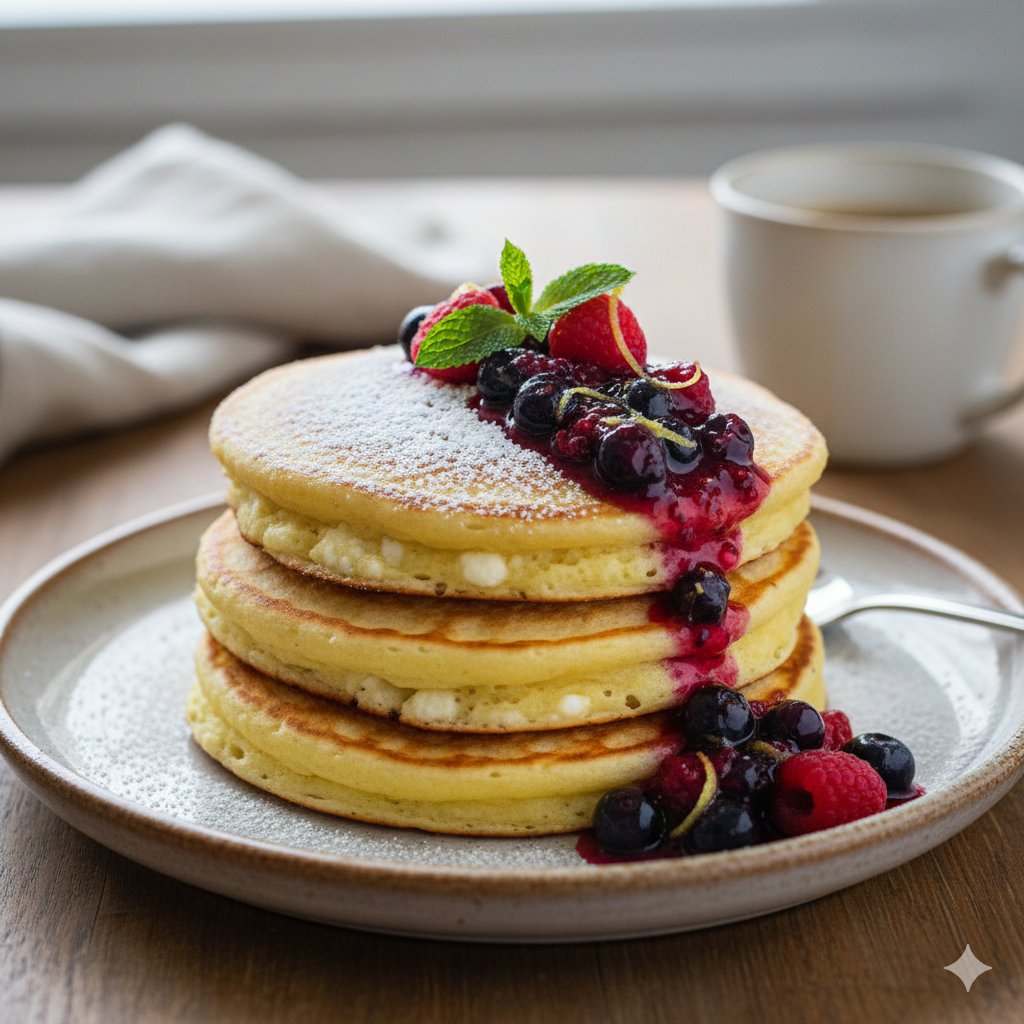
Stack three pancakes per person. The weight of the stack should look substantial but airy. Use a warmed plate to prevent the ricotta from seizing.
Garnish Ideas
- Macerated Berries: Blueberries or raspberries tossed in a teaspoon of sugar and lemon juice.
- Powdered Sugar: A light “snowfall” dusting adds visual contrast.
- Fresh Mint: A single sprig adds a pop of green.
- Lemon Curd: A dollop on top reinforces the citrus profile.
Beverage Pairings
- Coffee: A light-roast Ethiopian coffee with floral notes.
- Tea: Earl Grey, as the bergamot complements the lemon.
- Cocktails: A classic Mimosa or a Peach Bellini.
5. Nutritional Information (Per Serving)
Serving size: 2 pancakes
| Nutrient | Amount |
| Calories | 320 kcal |
| Total Fat | 14g |
| Saturated Fat | 8g |
| Cholesterol | 115mg |
| Sodium | 450mg |
| Total Carbohydrates | 38g |
| Dietary Fiber | 1g |
| Sugars | 12g |
| Protein | 11g |
Health Benefits: High in calcium and phosphorus from the ricotta, and a boost of Vitamin C from the fresh lemon zest.
6. Storage and Reheating
Refrigeration
Store leftover pancakes in an airtight container for up to 3 days. Place parchment paper between each pancake to prevent sticking.
Freezing
These freeze remarkably well. Freeze in a single layer on a baking sheet for one hour, then transfer to a freezer-safe bag. Good for up to 2 months.
Reheating
- Oven (Best): Place on a tray at 350°F (175°C) for 5-8 minutes, covered with foil to retain moisture.
- Toaster: Use a low setting for a slightly crispy exterior.
- Microwave: Not recommended, as it can make the ricotta rubbery.
7. Expert Tips and Variations
Professional Chef Tips
- Drain the Ricotta: If your ricotta looks watery, let it sit in a fine-mesh sieve for 15 minutes before using. Excess water ruins the fluffiness.
- Room Temperature Ingredients: Ensure eggs and ricotta are at room temperature to prevent the melted butter from curdling in the batter.
- The “First Pancake” Rule: The first pancake is usually a sacrificial lamb used to calibrate the pan’s temperature. Adjust heat accordingly.
Creative Variations
- Blueberry Lemon Ricotta: Fold 1/2 cup of fresh blueberries into the batter at the very last second.
- Poppy Seed Twist: Add 1 tablespoon of poppy seeds for a delightful crunch.
- Almond Infusion: Swap vanilla extract for 1/2 teaspoon of almond extract.
8. Ingredients Section
The Batter
- All-Purpose Flour: 1 ½ cups (190g)
- Granulated Sugar: 3 tbsp (45g)
- Baking Powder: 2 tsp (10g)
- Kosher Salt: ½ tsp (3g)
- Whole Milk Ricotta: 1 cup (250g) – Sourced fresh if possible.
- Whole Milk: ¾ cup (180ml)
- Large Eggs: 2 (separated into yolks and whites)
- Unsalted Butter: 3 tbsp (42g), melted and cooled
- Fresh Lemon Juice: 2 tbsp (30ml)
- Lemon Zest: 1 tbsp (from approx. 2 medium lemons)
- Vanilla Extract: 1 tsp
Sourcing & Substitutions
- Gluten-Free: Substitute with a 1:1 gluten-free baking flour blend.
- Dairy-Free: Use almond-based ricotta and oat milk, though the texture will be significantly denser.
9. Step-by-Step Instructions
Step 1: Prepare the Dry Base
In a large mixing bowl, whisk together the flour, sugar, baking powder, and salt. Sifting is recommended to ensure no clumps of baking powder remain.
Step 2: Combine the Wet Aromatics
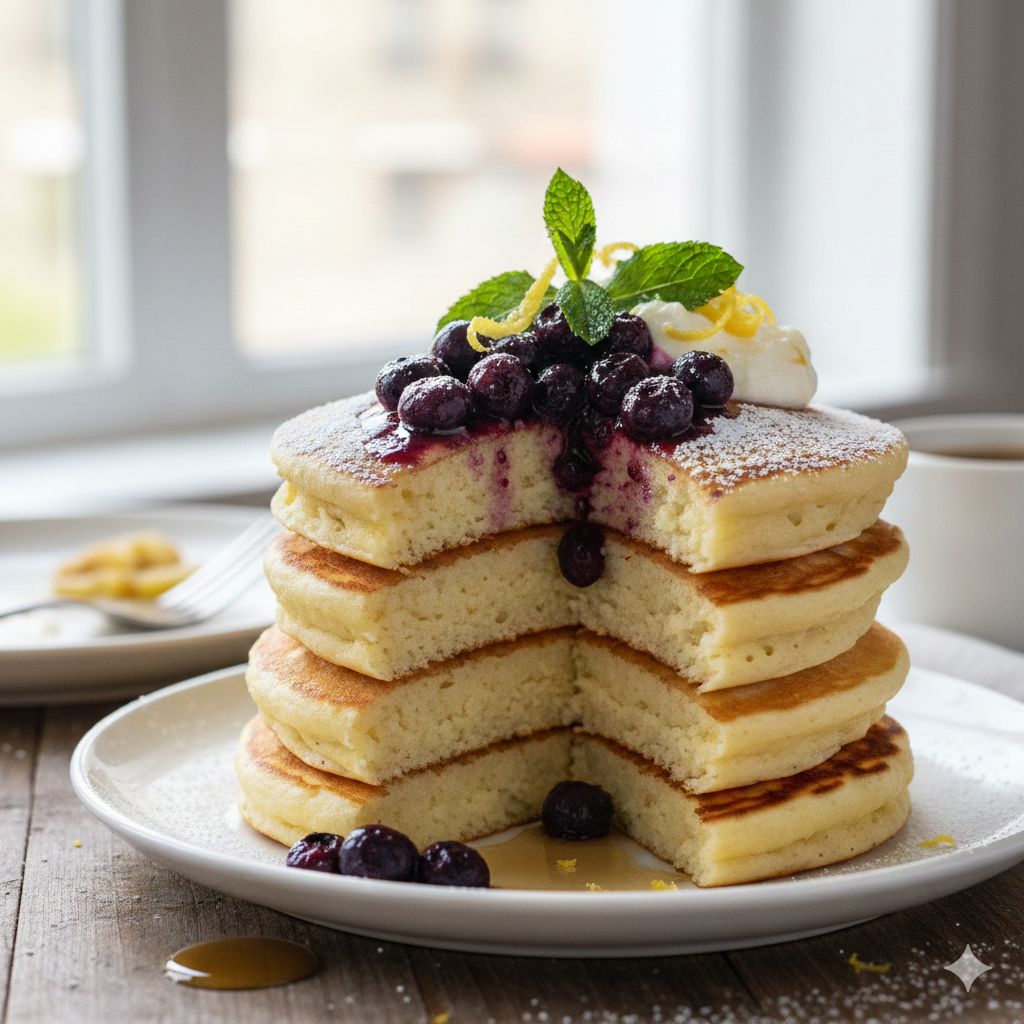
In a separate medium bowl, whisk the ricotta, milk, egg yolks, melted butter, lemon juice, lemon zest, and vanilla. The mixture should be creamy but have some small visible curds of ricotta—this is the “treasure” inside the pancake.
Step 3: The Whipping Phase
In a clean, dry bowl, beat the egg whites using an electric mixer until stiff peaks form. When you lift the beaters, the whites should stand straight up. This is the “mechanical leavening” that creates the airy texture.
Step 4: Assemble the Batter
Pour the wet ricotta mixture into the dry ingredients. Stir gently with a spatula until just combined. Do not overmix; lumps are okay.
Step 5: The Folding Technique
Gently fold one-third of the egg whites into the batter to lighten it. Then, add the remaining whites and fold with a “cut and turn” motion. Stop as soon as no large white streaks remain. Timing: Use this batter immediately to prevent the air bubbles from collapsing.
Step 6: Griddle Calibration
Heat your skillet over medium-low heat. Lightly grease with a small amount of butter or neutral oil. Wipe away excess; you want a thin film, not a puddle.
Step 7: The Pour
Use a 1/3 cup measure to scoop the batter onto the griddle. Do not crowd the pan.
Step 8: The Flip
Cook for 3-4 minutes on the first side. Visual Cue: These pancakes do not bubble as much as traditional ones. Look for the edges to set and become golden. Flip gently. Cook for another 2 minutes.
10. Frequently Asked Questions (FAQ)
Q: Why are my pancakes flat?
A: Usually, this is due to overmixing the batter or failing to whip the egg whites to stiff peaks. Another culprit could be expired baking powder.
Q: Can I use part-skim ricotta?
A: You can, but the pancakes will be less creamy and may dry out faster. Whole milk ricotta provides the essential fat for that “custard-like” center.
Q: Is it okay to make the batter the night before?
A: No. Because this recipe relies on whipped egg whites and the chemical reaction of baking powder with lemon juice, the batter will lose its lift if left to sit overnight.
Q: How do I know when the pan is the right temperature?
A: Flick a drop of water on the surface. If it sizzles and dances for a second before evaporating, you’re ready. If it disappears instantly, it’s too hot.