1. Introduction
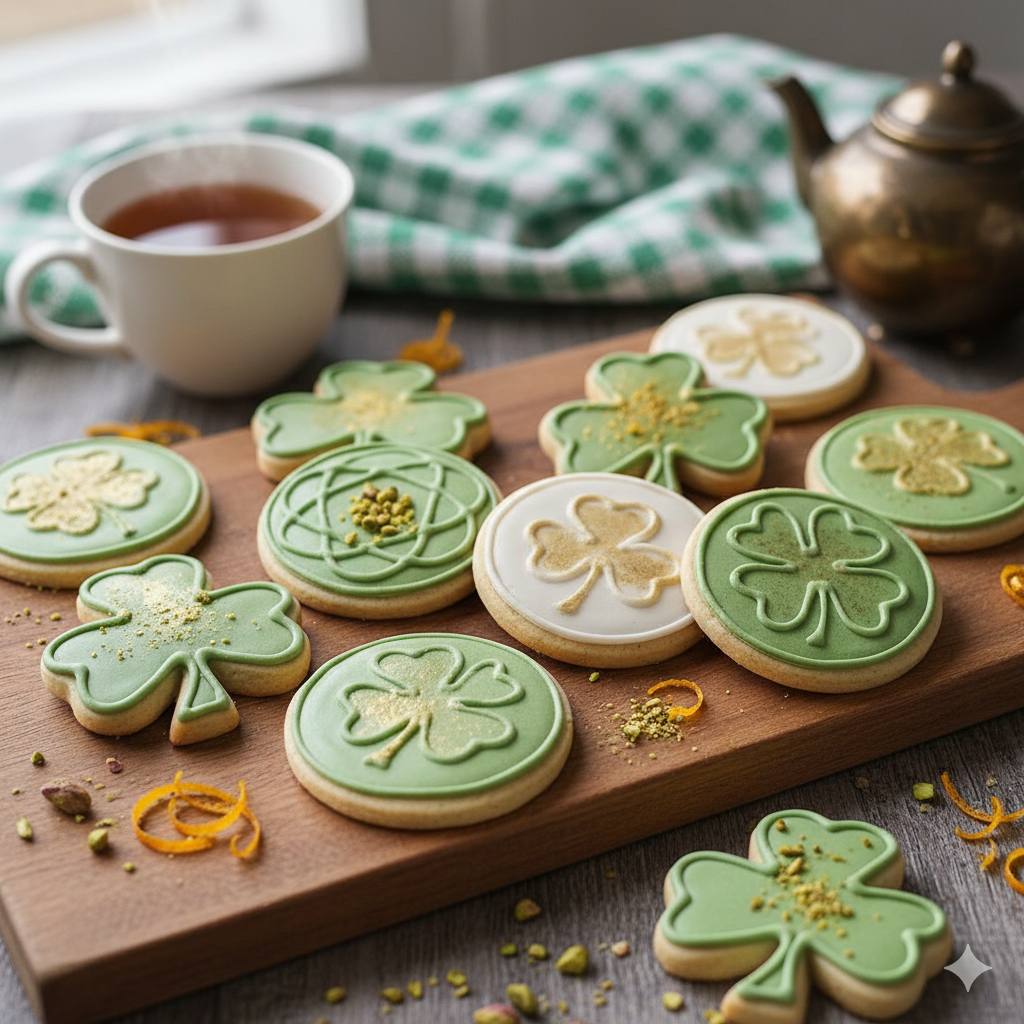
When the mist rolls over the green hills of Ireland and the peat fires begin to crackle, the kitchen becomes the heart of the home. There is a specific kind of magic found in Irish baking—a philosophy rooted in simplicity, high-quality dairy, and the warmth of hospitality. Among the most cherished treats are Festive Irish Cookies, often referred to locally as “biscuits.”
These aren’t your average sugar cookies. Traditional Irish festive cookies are defined by a short, crumbly texture and a rich, golden flavor that comes from Ireland’s world-renowned grass-fed butter. Whether they are shaped like shamrocks for St. Patrick’s Day or dusted with “snow” (powdered sugar) for Christmas, these treats carry the weight of generations.
Historically, sugar and fine flour were luxuries in rural Ireland. Bringing these ingredients together for a holiday bake was a sign of celebration and community. Today, we honor that history by using the finest ingredients to create a cookie that melts on the tongue and pairs perfectly with a strong cup of Barry’s or Lyons tea. This recipe takes the classic Irish Shortbread foundation and elevates it with subtle festive notes of lemon zest and high-quality sea salt.
2. Recipe Overview
- Cuisine Type: Traditional Irish / European Bakery
- Difficulty Level: Intermediate (Requires patience with dough chilling)
- Total Time: 1 hour 45 minutes (includes chilling time)
- Prep Time: 20 minutes
- Chilling Time: 60 minutes
- Baking Time: 25 minutes
- Dietary Classifications: Vegetarian, Egg-Free, Nut-Free (can be modified for Gluten-Free)
3. Equipment and Tools
To achieve the professional “snap” and delicate crumb of a true Irish biscuit, having the right tools is essential.
- Standing Mixer or Electric Hand Mixer: Essential for “creaming” the butter and sugar to the correct aeration.
- Digital Kitchen Scale: Highly recommended for precision (baking by weight is the European standard).
- Large Mixing Bowl: Stainless steel or glass.
- Fine-Mesh Sieve: For aerating the flour and cornstarch.
- Rolling Pin: Preferably a tapered French rolling pin for better pressure control.
- Baking Sheets: Heavy-duty, light-colored aluminum to prevent bottom-burning.
- Parchment Paper or Silicone Baking Mats: To ensure a non-stick surface.
- Wire Cooling Rack: For proper airflow after baking.
- Cookie Cutters: 2.5-inch to 3-inch round or festive shapes (shamrocks, stars).
- Specifications:
- Pan Size: 13×18 inch (Half-sheet pan).
- Dough Depth: Aim for a consistent thickness of 1/2 inch (approx. 1.25 cm).
4. Serving Suggestions
The beauty of these cookies lies in their versatility. They are sophisticated enough for a formal tea service but hearty enough for a family gathering.
- The Classic Pairing: Serve alongside a pot of strong Irish Breakfast tea with a splash of whole milk.
- The Evening Treat: Pair with a small glass of Irish cream liqueur or a dry stout. The saltiness of the cookie cuts through the richness of the drink beautifully.
- Plating: Arrange on a tiered slate stand. Dust lightly with powdered sugar just before serving to mimic the morning frost of the Irish countryside.
- Garnish: A small sprig of fresh mint or edible gold leaf can add a modern festive flair.

5. Nutritional Information
(Note: Values are estimates based on a single serving of one 3-inch cookie.)
| Metric | Amount Per Serving |
| Calories | 165 kcal |
| Total Fat | 11g |
| Saturated Fat | 7g |
| Cholesterol | 28mg |
| Sodium | 85mg |
| Total Carbohydrates | 16g |
| Dietary Fiber | 0.5g |
| Sugars | 5g |
| Protein | 1.5g |
Health Insight: While these are an indulgent treat, using high-quality grass-fed butter provides a higher concentration of Omega-3 fatty acids and Vitamin K2 compared to standard grain-fed butter.
6. Storage and Reheating
Because of their high fat content and low moisture, these cookies have an excellent shelf life.
- Room Temperature: Store in an airtight tin for up to 10 days. A tin is preferable to plastic to maintain the crisp texture.
- Refrigeration: Not recommended, as the humidity can make the cookies go soft.
- Freezing: * Unbaked Dough: Wrap tightly in plastic wrap and freeze for up to 3 months. Thaw in the fridge overnight before rolling.
- Baked Cookies: Freeze in a single layer before transferring to a freezer bag. They last 2 months.
- Reheating: If they lose their “snap,” place them in a 300°F (150°C) oven for 3–5 minutes to refresh the oils, then cool completely.
7. Expert Tips and Variations
The Professional Touch
- Temperature Matters: Your butter should be “cool room temperature” (about 65°F / 18°C). If it’s too soft or melted, the cookies will spread into puddles.
- Don’t Overwork: Once you add the flour, mix only until a dough forms. Over-mixing develops gluten, which turns a “short” melt-in-your-mouth cookie into a “tough” one.
Common Mistakes
- Using Salted Butter: While tempting, use unsalted butter and add your own high-quality sea salt. This allows you to control the exact flavor profile.
- Skipping the Chill: Chilling the dough relaxes the gluten and solidifies the fats, ensuring the shapes stay sharp in the oven.
Variations
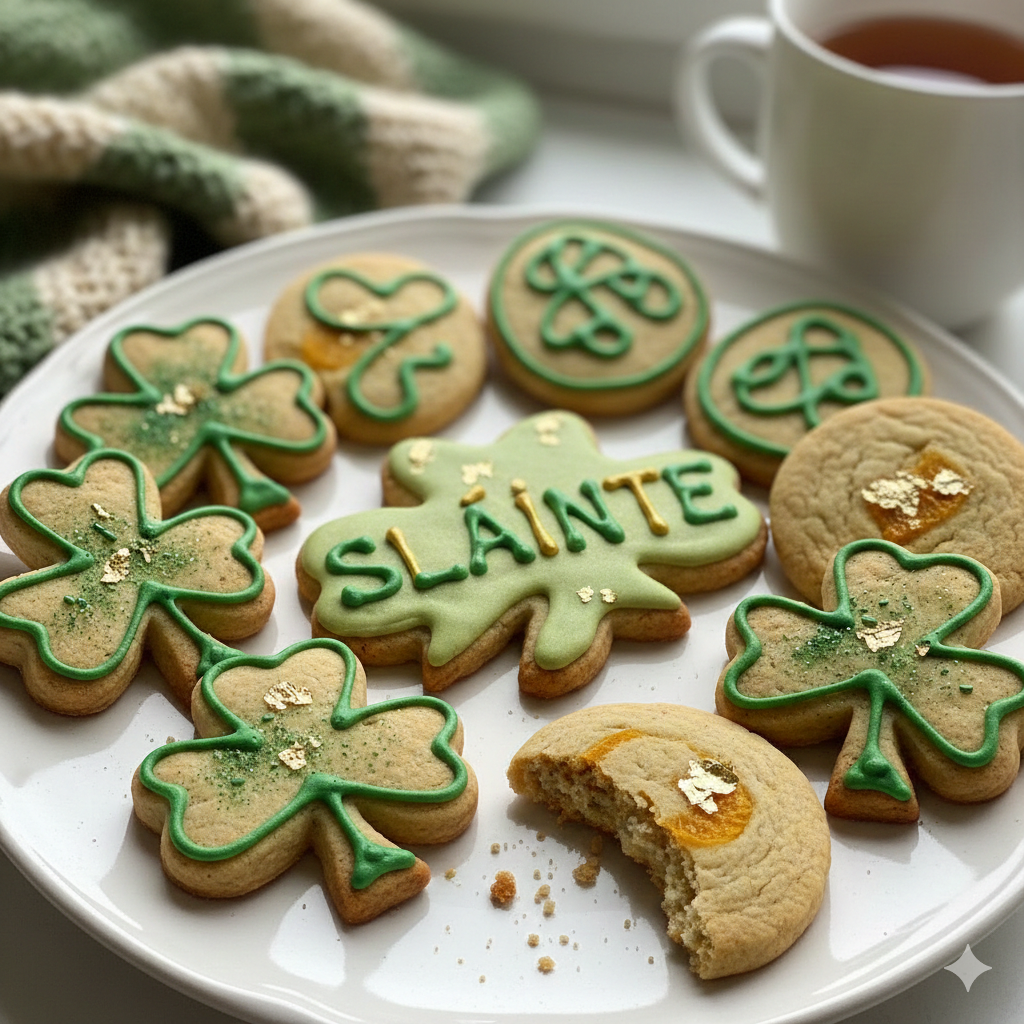
- The Whiskey Glaze: Whisk together 1 cup powdered sugar with 2 tablespoons of Irish Whiskey and a teaspoon of milk. Drizzle over cooled cookies.
- Chocolate Dipped: Melt dark chocolate (70% cocoa) and dip half the cookie. Sprinkle with crushed pistachios for a green “festive” look.
- Gluten-Free Adaptation: Replace the all-purpose flour with a high-quality 1:1 gluten-free baking blend that includes xanthan gum.
8. Ingredients Section
- 225g (1 cup / 2 sticks) High-Quality Unsalted Irish Butter: Look for brands like Kerrygold. The higher fat content is non-negotiable.
- 100g (1/2 cup) Superfine Sugar: Also known as Caster sugar. It dissolves faster than granulated sugar.
- 300g (2 1/2 cups) All-Purpose Flour: Sifted to remove lumps.
- 50g (1/2 cup) Cornstarch (Cornflour): This is the “secret” to the crumbly Irish texture.
- 1/2 tsp Fine Sea Salt: To balance the sweetness.
- 1 tsp Pure Vanilla Extract: Or the seeds from half a vanilla bean.
- Optional: Zest of 1 organic lemon for a bright, festive lift.
9. Step-by-Step Instructions
Step 1: The Creaming Process
In the bowl of your stand mixer, combine the cool room-temperature butter and the superfine sugar. Beat on medium speed for about 3–5 minutes.
- Culinary Note: You are looking for a “pale and fluffy” texture. This incorporates micro-bubbles of air that contribute to the light texture.
Step 2: Flavor Infusion
Add the vanilla extract and lemon zest (if using). Mix for another 30 seconds to distribute the aromatics.
Step 3: Sifting the Dry Ingredients
In a separate bowl, sift together the flour, cornstarch, and sea salt.
- Visual Cue: The mixture should look uniform and feel like fine silk.
Step 4: Combining
Turn the mixer to the lowest setting. Gradually add the dry ingredients to the butter mixture. Stop as soon as the dough begins to clump together and no streaks of dry flour remain.
Step 5: The First Chill
Turn the dough out onto a piece of plastic wrap. Flatten it into a disk, wrap tightly, and refrigerate for 30 minutes.
Step 6: Rolling and Cutting
On a lightly floured surface, roll the dough out to a thickness of 1/2 inch. Use your cookie cutters to stamp out your shapes. Re-roll scraps only once; a third rolling will result in a tough cookie.
Step 7: The Second Chill
Place the cut shapes onto your prepared baking sheet. Refrigerate the entire sheet for another 30 minutes. This prevents the cookies from spreading.
Step 8: Baking
Preheat your oven to 325°F (160°C). Bake for 20–25 minutes.
- Visual Cue: These cookies should not brown. They should remain pale golden. The edges should just barely begin to show a hint of color.
Step 9: Cooling
Let the cookies rest on the baking sheet for 5 minutes (they are very fragile when hot). Carefully transfer them to a wire rack to cool completely.
10. Frequently Asked Questions (FAQ)
Q: Can I use margarine instead of butter?
A: In this specific recipe, no. Irish shortbread relies entirely on the flavor and melting point of dairy fat. Margarine contains too much water and will ruin the texture.
Q: Why did my cookies spread and lose their shape?
A: This usually happens if the butter was too warm when mixing, or if the “Second Chill” step was skipped. Ensure the dough is cold when it enters the oven.
Q: My dough is too crumbly to roll. What should I do?
A: If the dough is falling apart, your kitchen might be too cold. Let it sit at room temperature for 5 minutes and knead it very briefly with the warmth of your hands to bring the fats back together.
Q: Can I add inclusions like chocolate chips?
A: Traditional Irish festive cookies are plain, but you can add 1/2 cup of finely chopped dark chocolate or dried currants. Keep the pieces small so they don’t interfere with the cookie’s structure.
Q: What is the best way to ship these as gifts?
A: These are quite sturdy once cooled. Pack them back-to-back in pairs, wrap the pairs in parchment paper, and place them in a tin with plenty of tissue paper to prevent shifting.