1. Introduction
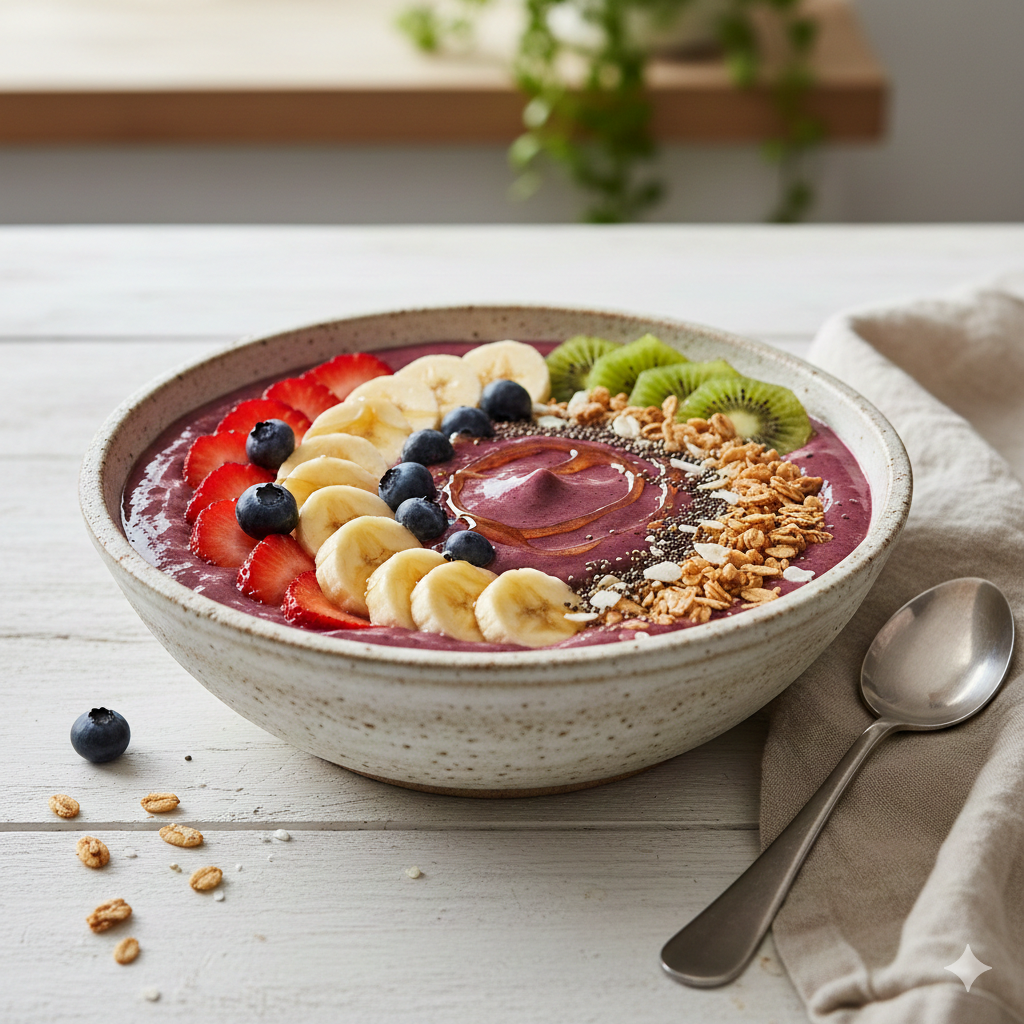
The smoothie bowl is far more than just “smoothie in a bowl.” It is a culinary canvas, a vibrant celebration of texture, and a modern breakfast ritual that has transformed the way we approach functional nutrition. While the traditional sippable smoothie is designed for convenience and speed, the smoothie bowl invites you to slow down. It demands a spoon, rewards a keen eye for aesthetics, and provides a more satiating experience by incorporating the mechanical act of chewing.
The origins of the smoothie bowl are often traced back to the Açaí Na Tigela (Açaí in the bowl) from Brazil, particularly popularized in the 1980s and 90s in Rio de Janeiro and later in Hawaii. Originally used by indigenous communities in the Amazon for energy, the frozen pulp of the açaí berry was blended with guaraná syrup and topped with granola and sliced bananas to fuel surfers and athletes. Today, this concept has evolved into a global phenomenon, encompassing everything from tropical dragon fruit bases to earthy green kale and spirulina blends.
What makes a smoothie bowl truly significant is its versatility. It bridges the gap between a light snack and a hearty meal, allowing for an endless array of “superfood” additions—seeds, nuts, fresh fruits, and adaptogens—that might otherwise settle at the bottom of a straw. It’s a dish that tastes like dessert but functions like a high-performance fuel.
2. Recipe Overview
- Cuisine Type: Modern Fusion / Health-Focused
- Difficulty Level: Easy to Intermediate (Requires specific blending technique)
- Total Preparation Time: 10–15 minutes
- Total Cooking Time: 0 minutes (Raw/No-cook)
- Dietary Classifications: Vegan, Vegetarian, Gluten-Free, Dairy-Free, Refined Sugar-Free.
3. Equipment and Tools
To achieve the “soft-serve” consistency required for a successful bowl, the right tools are non-negotiable.
- High-Speed Blender: Ideally 1200+ watts (e.g., Vitamix or Blendtec). A standard blender may struggle with the low liquid-to-frozen-ratio.
- Tamper Tool: Specifically for high-speed blenders to push frozen ingredients into the blades without adding extra liquid.
- Measuring Cups and Spoons: For precision in balancing flavor and texture.
- Chilled Ceramic or Coconut Bowl: A room-temperature bowl will melt the base quickly. A bowl with a 500ml to 750ml capacity (approx. 2–3 inches deep) is ideal.
- Silicone Spatula: For scraping every bit of the thick mixture out of the blender.
4. Serving Suggestions
The presentation is half the joy of a smoothie bowl.
Plating Recommendations
- The “Gradient” Pour: Pour the base and tap the bowl on the counter to level it out.
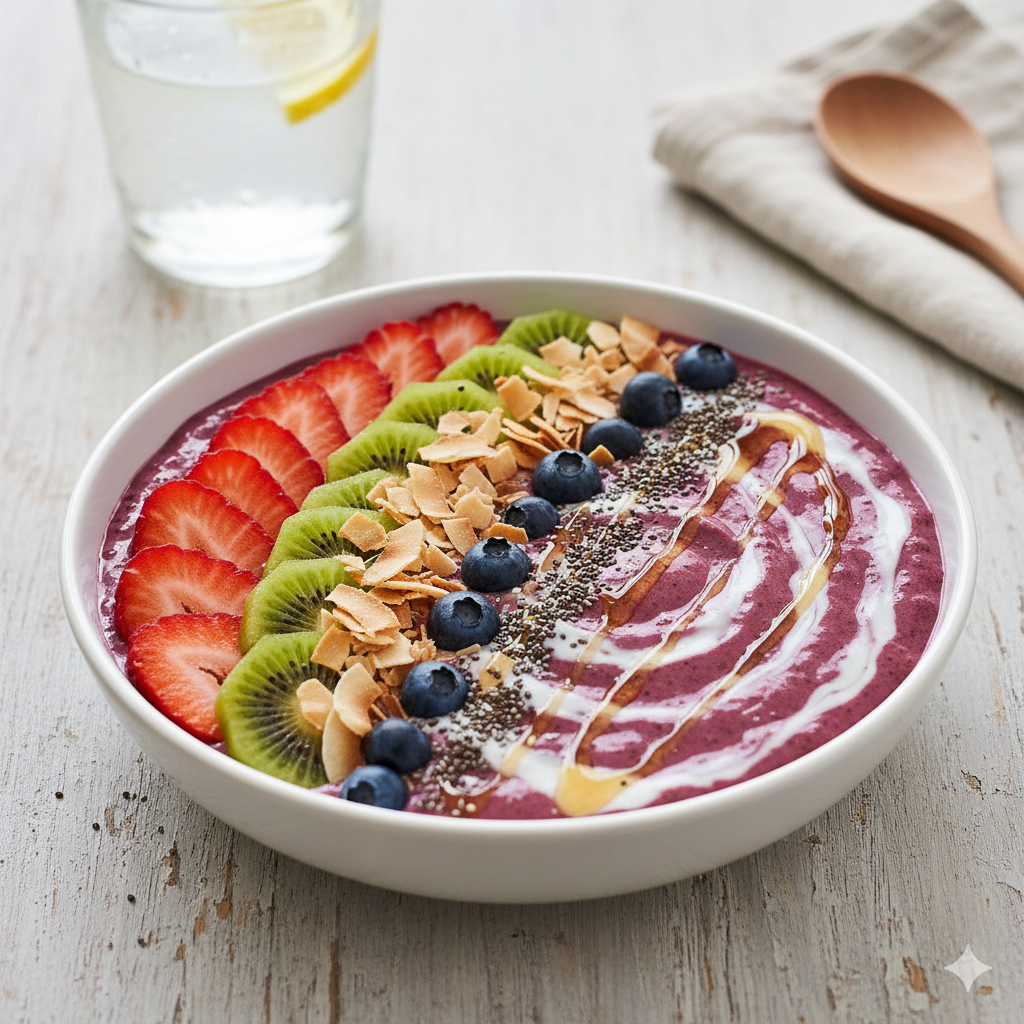
- Symmetry vs. Chaos: Arrange toppings in neat, straight rows for a professional “café” look, or a crescent moon shape on one side to showcase the vibrant color of the base.
Garnish Ideas
- Crunch: Hemp hearts, cacao nibs, toasted coconut flakes, or gluten-free granola.
- Freshness: Edible flowers (pansies or nasturtiums), micro-mint leaves, or zest of lime.
- Drizzles: A “magic shell” made of melted dark chocolate and coconut oil, or a swirl of creamy almond butter.
Beverage Pairings
- Matcha Latte: The earthy tones of green tea complement fruit-forward bowls.
- Golden Milk (Turmeric Latte): A warm, anti-inflammatory contrast to the cold bowl.
5. Nutritional Information
(Per serving based on the “Signature Berry Base”)
| Nutrient | Amount |
| Calories | 340 kcal |
| Total Fat | 8g |
| Saturated Fat | 1.5g |
| Sodium | 45mg |
| Total Carbohydrates | 62g |
| Dietary Fiber | 12g |
| Sugars (Natural) | 34g |
| Protein | 7g |
Health Benefits:
- High Antioxidants: Berries provide anthocyanins which combat oxidative stress.
- Digestive Health: High fiber content from whole fruits and seeds supports a healthy gut microbiome.
- Sustained Energy: The combination of complex carbs and healthy fats prevents the “sugar crash” associated with processed cereals.
6. Storage and Reheating
Smoothie bowls are best enjoyed immediately. However, if you have leftovers:
- Refrigeration: Not recommended. The mixture will turn into a thin juice within 20 minutes.
- Freezing: You can freeze the base in silicone muffin tins. When ready to eat, pop two “pucks” into the blender with a splash of milk and re-blend.
- Meal Prep: “Smoothie Packs” are the way to go. Measure all dry/frozen ingredients into a reusable bag. In the morning, just add liquid and blend.
7. Expert Tips and Variations
Professional Chef Tips
- The Frozen Banana Secret: Always peel bananas before freezing. Slice them into coins for easier blending.
- Liquid Second: Always add your frozen fruit first, then pour the liquid over the top. This prevents the blades from spinning in a “liquid pocket” at the bottom.
- The “Pulse” Method: If you don’t have a high-speed blender, pulse the frozen fruit until it looks like “snow,” then add liquid one tablespoon at a time.
Creative Variations
- The Green Goddess: Replace half the berries with frozen mango and add 1 cup of baby spinach and 1/2 tsp of spirulina.
- Chocolate Protein Power: Add 1 scoop of chocolate plant protein, 1 tbsp cacao powder, and 1 tbsp peanut butter to the base.
- Tropical Dream: Use frozen pineapple, coconut milk, and a squeeze of lime.
8. Ingredients Section
The Base (Signature Berry)
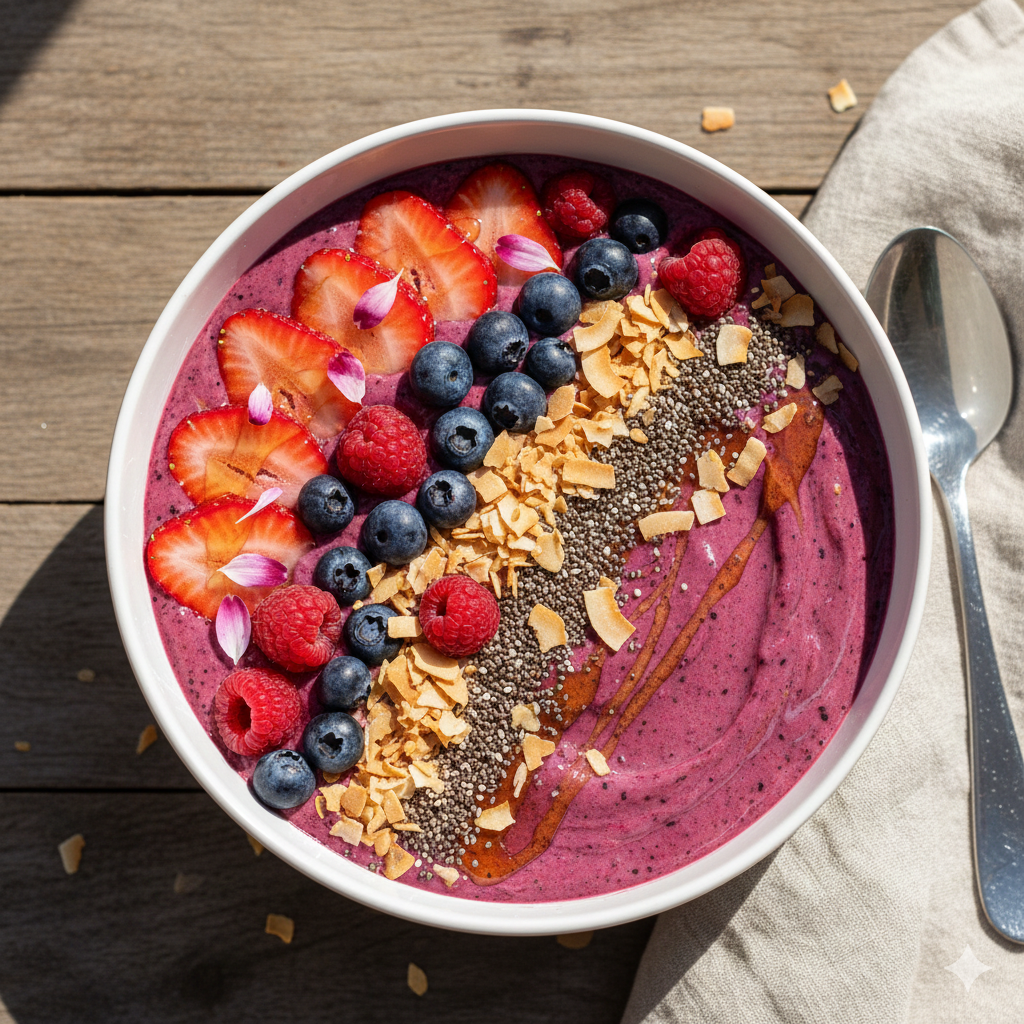
- 2 cups Frozen Bananas (approx. 2 medium bananas, sliced and frozen for at least 12 hours).
- 1 cup Frozen Mixed Berries (Blueberries, raspberries, blackberries).
- 1/4 cup Unsweetened Almond Milk (or coconut water). Note: Use more only if absolutely necessary.
- 1 tbsp Chia Seeds (Adds thickness and Omega-3s).
- 1/2 tsp Pure Vanilla Extract.
The Toppings
- 1/4 cup Fresh Strawberries (sliced).
- 2 tbsp Sliced Almonds or Walnuts.
- 1 tbsp Shredded Coconut.
- 1 tsp Raw Honey or Maple Syrup (optional drizzle).
Substitutions
- Banana-Free: Use frozen cauliflower rice (steamed then frozen) or frozen avocado chunks for creaminess without the sugar/flavor of bananas.
- Nut-Free: Use oat milk and sunflower seed butter.
9. Step-by-Step Instructions
- Chill the Bowl: Place your serving bowl in the freezer for 5 minutes while you prepare ingredients.
- Layer the Blender: Add the frozen banana coins and mixed berries into the blender canister. Sprinkle the chia seeds and vanilla extract over the fruit.
- Add Liquid Precisely: Pour exactly 1/4 cup of your chosen liquid over the ingredients. Do not over-pour.
- The Initial Blend: Start the blender on its lowest speed. If using a high-speed blender, immediately use the tamper to push the frozen fruit down into the blades.
- Ramp Up the Speed: Slowly increase the speed to medium-high. You are looking for a “four-quadrant” vortex to form. This should take 45–60 seconds.
- Check Consistency: Stop the blender. The mixture should be so thick that it holds its shape on a spoon. It should look like thick soft-serve ice cream. If it’s too thick to move, add liquid 1 tablespoon at a time.
- Transfer: Quickly use a silicone spatula to scoop the base into your chilled bowl. Smooth the top with the back of a spoon.
- Artful Topping: Start with your larger items (fruit slices) and move to smaller items (seeds/drizzles).
- Serve: Eat immediately while the base is firm.
10. Frequently Asked Questions (FAQ)
Q: Why is my smoothie bowl always too runny?
A: This is usually due to too much liquid or using fresh fruit instead of frozen. The “frozen” element is what provides the structure. Always start with the minimum liquid recommended.
Q: Can I make this without a high-speed blender?
A: Yes, but it requires patience. Use the pulse setting frequently and stop to scrape down the sides every 15 seconds. You may need slightly more liquid, resulting in a softer texture.
Q: Is a smoothie bowl actually healthy, or just a sugar bomb?
A: It depends on the ingredients. Focus on fiber-rich fruits, include a source of healthy fat or protein (like nut butter or seeds), and avoid adding refined syrups to keep the glycemic load balanced.
Q: How do I get those perfect “ripples” on top?
A: Use a very thick base and a small offset spatula. Gently swirl the surface of the base before adding toppings.
Q: Can I use frozen vegetables?
A: Absolutely! Frozen spinach, kale, and even frozen steamed cauliflower or zucchini are excellent “hidden” ways to add bulk and nutrients without altering the flavor significantly.