1. Introduction
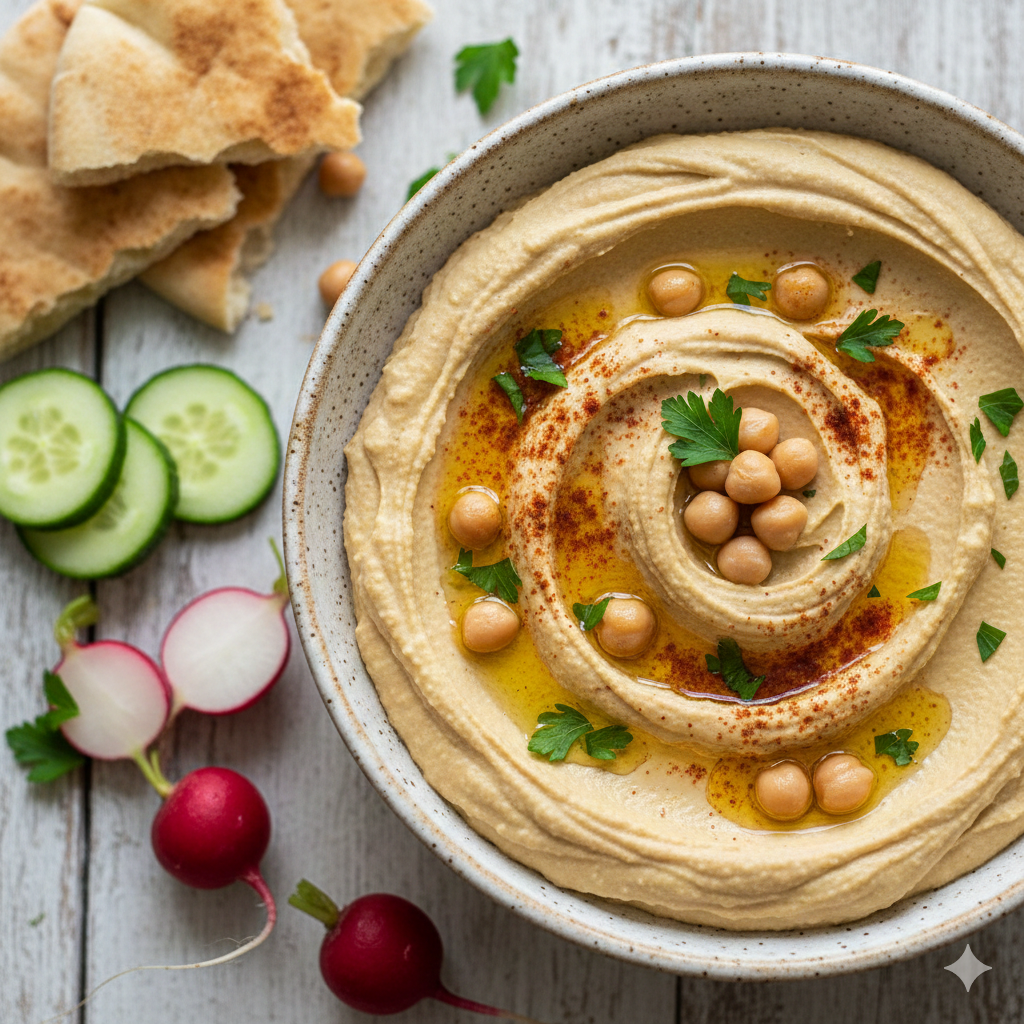
There is a profound, almost spiritual difference between a plastic tub of grocery store hummus and a warm bowl of the homemade variety, swirled with golden olive oil. For many, hummus is a staple “dip,” but in its Mediterranean and Middle Eastern heartlands, it is a centerpiece of hospitality.
The word hummus is actually the Arabic word for “chickpea.” While its exact origins are debated among many Levantine cultures, the soul of the dish remains the same: a humble legume transformed into a luxurious, velvet-smooth puree. This recipe isn’t just about mixing ingredients; it’s about a few simple techniques—like the order of blending and the temperature of your water—that elevate a basic snack into a gourmet experience. Whether you’re a seasoned home cook or a kitchen novice, this guide will help you achieve that elusive, restaurant-quality silkiness that makes store-bought versions pale in comparison.
2. Recipe Overview
- Cuisine Type: Middle Eastern / Levantine
- Difficulty Level: Easy
- Prep Time: 10 minutes
- Cook Time: 0 minutes (using canned chickpeas)
- Total Time: 10 minutes
- Dietary Classifications: Vegan, Vegetarian, Gluten-Free, Dairy-Free, Nut-Free (contains sesame)
3. Equipment and Tools
To achieve the perfect emulsion, the right tools are essential.
- High-Speed Food Processor or Blender: A 7-cup to 11-cup capacity food processor is ideal for creating a smooth texture.
- Silicone Spatula: For scraping down the sides of the bowl to ensure every chickpea is pulverized.
- Citrus Juicer: To get the maximum yield from your fresh lemons.
- Fine Mesh Strainer: Necessary for rinsing the chickpeas and removing any excess starch or loose skins.
- Measuring Cups and Spoons: For precision in balancing the tahini-to-lemon ratio.
4. Serving Suggestions
Hummus is incredibly versatile. Move beyond the standard baby carrot and try these pairings:
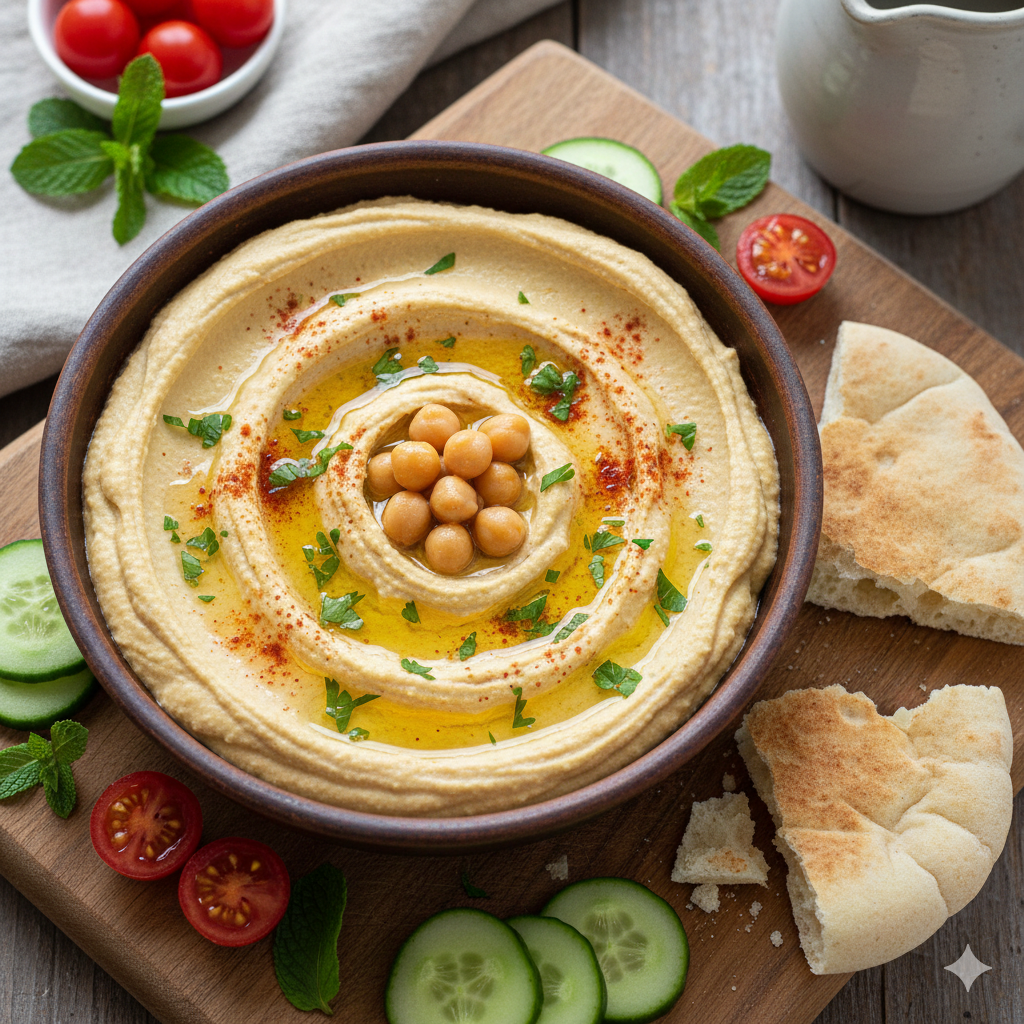
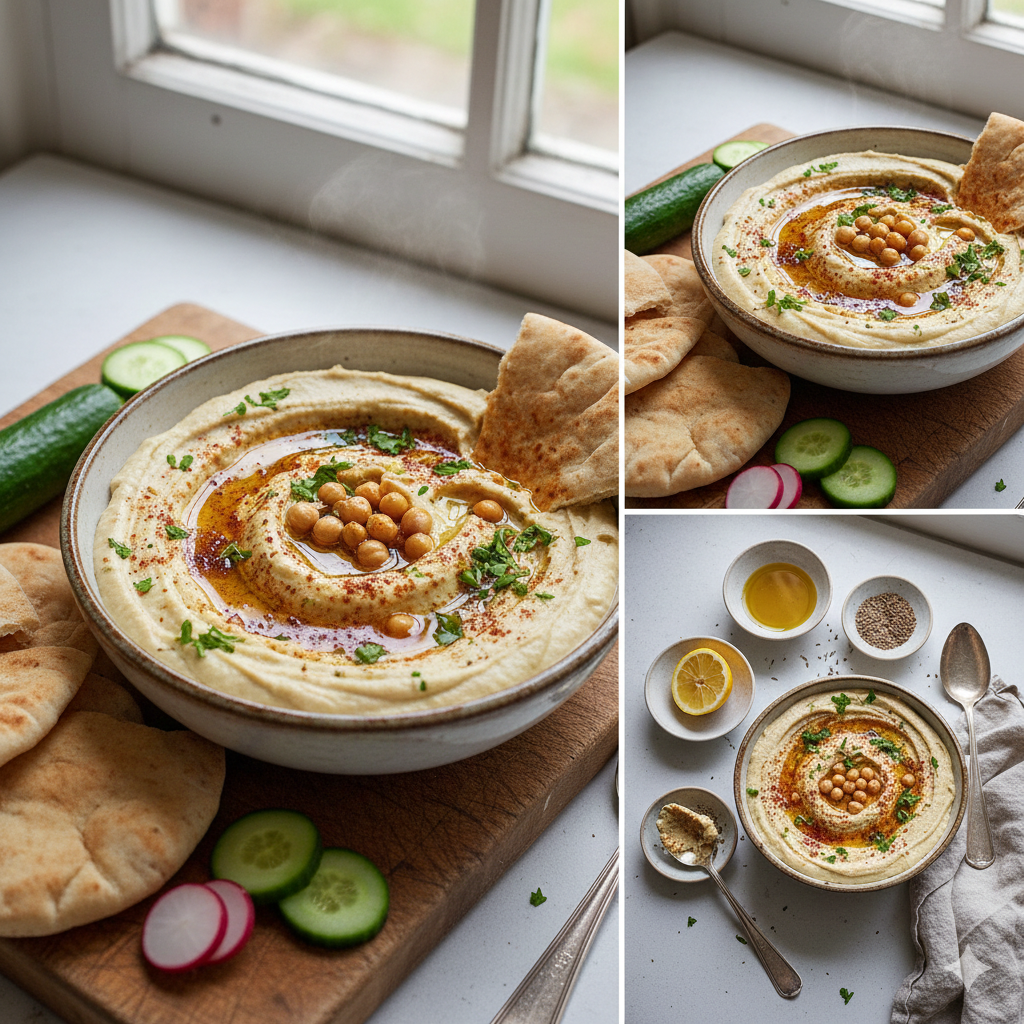
- Plating: Use the back of a large spoon to create deep “swooshes” in the hummus. This creates “wells” to hold the olive oil.
- Garnish: A dusting of smoked paprika or sumac, a handful of whole cooked chickpeas, and finely chopped fresh parsley.
- Sides: Warm, fluffy pita bread, sliced cucumbers, radishes, or even grilled lamb skewers.
- Beverage Pairings: A crisp, dry white wine like Sauvignon Blanc or a refreshing iced mint tea.
5. Nutritional Information
(Per 1/4 cup serving)
| Nutrient | Amount |
| Calories | 160 kcal |
| Total Fat | 10g |
| Saturated Fat | 1.5g |
| Protein | 5g |
| Carbohydrates | 14g |
| Dietary Fiber | 4g |
Health Benefits: Hummus is a nutritional powerhouse. It provides plant-based protein, heart-healthy monounsaturated fats from tahini and olive oil, and a significant amount of fiber to aid digestion.
6. Storage and Reheating
- Refrigeration: Store in an airtight container for up to 5 days.
- Freezing: You can freeze hummus for up to 3 months. Note that the texture may become slightly grainier; thaw in the fridge and give it a vigorous stir or a quick pulse in the processor to restore creaminess.
- Reheating: Hummus is best served at room temperature or slightly warm. If refrigerated, let it sit out for 20 minutes before serving.
7. Expert Tips and Variations
- The Secret Ingredient: Use ice-cold water while blending. The cold helps aerate the tahini, turning the mixture a pale, creamy white.
- The Peel Debate: For the absolute smoothest hummus, pinch the skins off the chickpeas. It takes 5 minutes but results in a “whipped” texture.
- Variations:
- Roasted Red Pepper: Add 1 roasted pepper to the mix.
- Roasted Garlic: Swap raw garlic for a whole head of roasted garlic for a mellow, sweet flavor.
- Spicy: Add a teaspoon of harissa paste or a pinch of cayenne.
8. Ingredients Section
- 1 can (15 oz / 425g) Chickpeas: Look for “organic” or “low sodium.”
- 1/2 cup (120ml) Premium Tahini: Ensure it is runny and well-stirred.
- 1/4 cup (60ml) Fresh Lemon Juice: Approximately 1–2 lemons.
- 1 small clove Garlic: Grated or finely minced.
- 2-3 tbsp Ice Water: Added gradually.
- 1/2 tsp Sea Salt: Adjust to taste.
- 1/2 tsp Ground Cumin: For authentic earthy undertones.
- Extra Virgin Olive Oil: For drizzling.
9. Step-by-Step Instructions
- Process the Tahini and Lemon: Add the tahini and lemon juice to the food processor. Process for 1 minute. This “whips” the tahini, creating the base for a creamy texture.
- Add Aromatics: Add the minced garlic, salt, and cumin. Process for another 30 seconds.
- Prepare Chickpeas: Drain and rinse the chickpeas thoroughly. If you have time, remove the skins by gently pinching them.
- Incorporate Chickpeas: Add half the chickpeas to the processor and blend for 1 minute. Scrape down the sides. Add the remaining chickpeas and blend for another 2 minutes until thick and somewhat smooth.
- The “Ice Water Trick”: While the processor is running, slowly drizzle in the ice water. Watch as the hummus lightens in color and becomes incredibly fluffy.
- Final Seasoning: Taste and add more salt or lemon juice if needed.
- Garnish and Serve: Transfer to a bowl, create your “wells,” and flood with olive oil.
10. Frequently Asked Questions (FAQ)
Q: Can I use dried chickpeas instead of canned?
A: Absolutely. Soak 1 cup of dried chickpeas overnight, then simmer with a pinch of baking soda for 1–2 hours until they are very soft (nearly falling apart). This actually produces the best flavor.
Q: My hummus is too thick, what should I do?
A: Continue adding ice water, one teaspoon at a time, with the processor running until you reach your desired consistency.
Q: Why does my hummus taste bitter?
A: This is usually due to the tahini. Ensure your tahini hasn’t gone rancid and that you aren’t over-processing the garlic. Grating garlic rather than blending it for a long time prevents the release of bitter enzymes.