
1. Introduction: A Symphony of Autumn Flavors
There is a specific moment when the air turns crisp, and the kitchen becomes a sanctuary of warmth, that calls for a very particular kind of snack. Enter the Butternut Squash Crostini with Sage Butter. This isn’t just an appetizer; it’s a celebration of texture and seasonal transition.
The origin of the “crostini”—meaning “little toasts” in Italian—dates back to the medieval era when Italian peasants used slices of bread as makeshift plates. While the vessels have remained humble, the toppings have evolved into a canvas for culinary artistry. This specific rendition marries the rustic charm of the Italian countryside with the deep, nutty sweetness of roasted squash, a staple of North American fall harvests.
The magic of this dish lies in the Maillard reaction—that beautiful browning of the squash in the oven—paired with the herbaceous punch of fried sage. When you bite into a well-constructed crostini, you experience a tiered sensory journey: the crunch of the baguette, the velvety smoothness of the squash puree, the tang of goat cheese, and the earthy, buttery finish of the sage. It is a dish that tells a story of harvest, heat, and heritage.
2. Recipe Overview
- Cuisine Type: Modern Italian-American / Fusion
- Difficulty Level: Intermediate (requires multi-tasking and precision browning)
- Prep Time: 20 minutes
- Cook Time: 40 minutes
- Total Time: 1 hour
- Dietary Classifications: Vegetarian (can be made Vegan or Gluten-Free with substitutions)
3. Equipment and Tools
To achieve professional results, ensure your kitchen is staged with the following:
- Baking Sheets: Two large (18×13 inch) rimmed baking sheets to prevent overcrowding.
- Chef’s Knife: A sharp 8-inch blade for safely cubing the dense butternut squash.
- Food Processor or High-Speed Blender: For achieving a silky-smooth squash base (alternatively, a potato masher for a rustic texture).
- Small Skillet: Stainless steel or cast iron (approx. 8-inch diameter) for browning the butter.
- Mixing Bowls: One large for tossing squash, one medium for the cheese spread.
- Pastry Brush: For evening coating the baguette slices with olive oil.
- Mandoline Slicer (Optional): If you prefer razor-thin squash ribbons rather than a mash.
4. Serving Suggestions
Plating Recommendations:
Arrange the crostini on a dark slate board or a rustic wooden paddle. The orange hues of the squash pop beautifully against darker backgrounds. Avoid crowding; give each piece breathing room to highlight the garnish.
Garnish Ideas:
- Fried Sage Leaves: The star of the show.
- Pomegranate Arils: For a burst of acidity and festive color.
- Honey Drizzle: A light ribbon of wildflower honey enhances the squash’s natural sugars.
- Toasted Pepitas: For an extra layer of crunch.
Pairings:
- Wine: A crisp Chardonnay with oaky notes or a dry Prosecco to cut through the richness of the butter.
- Non-Alcoholic: A sparkling apple cider or a ginger-kombucha.
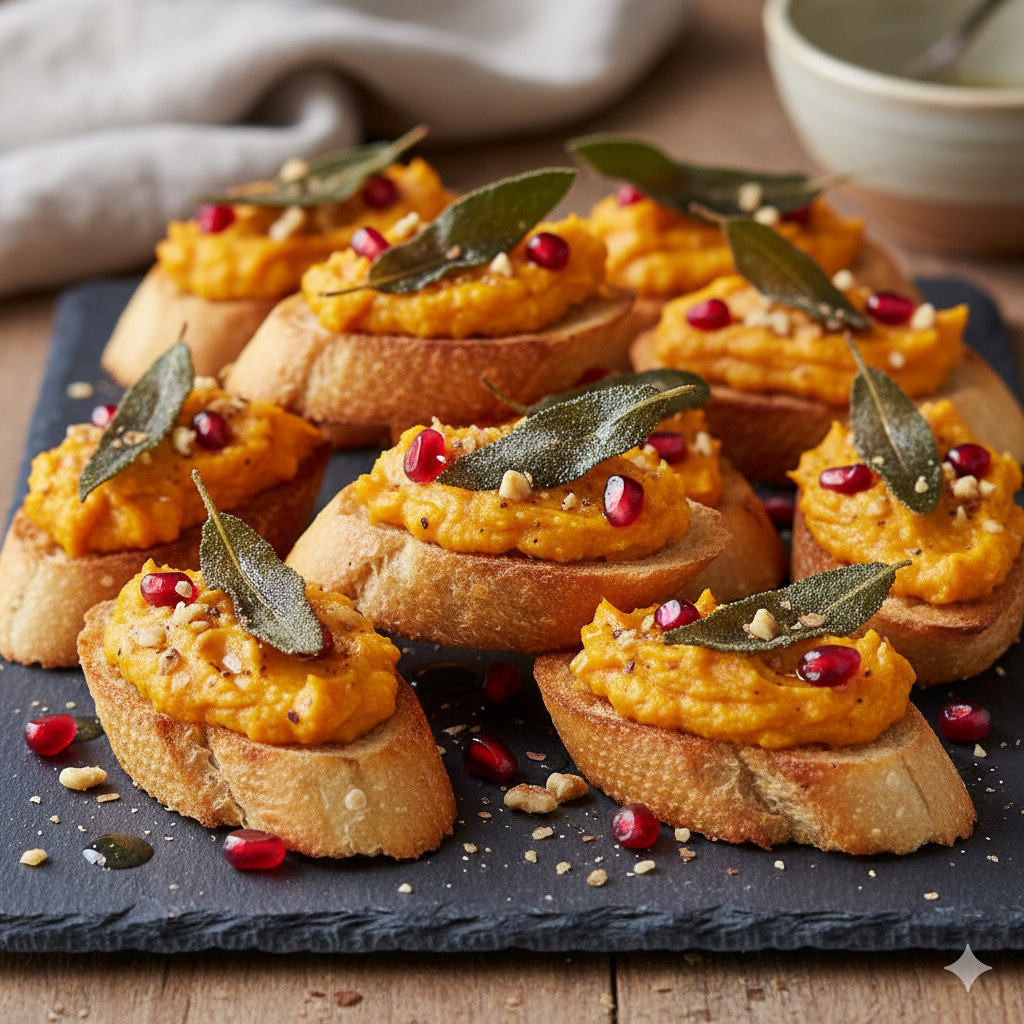
5. Nutritional Information (Per 2 Crostini)
| Nutrient | Amount |
| Calories | 185 kcal |
| Total Fat | 10g |
| Saturated Fat | 5g |
| Carbohydrates | 22g |
| Fiber | 3g |
| Protein | 5g |
| Sodium | 210mg |
Health Benefits: Butternut squash is a powerhouse of Vitamin A and Vitamin C, supporting immune function and skin health. Using real butter in moderation provides fat-soluble vitamins, while sourdough bread (if used) offers probiotic benefits.
6. Storage and Reheating
- Refrigeration: Store the squash puree and the toasted bread separately. The puree will last 4 days in an airtight container.
- Freezing: The squash puree freezes excellently for up to 3 months. Do not freeze assembled crostini.
- Reheating: Reheat the squash in a small saucepan over low heat with a splash of water or cream. Re-toast the bread in a 350°F oven for 3 minutes to regain crispness.
7. Expert Tips and Variations
Professional Tips
- The “Sage Secret”: Do not let the butter turn black. The goal is Beurre Noisette (hazelnut butter), which is a deep golden brown with a nutty aroma.
- The Bread Base: Use a day-old baguette. Fresh bread is often too soft and will become soggy under the weight of the toppings.
Variations
- The Vegan Twist: Use vegan butter (oil-based) and a cashew-based “goat cheese” crumble.
- The Spicy Kick: Add a pinch of red pepper flakes to the butter while browning.
- Gluten-Free: Swap the baguette for sliced sweet potato “toasts” or high-quality GF crackers.
8. Ingredients Section
For the Squash Base
- 1 medium Butternut Squash (approx. 2 lbs / 900g), peeled and cubed.
- 2 tbsp Extra Virgin Olive Oil.
- 1 tsp Kosher Salt.
- 1/2 tsp Ground Nutmeg.
For the Sage Butter
- 4 tbsp Unsalted Butter (European style preferred for higher fat content).
- 12-15 Fresh Sage Leaves.
- 1 clove Garlic, smashed.
For Assembly
- 1 large French Baguette, sliced into 1/2-inch rounds.
- 4 oz (115g) Creamy Goat Cheese (Chevre) or Ricotta.
- 1/4 cup Toasted Walnuts, crushed.
- Optional: Balsamic Glaze for drizzling.

9. Step-by-Step Instructions
- Roast the Squash: Preheat your oven to 400°F (200°C). Toss the cubed squash with olive oil, salt, and nutmeg. Spread on a baking sheet. Roast for 25–30 minutes until edges are caramelized and the center is fork-tender.
- Toast the Crostini: While the squash roasts, brush baguette slices with oil. Place on a separate tray and bake for 8–10 minutes at the same temperature until golden.
- Prepare the Puree: Place the roasted squash into a food processor. Pulse until smooth. Taste and adjust seasoning.
- Brown the Butter: In a small skillet, melt butter over medium heat. Add the sage leaves and smashed garlic. Cook, swirling the pan, until the butter foams and turns golden brown. The sage leaves should become crisp. Remove from heat immediately.
- Assemble: * Spread a thin layer of goat cheese on each toast.
- Add a generous dollop of squash puree.
- Top with one fried sage leaf.
- Drizzle the remaining brown butter over the top.
- Finish with crushed walnuts.
10. Frequently Asked Questions (FAQ)
Q: Can I use canned pumpkin instead?
A: While possible, canned pumpkin lacks the roasted depth and texture of fresh butternut squash. If you must use it, sauté the canned puree in a pan first to reduce moisture.
Q: Why is my sage butter bitter?
A: You likely overcooked the butter. Once the milk solids turn brown, the window before it burns is only a few seconds.
Q: Can I make this ahead of time?
A: You can prep all components 24 hours in advance, but always assemble right before serving to prevent the bread from getting soggy.
Q: How do I peel a butternut squash easily?
A: Slice off the top and bottom, then use a heavy-duty Y-peeler. If the skin is too tough, microwave the whole squash for 60 seconds to soften the rind.
Q: What if I don’t like goat cheese?
A: Whipped feta or full-fat ricotta are excellent substitutes that provide the necessary creaminess.