1. Introduction
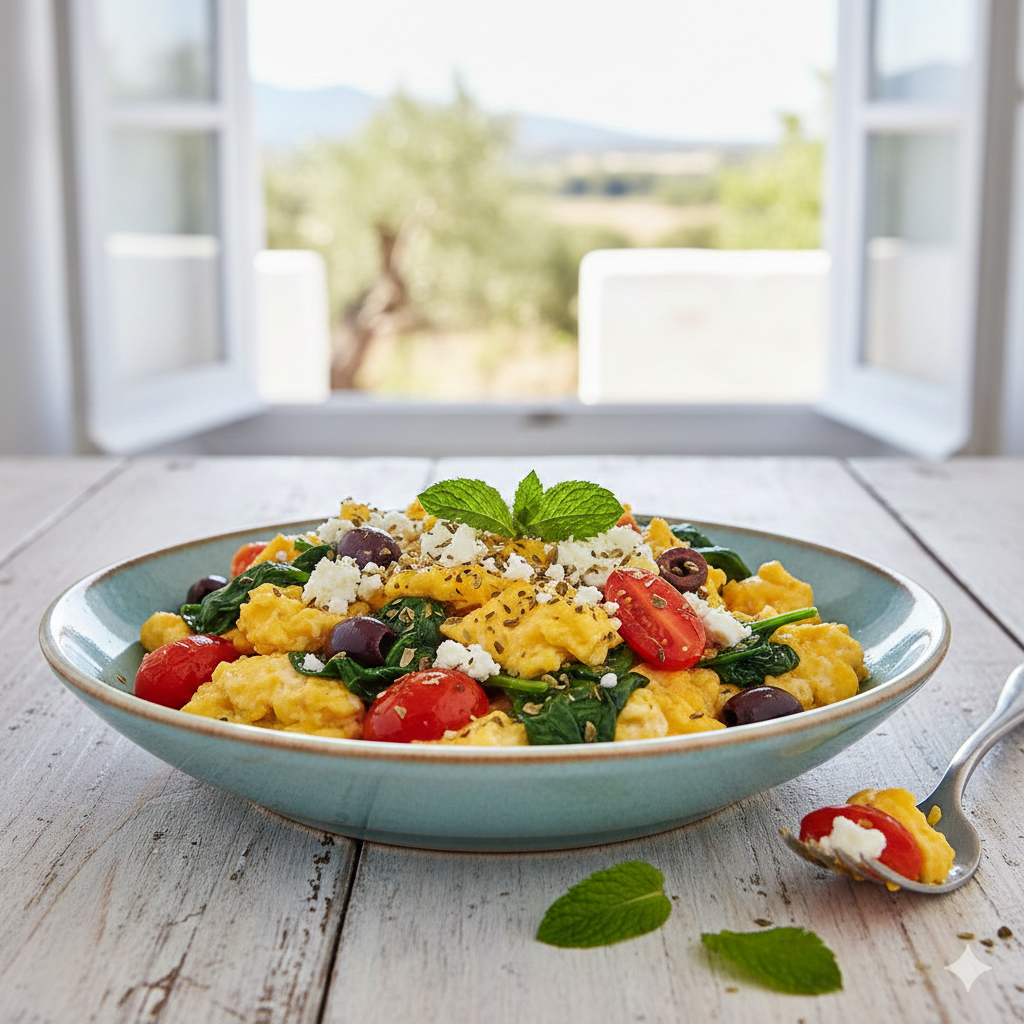
Imagine waking up to the gentle breeze of the Aegean Sea, the scent of blooming jasmine in the air, and a breakfast that feels like a warm embrace from the sun. While we can’t all live on a Greek island, we can certainly eat like we do. The Mediterranean Veggie Scrambled Egg is more than just a quick meal; it is a celebration of the “Cucina Povera” philosophy—taking simple, high-quality ingredients and transforming them into something sublime.
This dish finds its roots in the traditional rural breakfasts of Southern Europe, where eggs are rarely served alone. Instead, they act as a canvas for the season’s bounty: sun-ripened tomatoes, briny olives, and earthy greens. What makes this recipe a standout is the contrast in textures—the creamy, soft-curd eggs against the sharp tang of crumbled feta and the slight snap of sautéed peppers. It’s a nutrient-dense powerhouse that proves “healthy” and “indulgent” can exist on the same plate.
2. Recipe Overview
- Cuisine Type: Mediterranean / Fusion
- Difficulty Level: Easy (Beginner-friendly)
- Total Preparation Time: 5 minutes
- Total Cooking Time: 5 minutes
- Dietary Classifications: Vegetarian, Gluten-Free, Keto-friendly, Low-Carb.
3. Equipment and Tools
To achieve the perfect “ribbon” texture of the eggs without browning them, the right tools are essential.
- Non-Stick Skillet: An 8-inch or 10-inch pan is ideal for a 2-person serving.
- Silicone Spatula: Heat-resistant and flexible to sweep the bottom of the pan smoothly.
- Small Mixing Bowl: For whisking the eggs to incorporate air.
- Whisk or Fork: A balloon whisk is preferred for maximum aeration.
- Chef’s Knife: For precision dicing of the vegetables.
- Cutting Board: Wood or plastic.
- Measuring Spoons: For oils and dried herbs.
4. Serving Suggestions
Plating Recommendations:
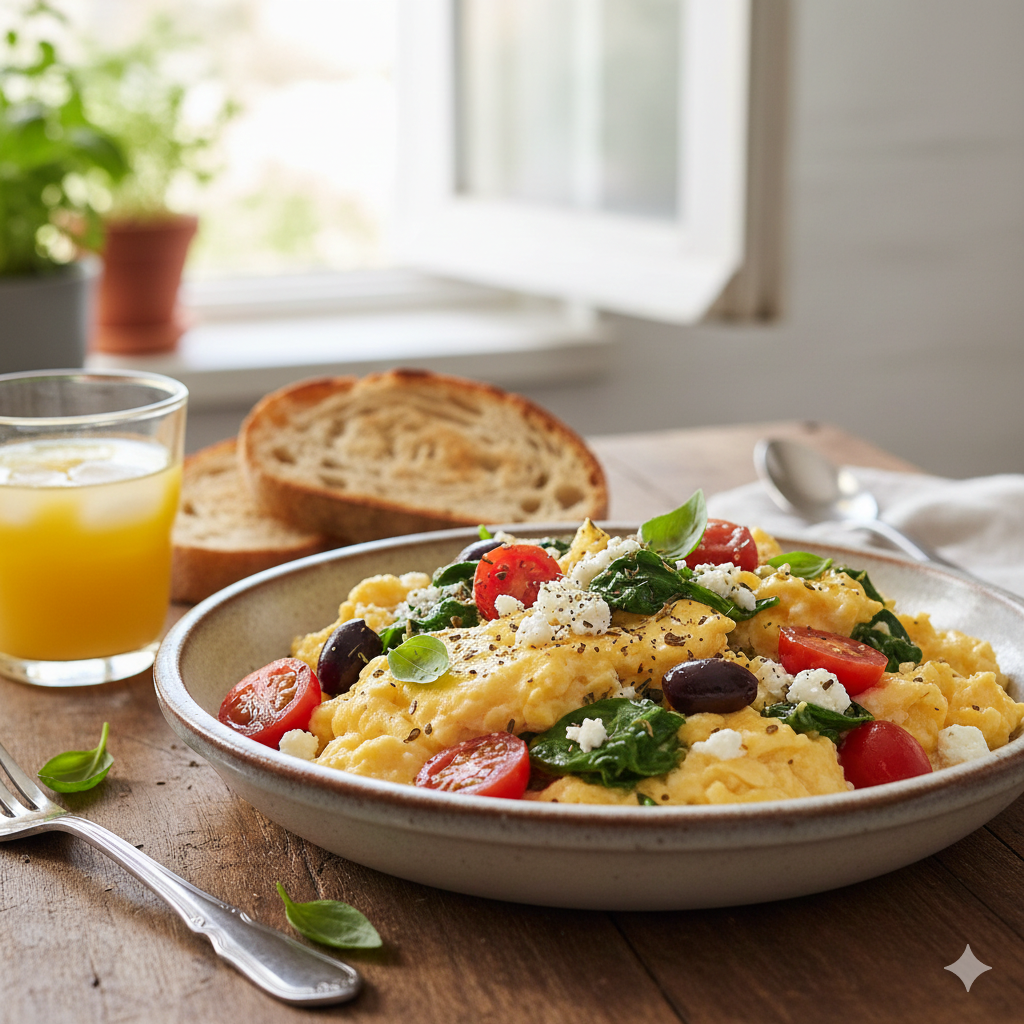
Serve the scramble in a shallow ceramic bowl to retain heat. Top with an extra sprinkle of fresh herbs and a crack of black pepper right before serving.
Garnish Ideas:
- A drizzle of high-quality Extra Virgin Olive Oil (EVOO).
- A pinch of Aleppo pepper or red chili flakes for a subtle kick.
- Freshly torn mint or dill leaves.
Complementary Side Dishes:
- A thick slice of toasted sourdough or crusty ciabatta.
- A side of sliced avocado with lemon juice.
- Grilled halloumi cheese.
Beverage Pairings:
- Morning: A strong, dark roast coffee or a fresh mint tea.
- Brunch: A crisp, dry Rosé or a sparkling water with cucumber and lime.
5. Nutritional Information
(Per Serving – based on 2 eggs)
| Nutrient | Amount |
| Calories | 245 kcal |
| Protein | 16g |
| Total Fat | 18g |
| Carbohydrates | 5g |
| Fiber | 2g |
| Sodium | 380mg |
Health Benefits: This dish is rich in Choline (brain health), Lutein (eye health), and Vitamin K from the spinach. The healthy fats from the olive oil and feta aid in the absorption of fat-soluble vitamins.
6. Storage and Reheating
- Refrigeration: While best eaten fresh, leftovers can be stored in an airtight container for up to 2 days.
- Freezing: Not recommended. Eggs lose their texture and become rubbery when frozen and thawed.
- Reheating: To avoid “rubbery egg syndrome,” reheat in a skillet over low heat with a teaspoon of water, covered, for 1–2 minutes. Alternatively, microwave at 50% power in 30-second intervals.
7. Expert Tips and Variations
Professional Chef Tips
- Low and Slow: Never use high heat. Scrambled eggs should be cooked over medium-low to maintain a custard-like consistency.
- The “Carry-over” Rule: Remove the eggs from the heat when they still look slightly “wet.” The residual heat from the pan will finish the cooking process on the plate.
Common Mistakes to Avoid
- Over-whisking: Whisk just until the yolks and whites are combined. Excessive whisking can make the eggs tough.
- Salting too early: Salt can break down egg proteins. Add salt right before the eggs hit the pan or at the very end.
Creative Variations
- The Protein Boost: Add smoked salmon or cooked chickpeas.
- The Spice Route: Stir in a spoonful of Harissa paste for a North African twist.
- The Pesto Swap: Swirl in a tablespoon of basil pesto during the last 30 seconds of cooking.
8. Ingredients Section
The Base
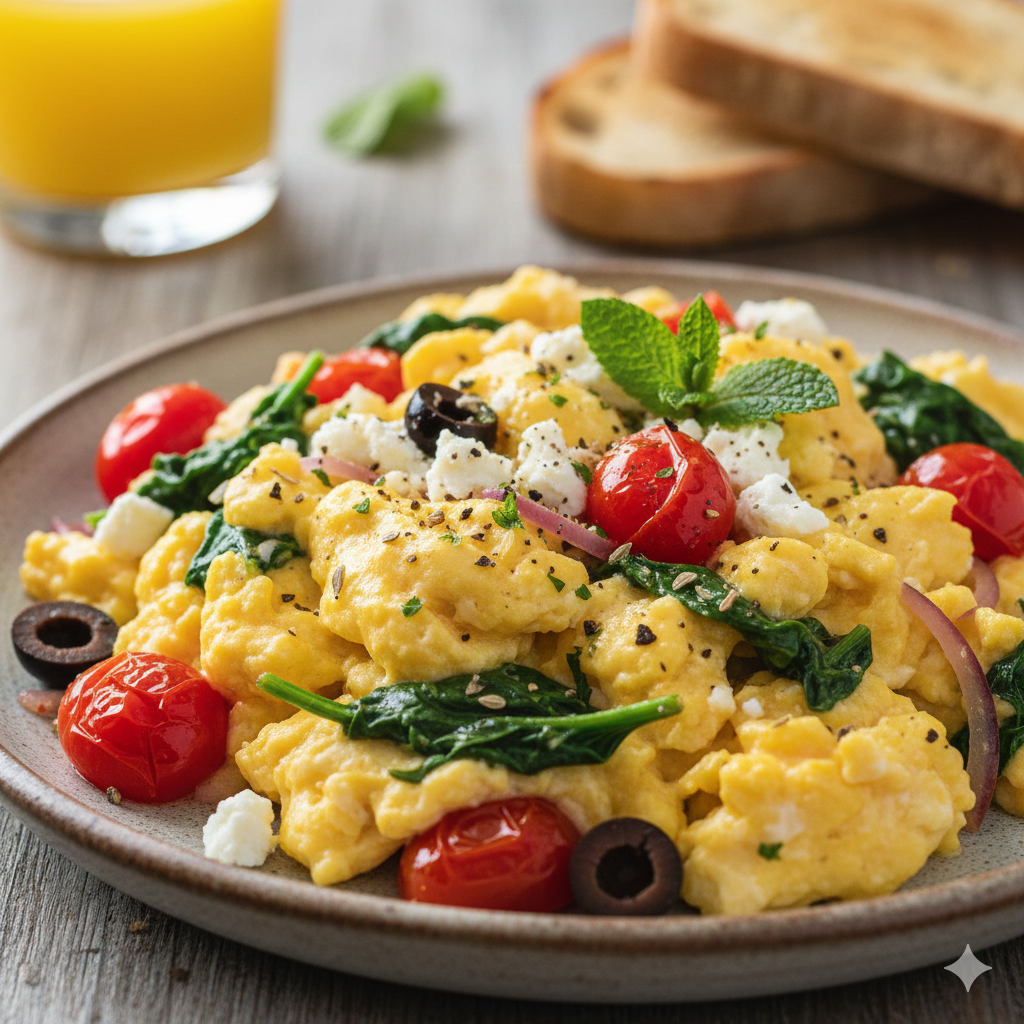
- Large Eggs (4): Preferably pasture-raised for a vibrant orange yolk.
- Whole Milk or Heavy Cream (1 tbsp): Adds creaminess (optional).
The Mediterranean Mix
- Baby Spinach (1 cup): Fresh, roughly chopped.
- Cherry Tomatoes (1/2 cup): Halved or quartered.
- Red Onion (2 tbsp): Finely minced.
- Feta Cheese (1/4 cup): High-quality sheep’s milk feta, crumbled.
- Kalamata Olives (5-6): Pitted and sliced.
- Dried Oregano (1/2 tsp): High-grade Greek oregano.
Sourcing & Substitutions
- Oil: Use Extra Virgin Olive Oil for authenticity. If unavailable, butter is a delicious alternative.
- Cheese: If you dislike Feta, use Goat Cheese for creaminess or Parmesan for a salty umami punch.
- Greens: Kale or Swiss chard can replace spinach, but require 2-3 minutes more sautéing time.
9. Step-by-Step Instructions
- Prep the Veggies: Dice the onions, halve the tomatoes, and chop the spinach. Ensure all ingredients are ready, as the cooking process is very fast.
- Whisk the Eggs: In a small bowl, whisk the 4 eggs with the milk/cream and dried oregano. Do not add salt yet.
- Sauté the Aromatics: Heat 1 tablespoon of olive oil in the skillet over medium heat. Add the onions and cook for 2 minutes until translucent.
- Blister the Tomatoes: Add the cherry tomatoes to the pan. Cook for 1-2 minutes until they begin to soften and release their juices.
- Wilt the Greens: Add the spinach and olives. Stir for 30 seconds until the spinach just begins to collapse.
- The Scramble: Lower the heat to medium-low. Pour the egg mixture over the vegetables.
- Form the Curds: Using your spatula, gently push the eggs from the edges toward the center. Let the liquid egg fill the space. Repeat this motion slowly.
- The Finishing Touch: When the eggs are 80% set, sprinkle the crumbled feta over the top.
- Serve: Once the eggs look soft and slightly moist, remove from heat immediately. Season with a pinch of sea salt and black pepper.
10. Frequently Asked Questions (FAQ)
Q: Can I make this dairy-free?
A: Absolutely. Simply omit the milk and feta. You can substitute the feta with nutritional yeast or a dairy-free almond-based “feta.”
Q: Why are my scrambled eggs watery?
A: This usually happens because of the tomatoes. Ensure you sauté them long enough to evaporate some of their moisture before adding the eggs.
Q: Is this recipe good for meal prep?
A: Scrambled eggs are best enjoyed fresh. However, you can “prep” by dicing all the vegetables in advance so the morning assembly takes only 5 minutes.
Q: Can I use egg whites only?
A: Yes, use about 3/4 cup of liquid egg whites. Note that the texture will be less creamy and the flavor less rich.
Q: What is the best pan to use?
A: A seasoned cast-iron or a high-quality non-stick pan is best to ensure the eggs don’t tear or stick.