1. Introduction: A Love Letter to the Colors of Italy
There is a profound beauty in simplicity, a concept the Italians have mastered through the philosophy of Insalata Caprese. Legend has it that this iconic combination of tomato, mozzarella, and basil was created to represent the colors of the Italian flag: red, white, and green. Originating from the sun-drenched island of Capri in the 1950s, the dish was popularized by King Farouk of Egypt, who requested a light afternoon snack that captured the essence of the Mediterranean.
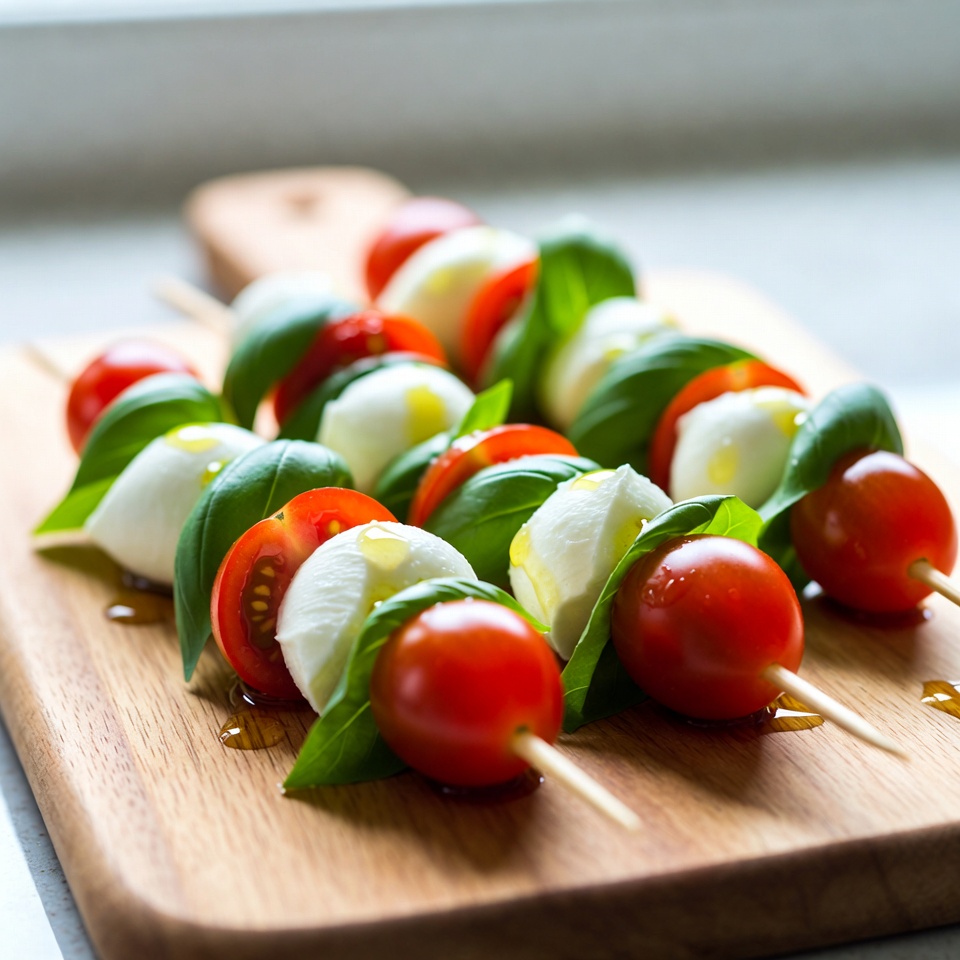
While the traditional salad is served on a flat plate, the Caprese Skewer (or Caprese Kabobs) reimagines this classic as the ultimate social food. It transforms a sit-down starter into a portable, elegant, and vibrant hors d’oeuvre. Whether you are hosting a high-end wedding reception, a casual backyard BBQ, or an intimate wine tasting, these skewers offer a burst of herbaceous freshness and creamy texture that appeals to almost every palate.
What makes this recipe significant isn’t just its history, but its reliance on ingredient integrity. In a world of complex molecular gastronomy, the Caprese skewer stands as a reminder that when you source the finest components, the food speaks for itself.
2. Recipe Overview
- Cuisine Type: Italian / Mediterranean
- Difficulty Level: Beginner (No cooking required)
- Prep Time: 20 minutes
- Total Time: 20 minutes
- Dietary Classifications: Vegetarian, Gluten-Free, Low-Carb, Keto-friendly
3. Equipment and Tools
To achieve professional-grade results, ensure you have the following tools prepared:
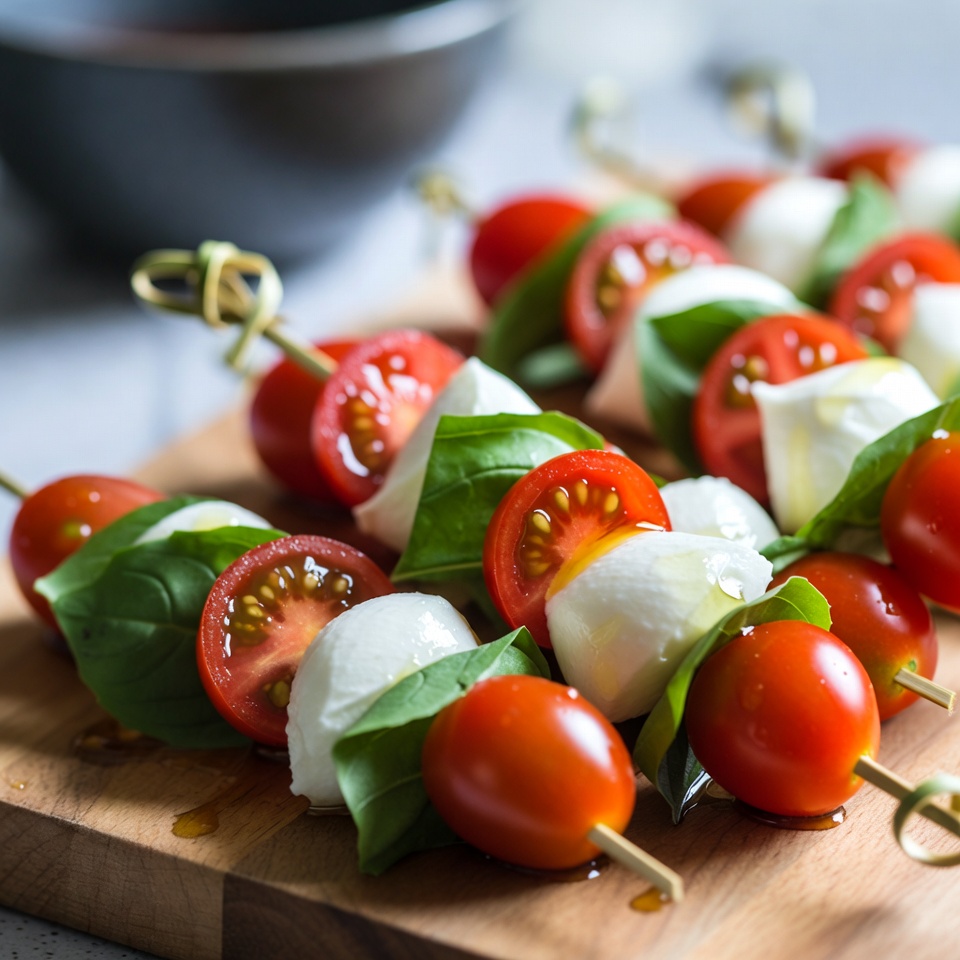
- Skewers: 4-inch (10 cm) bamboo knots or decorative toothpicks. Bamboo knots provide a “handle” that makes them easier for guests to grab.
- Mixing Bowls: Two medium-sized glass or stainless steel bowls (approx. 2-quart volume).
- Chef’s Knife: A sharp 8-inch blade for clean cuts on the basil or tomatoes if they are oversized.
- Colander: For rinsing fresh produce.
- Serving Platter: A large marble or ceramic tray (at least 12×12 inches) to allow for white space between skewers.
- Small Squeeze Bottle: For precision drizzling of the balsamic glaze.
4. Serving Suggestions
Plating Recommendations
Arrange the skewers in a circular “sunburst” pattern on a white slate or marble platter. This allows the vibrant red of the tomatoes to pop against the neutral background.
Garnish Ideas
- Micro-greens: A light dusting of micro-arugula adds a peppery bite.
- Flaky Sea Salt: Use Maldon salt for a crunch that enhances the sweetness of the tomatoes.
- Edible Flowers: Small violas or borage flowers add a gourmet touch for formal events.
Beverage Pairings
- Wine: A crisp Pinot Grigio or a dry Rosé complements the acidity of the tomatoes. For red lovers, a light Chianti works beautifully.
- Non-Alcoholic: Sparkling water infused with cucumber and lemon.
5. Nutritional Information (Per 3 Skewers)
| Nutrient | Amount |
| Calories | 145 kcal |
| Total Fat | 10g |
| Saturated Fat | 6g |
| Cholesterol | 25mg |
| Sodium | 180mg |
| Total Carbohydrates | 4g |
| Protein | 8g |
Health Benefits: Tomatoes are a primary source of lycopene, a powerful antioxidant linked to heart health. Fresh mozzarella provides high-quality protein and calcium, while basil contains essential oils with anti-inflammatory properties.
6. Storage and Reheating
- Refrigeration: Store in an airtight container for up to 24 hours. Any longer, and the basil will begin to oxidize (turn black) and the cheese may absorb too much moisture.
- Freezing: Not recommended. Fresh mozzarella and tomatoes have high water content; freezing will destroy their cellular structure, resulting in a mushy texture.
- Pro-Tip: If making ahead of time, thread the skewers but wait to add the balsamic glaze and salt until 5 minutes before serving to prevent the ingredients from “weeping.”
7. Expert Tips and Variations
Professional Chef Tips
- The “Veil” Technique: Fold your basil leaf into a small “envelope” or accordion shape before threading. This ensures it stays secure and provides a concentrated burst of flavor.
- Temperature Matters: Serve slightly below room temperature. Ice-cold mozzarella loses its creamy mouthfeel.
- Marination: Toss your mozzarella balls in a mixture of olive oil, dried oregano, and red pepper flakes 1 hour before assembly for an extra layer of flavor.
Creative Variations
- The Fruit Twist: Swap the tomato for a cube of watermelon or a slice of peach for a summer fruit Caprese.
- The Protein Add: Fold a thin slice of Prosciutto di Parma onto the skewer between the cheese and the basil.
- The Pesto Drip: Instead of balsamic glaze, use a dollop of basil pesto.
8. Ingredients Section
The Component List
- Cherry or Grape Tomatoes: 24 units (approx. 1 pint). Look for “Sugar Bomb” or heirloom varieties for maximum sweetness.
- Bocconcini or Ciliegine: 24 small fresh mozzarella balls. Ciliegine (cherry-sized) is the ideal scale for skewers.
- Fresh Basil Leaves: 24 large, vibrant green leaves.
- Extra Virgin Olive Oil (EVOO): 2 tablespoons. Use cold-pressed Italian oil.
- Balsamic Glaze: 1/4 cup. This should be a thick reduction, not a thin vinegar.
- Sea Salt & Black Pepper: To taste.
Substitutions
- Mozzarella: If unavailable, use cubes of mild Provolone or Feta (though the flavor profile will shift).
- Balsamic Glaze: You can make your own by simmering 1 cup of balsamic vinegar with 1 tablespoon of honey until reduced by half.
9. Step-by-Step Instructions
Step 1: Prepare the Produce
Wash the tomatoes and basil leaves under cold running water. Pat the basil dry very gently with a paper towel. Bruising the basil will cause it to turn brown rapidly.
Step 2: Season the Cheese
In a medium bowl, toss the mozzarella balls with the olive oil, a pinch of salt, and freshly cracked black pepper. This ensures the cheese isn’t “bland” inside the skewer.
Step 3: The Assembly Order
- Slide one cherry tomato onto the skewer until it reaches the bottom (leave 1 inch of space).
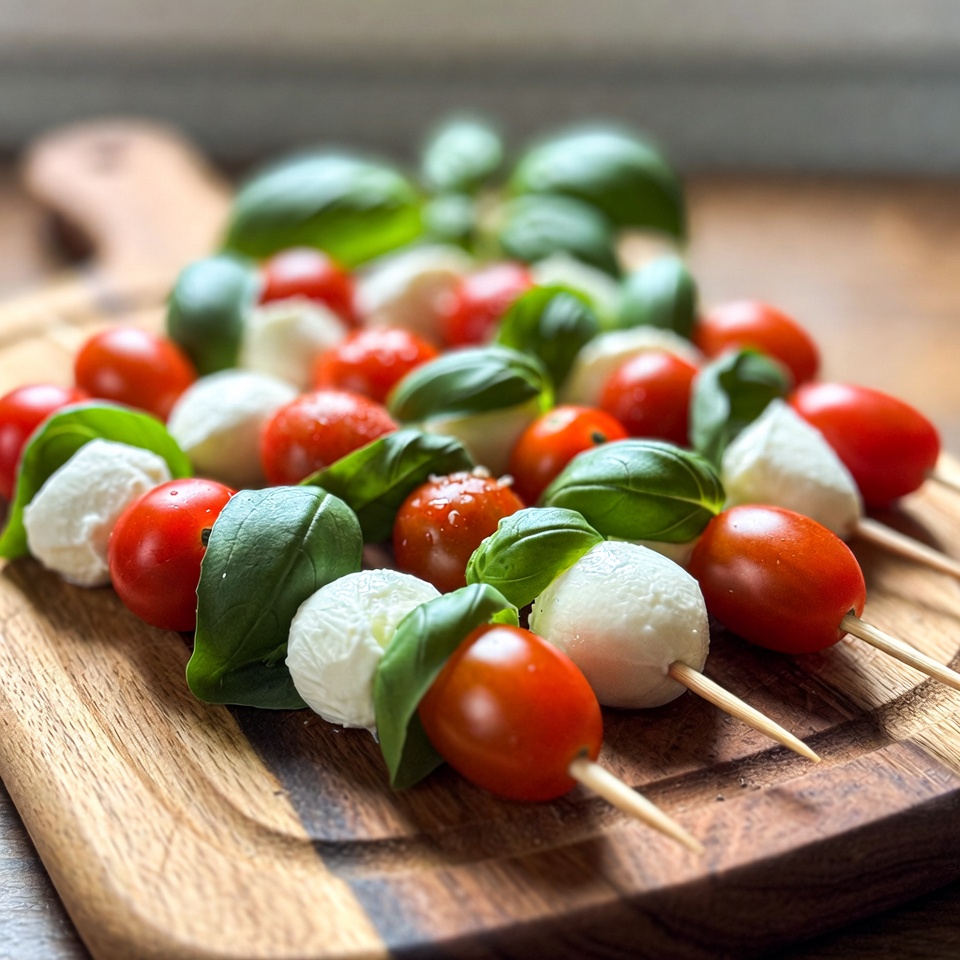
- Take a basil leaf, fold it in half or thirds (dark side out), and slide it on.
- Finish with one mozzarella ball.Note: Placing the cheese at the bottom allows the skewer to stand upright if you are using a flat-bottomed cheese style.
Step 4: Final Dressing
Arrange the completed skewers on your serving platter. Just before the guests arrive, use your squeeze bottle to create a zig-zag pattern of balsamic glaze across the entire tray.
Step 5: The Finishing Touch
Sprinkle a final pinch of flaky sea salt over the tomatoes. The salt draws out the juices, creating a natural sauce when it hits the olive oil and glaze.
10. Frequently Asked Questions (FAQ)
Q: Can I use large mozzarella balls cut into pieces?
A: You can, but the aesthetic will be less “clean.” Fresh mozzarella balls (Ciliegine) have a smooth outer skin that holds moisture better than a cut surface.
Q: Why is my basil turning black so quickly?
A: This is usually due to moisture or cold damage. Ensure the basil is completely dry after washing and avoid storing the finished skewers in the coldest part of your refrigerator.
Q: What is the difference between balsamic vinegar and balsamic glaze?
A: Vinegar is thin and acidic. Glaze is vinegar that has been cooked down with a sweetener until it is syrupy. For skewers, the glaze is essential as it clings to the ingredients rather than pooling at the bottom of the plate.
Q: Are these healthy for a Keto diet?
A: Yes! Simply go light on the balsamic glaze, as it contains concentrated sugars. The fats from the cheese and oil combined with the low-carb tomatoes make this an excellent Keto snack.
Q: How many skewers should I make per person?
A: For a cocktail hour, plan for 3 to 4 skewers per guest.