1. Introduction: The Heartbeat of the Mediterranean Coast
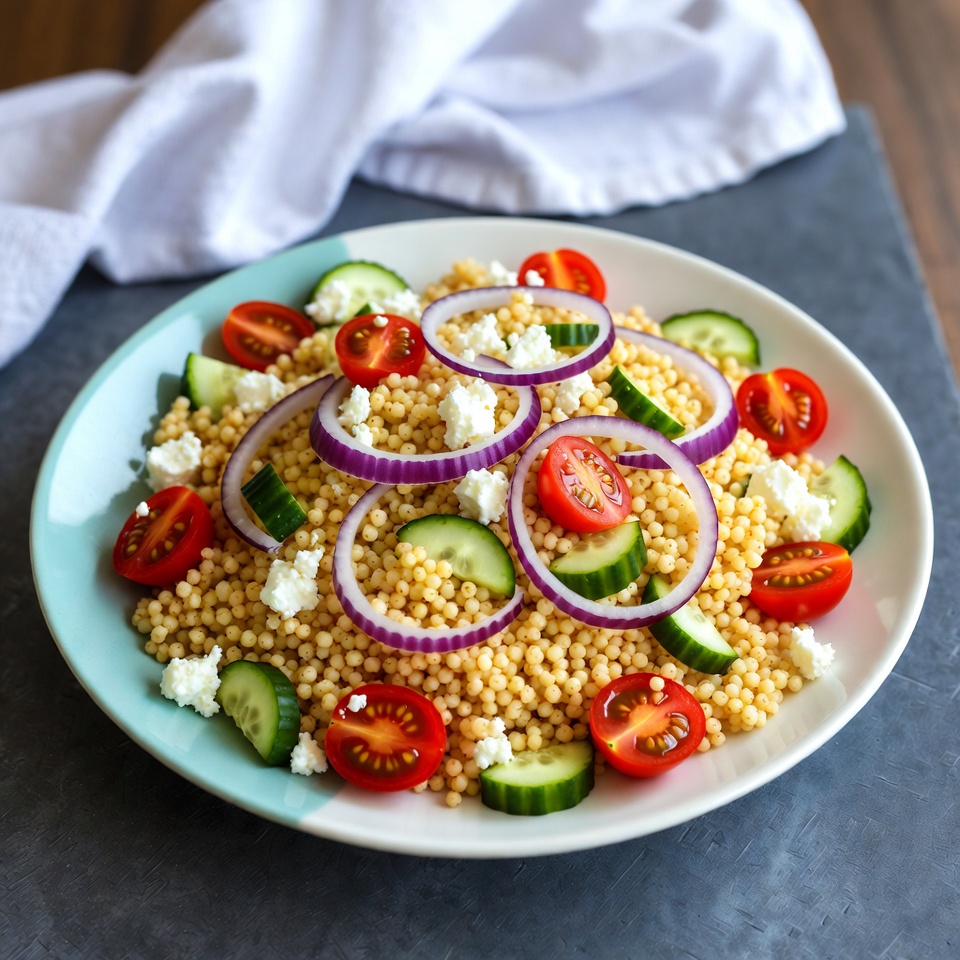
There is a specific kind of magic that happens when simple, sun-ripened ingredients meet the ancient texture of semolina. The Mediterranean Couscous Salad is more than just a side dish; it is a storied mosaic of the various cultures that border the Mediterranean Sea. While couscous finds its ancestral roots in North Africa—specifically among the Berber people of the Maghreb—its migration across the sea to Sicily, France, and the Levant has transformed it into a universal canvas for fresh produce.
Imagine a bustling open-air market in Provence or a seaside taverna in Crete. The air smells of salt, crushed mint, and ripening lemons. This salad captures that sensory experience. It represents the “Cuisine of the Sun,” where the focus is not on complex techniques, but on the integrity of the ingredients. The tiny grains of couscous act as sponges, soaking up the golden olive oil and the sharp tang of citrus, ensuring that every bite is a balanced explosion of flavor.
Whether you are hosting a summer garden party or seeking a meal-prep solution that doesn’t wilt by Tuesday, this dish stands as a testament to the brilliance of Mediterranean simplicity. It’s light yet satisfying, sophisticated yet incredibly humble.
2. Recipe Overview
- Cuisine Type: Mediterranean / North African Fusion
- Difficulty Level: Beginner (Easy)
- Prep Time: 15 minutes
- Cook Time: 5 minutes (for hydration)
- Total Time: 20 minutes
- Dietary Classifications: Vegetarian, Vegan (if honey is swapped for maple syrup), Nut-Free, Dairy-Free (if feta is omitted).
3. Equipment and Tools
To achieve the perfect “fluff” and ensure even distribution of the dressing, having the right tools is essential.
- Medium Mixing Bowl (3-Quart): Ideally heat-proof (glass or stainless steel) for hydrating the couscous.
- Small Glass Jar or Whisking Bowl: For emulsifying the lemon vinaigrette.
- Fine-Mesh Strainer: For rinsing fresh herbs and vegetables.
- Chef’s Knife: A sharp 8-inch blade is required for the “brunoise” (fine dice) of the vegetables.
- Large Fork or Bench Scraper: Crucial for fluffing the couscous without mashing the grains.
- Measuring Cups & Spoons: Both dry and liquid measurements for precision.
4. Serving Suggestions
Plating Recommendations
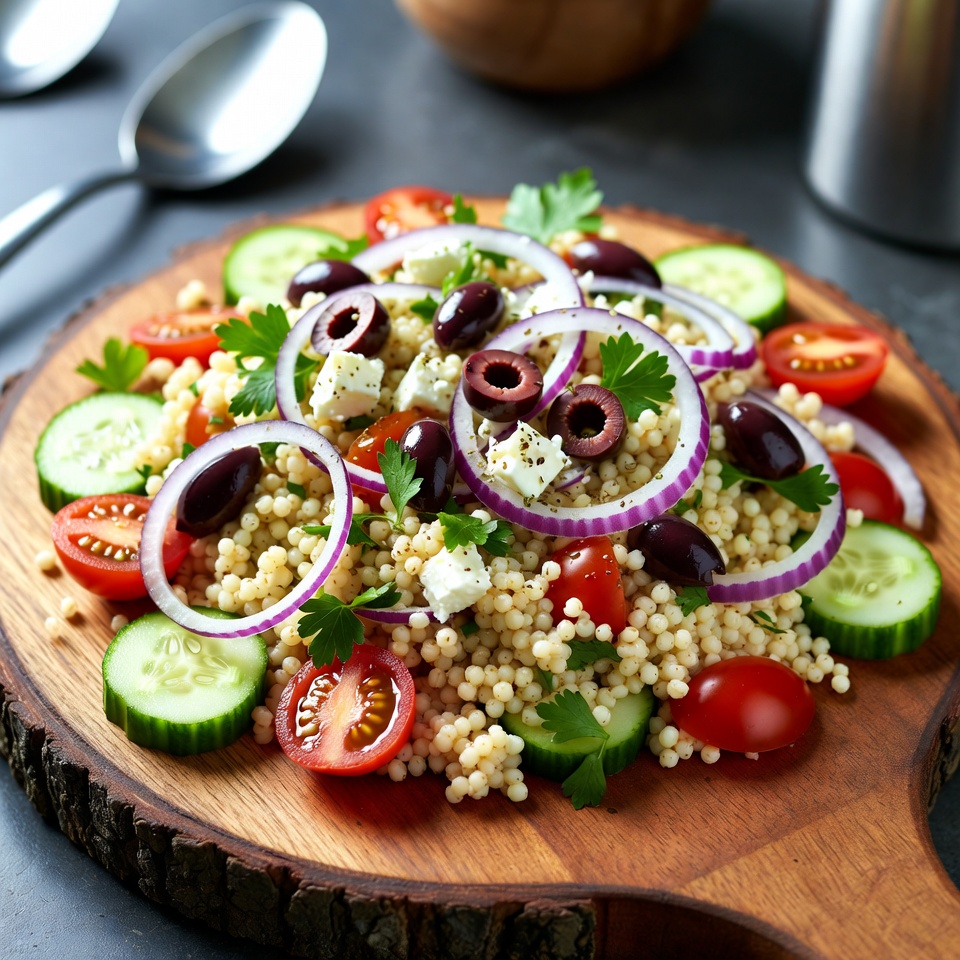
Serve the salad in a wide, shallow wooden bowl to highlight the vibrant colors of the tomatoes and parsley. A shallow vessel prevents the weight of the ingredients from compressing the delicate couscous at the bottom.
Garnish Ideas
- A final dusting of Sumac for a purple hue and extra acidity.
- Toasted pine nuts or slivered almonds for a buttery crunch.
- Zest of one whole lemon grated directly over the top before serving.
Pairings
- Protein: Grilled lemon-oregano chicken skewers or pan-seared sea bass.
- Beverage: A crisp, chilled Sauvignon Blanc or a dry Rosé from Provence. For a non-alcoholic option, a sparkling water infused with cucumber and mint is perfection.
5. Nutritional Information (Per Serving)
| Nutrient | Amount |
| Calories | 285 kcal |
| Total Fat | 12g |
| Saturated Fat | 2g |
| Carbohydrates | 38g |
| Fiber | 4g |
| Protein | 7g |
| Sodium | 310mg |
Health Benefits: This dish is rich in monounsaturated fats from extra virgin olive oil and lycopene from the cherry tomatoes. The inclusion of fresh parsley provides a significant dose of Vitamin K and Vitamin C.
6. Storage and Reheating
Refrigeration: Store in an airtight container for up to 4 days. Unlike leafy salads, couscous actually improves after a few hours as the grains absorb the dressing.
Freezing: It is not recommended to freeze this salad, as the fresh cucumbers and tomatoes will lose their structural integrity and become mushy upon thawing.
Reheating: This dish is traditionally served cold or at room temperature. If you prefer it warm, microwave it in 30-second intervals, adding a teaspoon of water to restore moisture.
7. Expert Tips and Variations
- The Golden Rule of Fluffing: Never use a spoon to stir cooked couscous. Use a fork to gently rake the grains. This preserves the individual texture.
- The “Blooming” Technique: Toast the dry couscous in a pan with a teaspoon of olive oil for 2 minutes before adding water. This adds a nutty, toasted dimension to the flavor.
- Variation – The Protein Powerhouse: Add a can of rinsed chickpeas or some crumbled goat cheese for a heartier vegetarian main.
- Seasonal Adaptation: In winter, replace the cucumber and tomatoes with roasted butternut squash, dried cranberries, and toasted pecans.
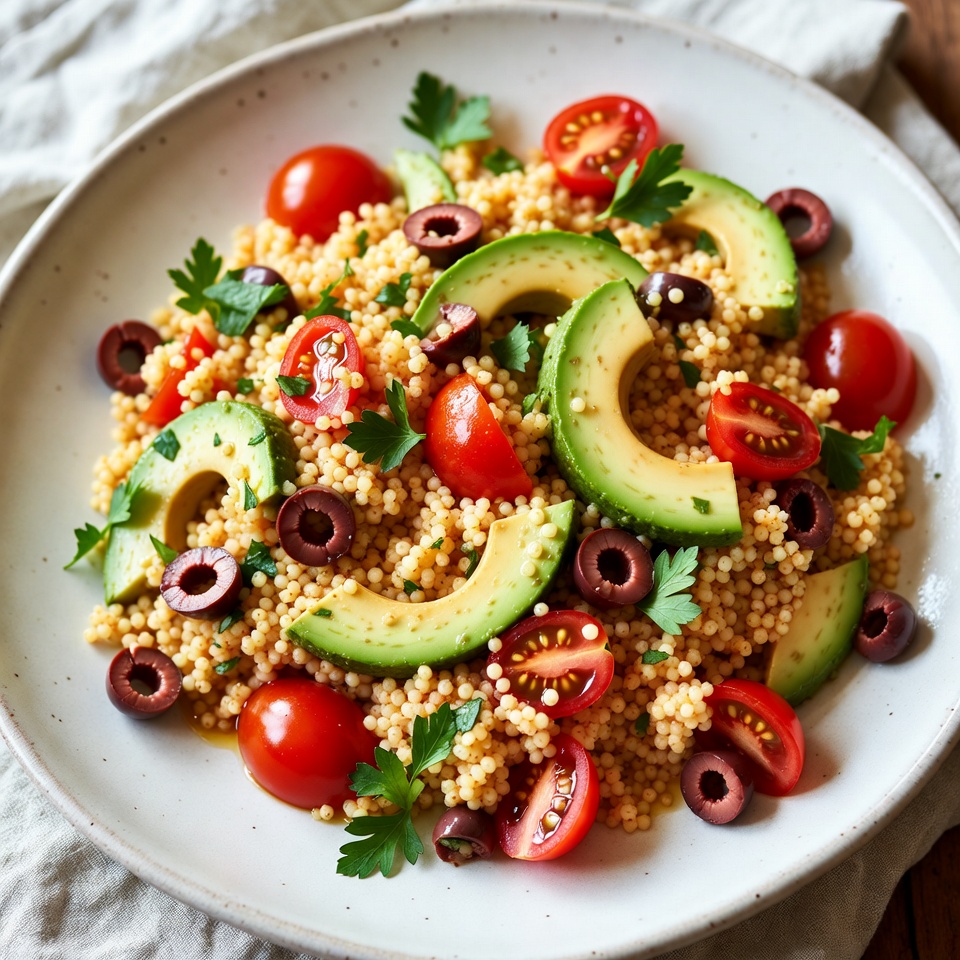
8. Ingredients Section
The Base
- 1 ½ cups (250g) Plain Moroccan Couscous (Fine grain)
- 1 ½ cups (350ml) Boiling Water or Vegetable Broth
- 2 tbsp Extra Virgin Olive Oil (for the grains)
- ½ tsp Fine Sea Salt
The Garden Mix
- 1 cup Cherry tomatoes, quartered
- 1 large English cucumber, de-seeded and diced small
- ½ cup Red onion, finely minced
- ½ cup Fresh flat-leaf parsley, chopped
- ¼ cup Fresh mint leaves, chiffonade
- ½ cup Kalamata olives, pitted and halved
The Zesty Vinaigrette
- 1/3 cup Extra Virgin Olive Oil (Cold-pressed)
- 3 tbsp Freshly squeezed lemon juice
- 1 clove Garlic, grated or pressed
- 1 tsp Dried oregano
- 1 tsp Honey or Agave nectar
- Salt & Black Pepper to taste
9. Step-by-Step Instructions
- Hydrate the Couscous: Place the dry couscous and salt in a large heat-proof bowl. Pour the boiling water (or broth) over the grains. Stir once, then cover the bowl tightly with plastic wrap or a lid. Let it sit undisturbed for 5 to 7 minutes.
- Prep the Vegetables: While the couscous steams, dice your cucumber, tomatoes, and onion. Pro Tip: If the cucumber is very watery, pat the diced pieces dry with a paper towel to prevent a soggy salad.
- Emulsify the Dressing: In a small jar, combine the olive oil, lemon juice, garlic, oregano, and honey. Shake vigorously until the mixture is opaque and well-combined.
- Fluff the Grains: Remove the cover from the couscous. Drizzle with 2 tablespoons of olive oil. Using a fork, gently rake the grains to break up any clumps until they are light and airy.
- The Assembly: Add the diced vegetables, olives, and fresh herbs to the couscous bowl.
- Dress and Toss: Pour the vinaigrette over the salad. Use a large spatula to fold the ingredients together gently.
- Rest: For the best results, let the salad sit at room temperature for 15 minutes before serving. This allows the flavors to “marry.”
10. Frequently Asked Questions (FAQ)
Q: Can I use Pearl (Israeli) Couscous instead?
A: Yes, but the method changes. Pearl couscous must be boiled in a pot of water (like pasta) for about 8-10 minutes until al dente, rather than just steeped in hot water.
Q: Is couscous gluten-free?
A: No. Couscous is made from semolina flour (wheat). For a gluten-free version, substitute with quinoa or cooked millet.
Q: How do I prevent my couscous from being mushy?
A: The most common mistake is using too much water. Stick to a 1:1 ratio of couscous to liquid. Also, ensure you fluff it immediately after the 5-minute steaming period.
Q: Can I make this ahead of time?
A: Absolutely. It is an ideal meal-prep dish. Just wait to add the fresh mint until right before serving to keep it from turning dark.
Q: What if I don’t have fresh lemons?
A: Red wine vinegar or Apple Cider Vinegar can work in a pinch, though you will lose that signature citrus brightness.